Reported Ukrainian drone strike damages Yandex data center complex in Vladimir, Russia
What happened
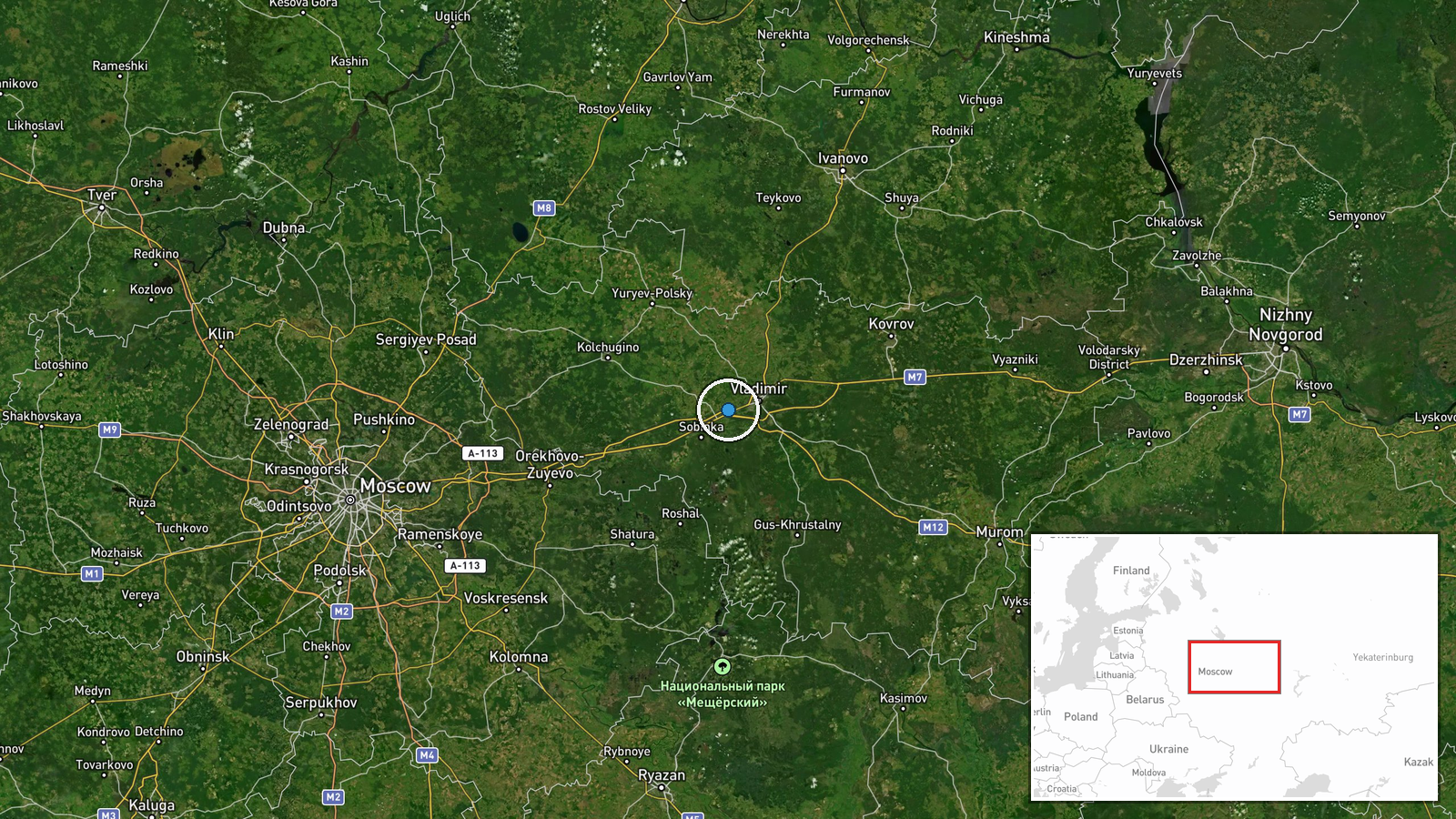
A Telegram channel, @supernova_plus, reports that Ukrainian forces struck the Energetik data center complex operated by Yandex on the outskirts of Vladimir, the capital of Vladimir Oblast in western Russia. The Russian-language post dates the strike to 11 October 2026 and describes a massed attack on facilities that it says are used, among other purposes, for military ends. Citing a published satellite image, the report says five of the complex's eight buildings were hit, and three of them were probably critically damaged. It states that the full extent of destruction still requires confirmation. The event is logged as a UAS strike. Summary material attached to the record says the Galushkin supercomputer, which supports YandexGPT and the Alice assistant, may have been affected, but this remains unverified. The record's timestamp of 19 October 2026 likely reflects when the item was logged rather than when the strike occurred.
Context and assessment
Data centers draw attention in this kind of conflict because they combine civilian commercial services with computing capacity that can be relevant to government and military users. Yandex is among Russia's largest technology companies, and its AI products and search services depend on facilities of this kind, so a strike on such a site carries both economic and symbolic weight. Vladimir is an established industrial city on the Klyazma River, roughly 180 kilometres east of Moscow, and it hosts manufacturing and electronics activity, which may help explain why the site was considered a target. The dataset contains no related events for this location, so no recent pattern of strikes on digital infrastructure can be drawn from it here. Operationally, the reported use of long-range drones against a facility this far from the front would suggest that the attacker has the range and targeting capacity to reach deep into Russian territory, but a single unverified report cannot establish a campaign. Any intent to disrupt computing capacity would be inferred rather than confirmed, and the stated military purpose of the site has not been independently established.
Sources and confidence
The event rests on a single Telegram channel, @supernova_plus, with no second outlet cross-confirming the strike, the damage count or the claimed effect on the Galushkin supercomputer. The confidence score of 5.5 reflects this single-source basis, the lack of independent verification of the satellite image cited, and the fact that the damage assessment is explicitly described as preliminary. Confidence would rise with independent analysis of commercial satellite imagery, confirmation from Yandex or Russian regional authorities, or corroboration from established wire services. It would fall if Yandex denied material damage or if imagery failed to match the reported building count.
Location
The location is placed at settlement precision, with coordinates on the outskirts of Vladimir city, which the source supports and the location confidence rates as high. The site lies in Vladimir Oblast, west-central Russia, about 180 kilometres east of Moscow. Vladimir sits on a rise above the Klyazma River, a tributary of the Oka, and the surrounding terrain is largely flat to gently rolling and forested.
▶ View this event on the live map

Intel Mapper aggregates open-source reports from monitored Telegram and X channels, geolocates them, cross-checks duplicates across sources and assigns a confidence score. Entries are updated as new confirmations arrive. Read how we verify events.