Russian Shahed drones strike Poltava city in overnight attack
What happened
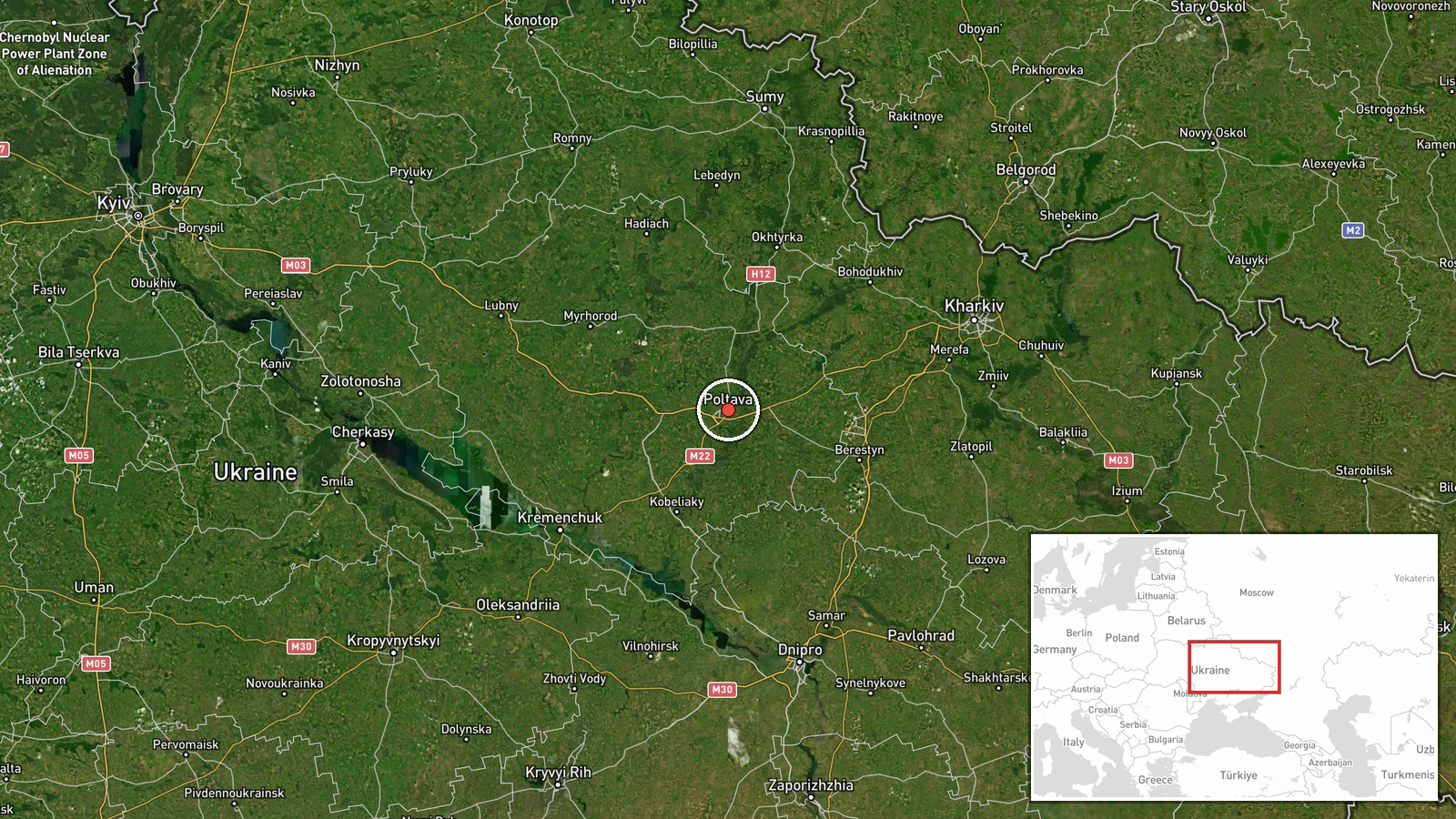
Russian Shahed-136 kamikaze drones attacked Poltava city on 1 September at approximately 07:50 UTC, according to Telegram channel @war_monitor. Air raid alerts were issued across the city, and explosions were reported. The attack is consistent with Russia's ongoing campaign targeting Ukrainian civilian infrastructure. Poltava, located in east-central Ukraine, has been subject to repeated strikes over recent months.
Context and assessment
Poltava city, an industrial and administrative hub in Poltava Oblast, has strategic significance as a transportation and logistics nexus. The strike follows a pattern of Russian drone activity detected transiting through Poltava Oblast on the same date, with multiple Shahed-variant drones tracked moving northwestward toward Kyiv and other targets. Related events on 1 September recorded drone detections near Semenivka and a separate three-missile Zircon strike detected en route to Kyiv on 31 August. This escalation may reflect a coordinated Russian strike wave aimed at multiple Ukrainian regions simultaneously, typical of Russia's air campaign strategy to overwhelm air defenses across dispersed targets.
Sources and confidence
Reported by single Telegram channel (@war_monitor). Source count of one and confidence score of 6.0 reflect reliance on a single channel without independent cross-confirmation. Confidence would increase with reports from Ukrainian official channels, multiple independent monitors, or damage documentation. Confidence could be lowered if the report is subsequently contradicted or determined to reference a different location or earlier/later incident.
Location
Poltava city, Poltava Oblast, east-central Ukraine (49.5992°N, 34.5514°E). A major regional city serving as a cultural, industrial, and administrative center. Located approximately 350 km southeast of Kyiv and roughly 200 km northwest of the front lines in Donetsk region. The city straddles the Vorskla River and sits on key highway and rail corridors.
Related events nearby
- Two Russian reactive (jet-powered) Shahed-variant kamikaze drones detected transiting from Donetsk northwestwa2026-09-01 04:51 UTC · Drone Transit · Poltava Oblast, Ukraine
- Three Russian Zircon hypersonic ballistic missiles detected transiting from Pryatin, Poltava Oblast toward Kyi2026-08-31 23:32 UTC · Ballistic Missile · En route: Pryatin, Poltava Oblast → Kyiv, Kyiv Cit
- Russian reactive (jet-powered) Shahed-variant kamikaze drones detected transiting through Poltava Oblast towar2026-09-01 05:01 UTC · Drone Transit · Semenivka, Poltava Oblast, Ukraine
▶ View this event on the live map
Intel Mapper aggregates open-source reports from monitored Telegram and X channels, geolocates them, cross-checks duplicates across sources and assigns a confidence score. Entries are updated as new confirmations arrive. Read how we verify events.