Russian Shahed-variant drone detected transiting toward Odesa Oblast from Black Sea
What happened
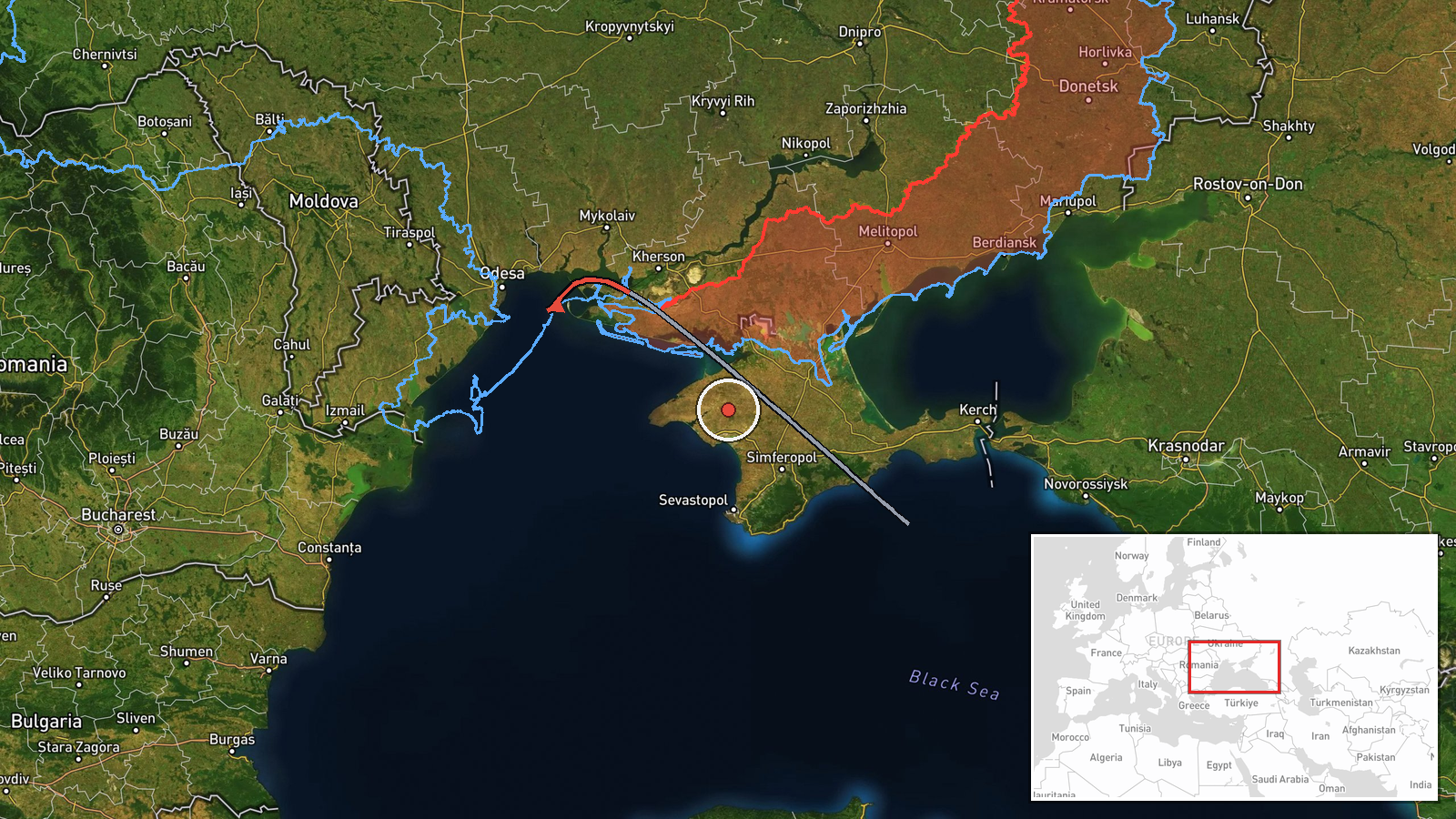
Ukrainian air monitoring systems detected a single Russian reactive drone of the Shahed variant in flight over the Black Sea on the morning of September 3, reportedly heading toward Odesa Oblast. The alert was issued in preliminary form as the drone remained airborne at time of reporting. No impact or interception was reported in the initial notification from the monitoring service.
Context and assessment
Odesa Oblast, Ukraine's primary southern maritime region, remains under sustained Russian aerial pressure as Moscow continues to target civilian and military infrastructure along the coast and inland. This detection follows a pattern of repeated drone and cruise missile strikes in the area, including a reported strike by a group of six Kalibr cruise missiles launched from the Tendrivska Spit region the previous day. The apparent staging of attacks from the Black Sea and nearby coastal positions suggests Russia is maintaining operational pressure on Ukrainian air defenses and civilian targets in the south, likely as part of broader efforts to disrupt port activity and degrade military capability in the region.
Sources and confidence
Report sourced from Telegram channel @war_monitor, a Ukrainian air monitoring outlet. Single-source reporting limits independent confirmation; no cross-verification from Ukrainian military or other monitoring services provided at time of alert. Confidence score of 6.0 reflects the preliminary nature of the report and reliance on one channel. Confirmation of impact or interception would raise confidence; retraction by the source would lower it.
Location
Detection coordinates place the drone transit in Odesa Oblast airspace, originating from the Black Sea. The target bearing was toward Odesa district proper. Odesa Oblast is Ukraine's southwestern maritime region, bounded by the Danube Delta to the west and the Crimean Peninsula to the east, with significant civilian and port infrastructure concentrated in and around the city of Odesa itself.
▶ View this event on the live map
Intel Mapper aggregates open-source reports from monitored Telegram and X channels, geolocates them, cross-checks duplicates across sources and assigns a confidence score. Entries are updated as new confirmations arrive. Read how we verify events.