Russian Shahed-variant drones transit toward Kyiv; Ukrainian air defense responds
What happened
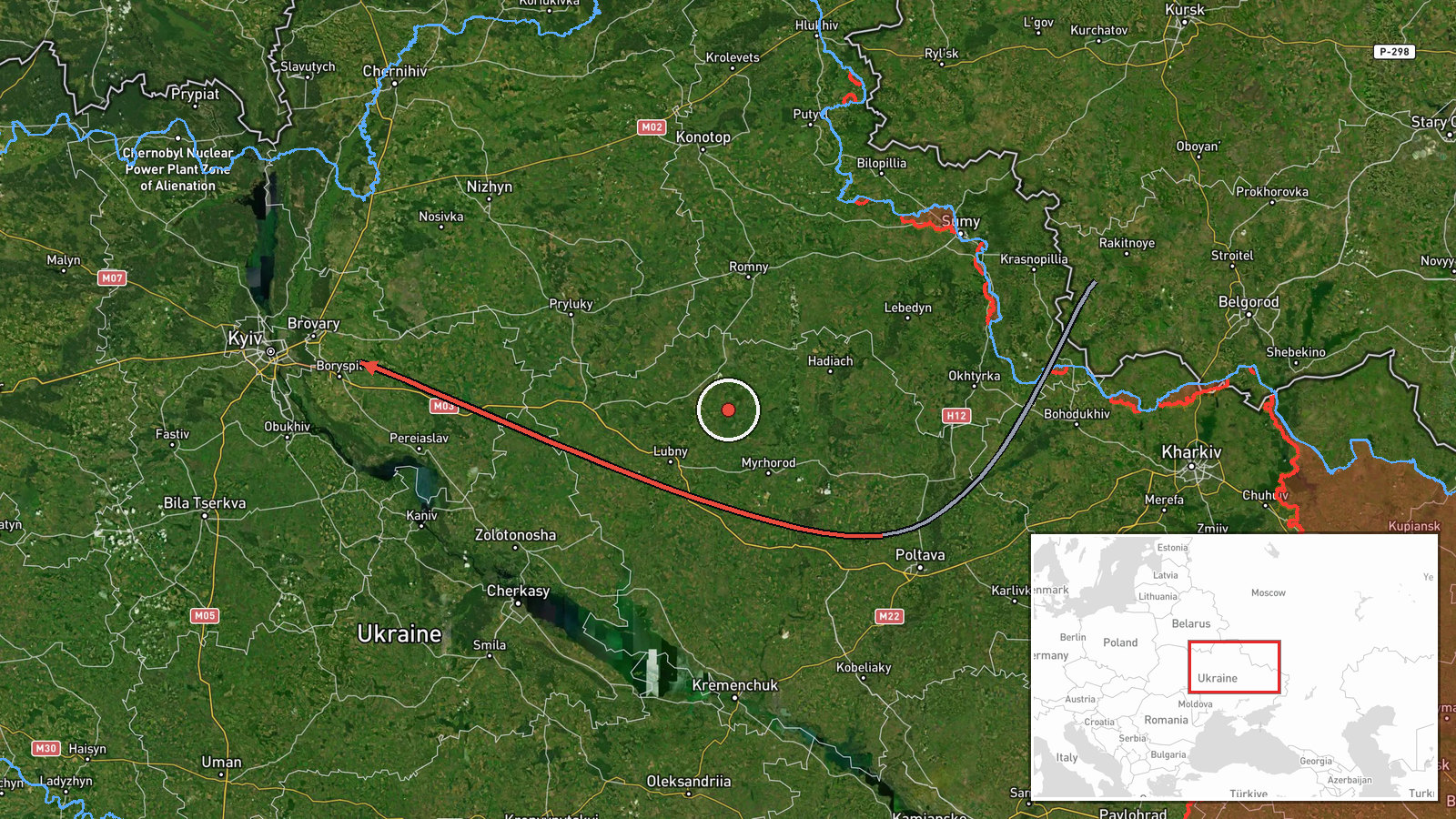
Two Russian reactive jet-powered Shahed-variant unmanned aerial vehicles were detected transiting from Poltava Oblast toward Kyiv and Kyiv Oblast on September 4 at 18:27 UTC, according to the Telegram channel @war_monitor. Ukrainian authorities issued an air alert and activated air defense systems in response to the inbound threat. The report describes the drones as reactor-powered variants, indicating potential for sustained flight and longer operational range than standard loitering munitions.
Context and assessment
The drone transit occurs within hours of a confirmed Russian strike on Ukraine's SBU security headquarters in central Kyiv, and amid an intensifying air campaign against the capital region. The use of reactor-powered Shahed variants represents an evolution in Russian drone capabilities, potentially allowing deeper penetration and sustained operations over defended airspace. This follows recent demonstrated Ukrainian air defense successes, including a MiG-29 shootdown of a cruise missile on September 3. The timing, amid U.S. diplomatic envoy visits announced for September 8 and Ukrainian leadership statements regarding proportional response, suggests Russia may be maintaining operational pressure on Kyiv during a sensitive political window.
Sources and confidence
Reported by single Telegram channel @war_monitor with no corroborating source confirmation at time of reporting. Confidence score of 6.0 reflects single-source limitation; would increase with independent verification from Ukrainian official channels, air force statements, or additional open-source confirmation. Score stability depends on subsequent air defense outcome reporting.
Location
Kyiv city and surrounding Kyiv Oblast region, central Ukraine (50.45°N, 30.52°E). Origin point identified as Poltava Oblast, approximately 150 km southeast, requiring transit over defended airspace. The capital region, with multiple military and administrative facilities, represents a recurring high-value target zone for Russian aerial operations.
Related events nearby
- President Zelensky announces Ukraine ready to refrain from strikes on Moscow through Monday, expecting recipro2026-09-05 14:27 UTC · Statement · Kyiv, Ukraine
- President Zelensky states Russian strikes on Kyiv airports are retaliatory responses to U.S. diplomatic visits2026-09-05 09:09 UTC · Statement · Kyiv, Ukraine
- Ukraine's General Staff announced that a unilateral ceasefire order (Sept 5-8) issued during U.S. envoy visits2026-09-05 08:45 UTC · Statement · Kyiv, Ukraine
- After CIA Director Ratcliffe's failed Moscow visit, Russia intensified missile and drone attacks on Ukraine. U2026-09-04 21:53 UTC · Statement · Kyiv, Ukraine
- Ukrainian military ordered ceasefire across all frontlines from September 5 00:00 to September 8 in coordinati2026-09-04 21:14 UTC · Statement · Kyiv, Ukraine
▶ View this event on the live map
Intel Mapper aggregates open-source reports from monitored Telegram and X channels, geolocates them, cross-checks duplicates across sources and assigns a confidence score. Entries are updated as new confirmations arrive. Read how we verify events.