Russia fires Kalibr cruise missiles from Black Sea toward Ukraine
What happened
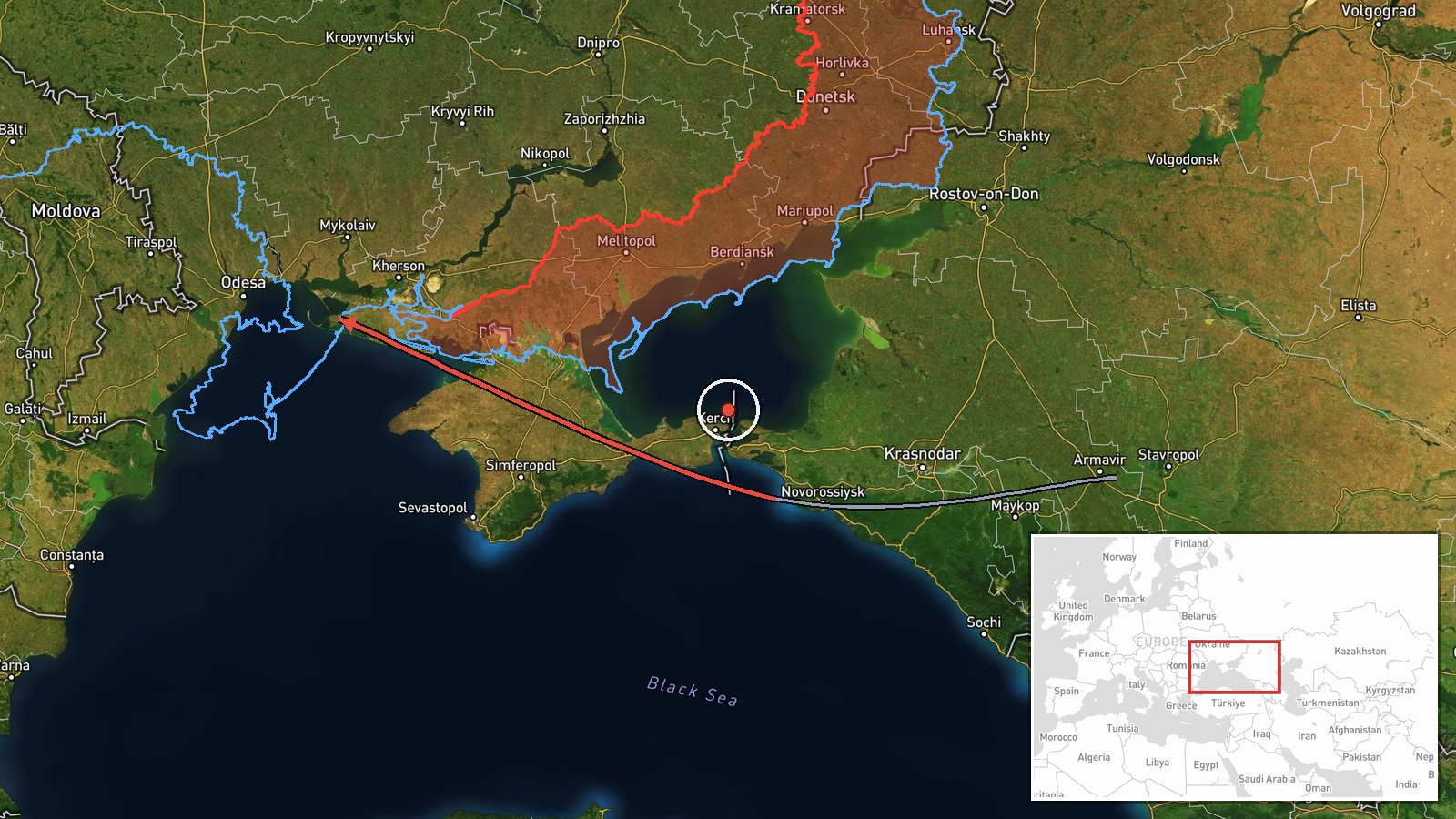
Russian forces launched Kalibr cruise missiles from the Black Sea off the Odessa coast on 8 September at 01:30 UTC, according to Ukrainian air-raid monitoring. The missiles were expected to reach Ukrainian airspace within 45 minutes of launch. The report does not specify intended targets or subsequent impact assessments. This adds to a sustained pattern of Russian naval strikes against Odesa Oblast over the preceding 24 hours.
Context and assessment
The Black Sea remains a primary avenue for Russian standoff strikes against Ukraine's southern regions. Kalibr cruise missiles, fired from Russian surface vessels or submarines, are difficult to intercept and carry conventional warheads typically used against infrastructure, military installations, or port facilities. The strike coincides with earlier detection of Russian Onyx missiles heading toward Odesa Oblast on the same date, and follows reconnaissance drone transits over the same oblast on 7 September. The frequency and timing suggest a coordinated campaign targeting the Odesa region, though specific operational objectives cannot be determined from available reporting.
Sources and confidence
Reported by Telegram channel @war_monitor, a Ukrainian air-raid monitoring source. Single-source reporting limits independent cross-confirmation; confidence score of 6.0 reflects the source's established track record with air-defense alerts but the absence of corroborating channels at time of filing. Additional Ukrainian or Western air-defense data would strengthen confidence.
Location
Launch origin determined as the Black Sea off Odessa coast (46.49°N, 30.73°E) at regional precision level. The Black Sea serves as Russia's primary naval launch platform for strikes into southern Ukraine. Odesa Oblast, the expected target region, lies approximately 50-70 km north of the launch area across the sea.
Related events nearby
- Ukrainian air-raid monitoring reports 2 Russian Onyx cruise missiles detected in trajectory toward Odesa Oblas2026-09-08 00:26 UTC · Cruise Missile · Odesa Oblast, Ukraine
▶ View this event on the live map
Intel Mapper aggregates open-source reports from monitored Telegram and X channels, geolocates them, cross-checks duplicates across sources and assigns a confidence score. Entries are updated as new confirmations arrive. Read how we verify events.