Russian Shahed drone transiting toward Lutsk as part of broader attack wave
What happened
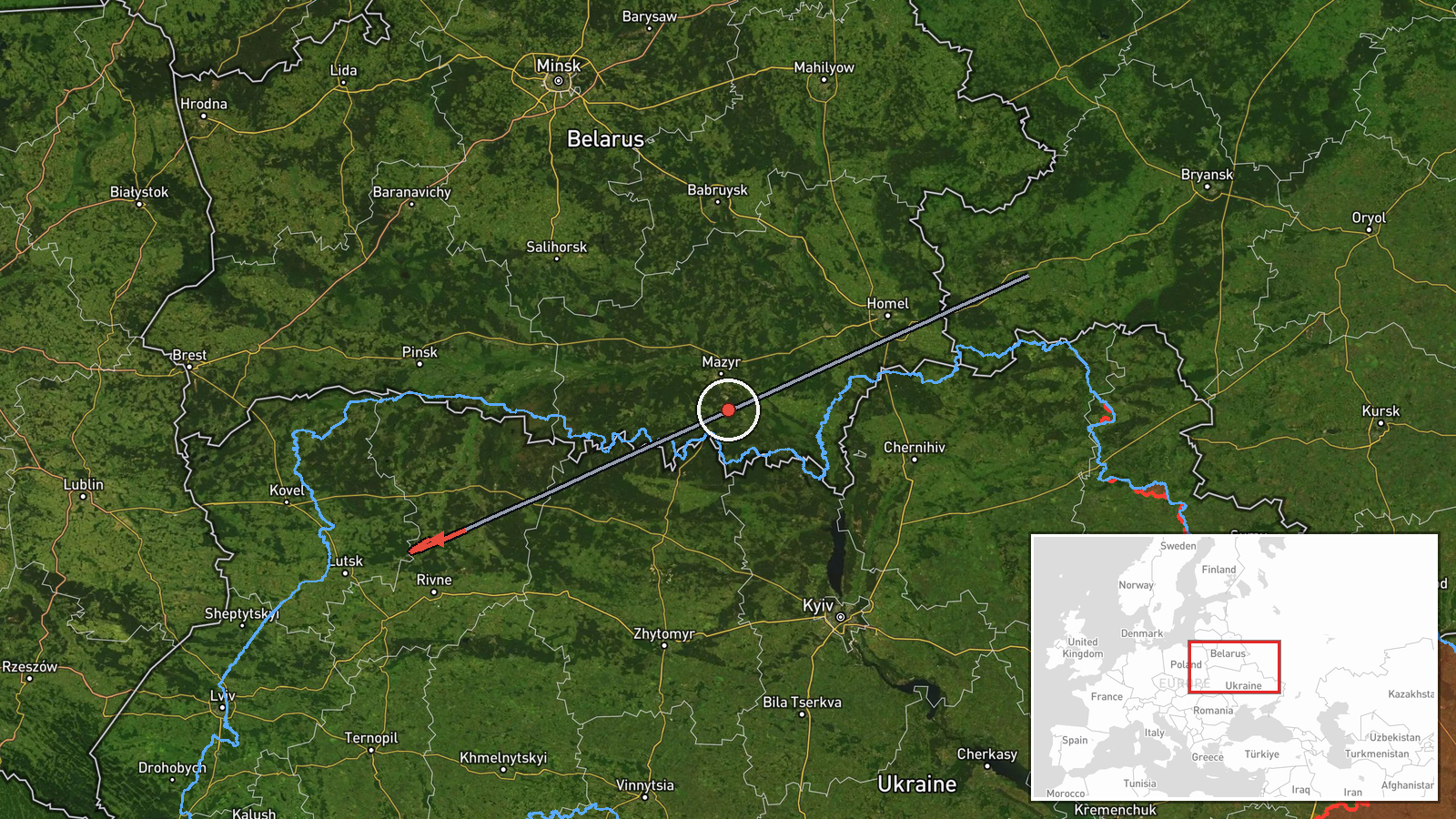
One Russian Shahed-type jet-powered drone was detected moving from Tsuman toward Lutsk in Volyn Oblast on 12 September at 12:32 UTC, prompting an air defense alert. The detection was reported by the Telegram channel @war_monitor. The drone's trajectory and timing place it within a coordinated wave of Russian unmanned aircraft operating across northwestern Ukraine.
Context and assessment
Lutsk, the capital of Volyn Oblast in northwestern Ukraine, lies approximately 70 kilometers from the Polish border and serves as a major regional hub. The detection follows a substantial coordinated Russian drone operation detected earlier that morning, with approximately 50 Shahed-2, Geran-2, and Geran-4 drones simultaneously tracked across Rivne and Volyn oblasts between 12:05 and 12:21 UTC. Multiple individual Shahed detections across the region—including near Hoshcha, Liubeshiv, and Shepetivka—suggest Russia conducted a multi-vector attack using transit routes through Belarus and Zhytomyr Oblast. Such patterns indicate attempts to overwhelm or disperse air defenses across a wide area rather than concentrate strikes on single targets.
Sources and confidence
Reported by single source: @war_monitor on Telegram. Confidence score of 6.0 reflects single-channel reporting without independent cross-confirmation. However, the report aligns temporally and geographically with confirmed large-scale drone activity across the region. Confirmation from additional channels or air defense statements would increase confidence; absence of follow-up strike reports or air defense interception claims could lower it.
Location
Lutsk is identified by settlement-level precision at coordinates 50.747°N, 25.397°E in central Volyn Oblast. The drone originated from Tsuman, also in Volyn Oblast, indicating a relatively short transit within the region. Lutsk sits in the Belarusian–Ukrainian frontier zone, approximately 200 kilometers northwest of Kyiv and roughly 70 kilometers from the Polish-Ukrainian border.
Related events nearby
- Russian Shahed drone struck railway infrastructure in Lutsk, igniting train wagons. Emergency services extingu2026-09-12 13:58 UTC · UAS Strike · Lutsk, Volyn Oblast, Ukraine
- One Russian reactive (jet-powered) Shahed-type drone detected transiting over Rivne Oblast in vector toward Ho2026-09-12 08:05 UTC · Drone Transit · Hoshcha, Rivne Oblast, Ukraine
- Approximately 50 Russian Shahed-2/Geran-2 and Geran-4 reactive drones detected in transit toward Rivne Oblast 2026-09-12 12:05 UTC · Drone Transit · Rivne Oblast, Ukraine
- Four Russian Shahed-type reactive drones detected transiting from Dubrovytsia toward Liubeshiv in Rivne Oblast2026-09-12 12:21 UTC · Drone Transit · Liubeshiv, Rivne Oblast, Ukraine
- Four Russian Shahed-type reactive (jet-powered) drones detected transiting from Korosten toward Dubrovytsia in2026-09-12 13:02 UTC · Drone Transit · Korosten, Zhytomyr Oblast, Ukraine
▶ View this event on the live map
Intel Mapper aggregates open-source reports from monitored Telegram and X channels, geolocates them, cross-checks duplicates across sources and assigns a confidence score. Entries are updated as new confirmations arrive. Read how we verify events.