Russian reconnaissance and attack drones detected transiting Zhytomyr Oblast
What happened
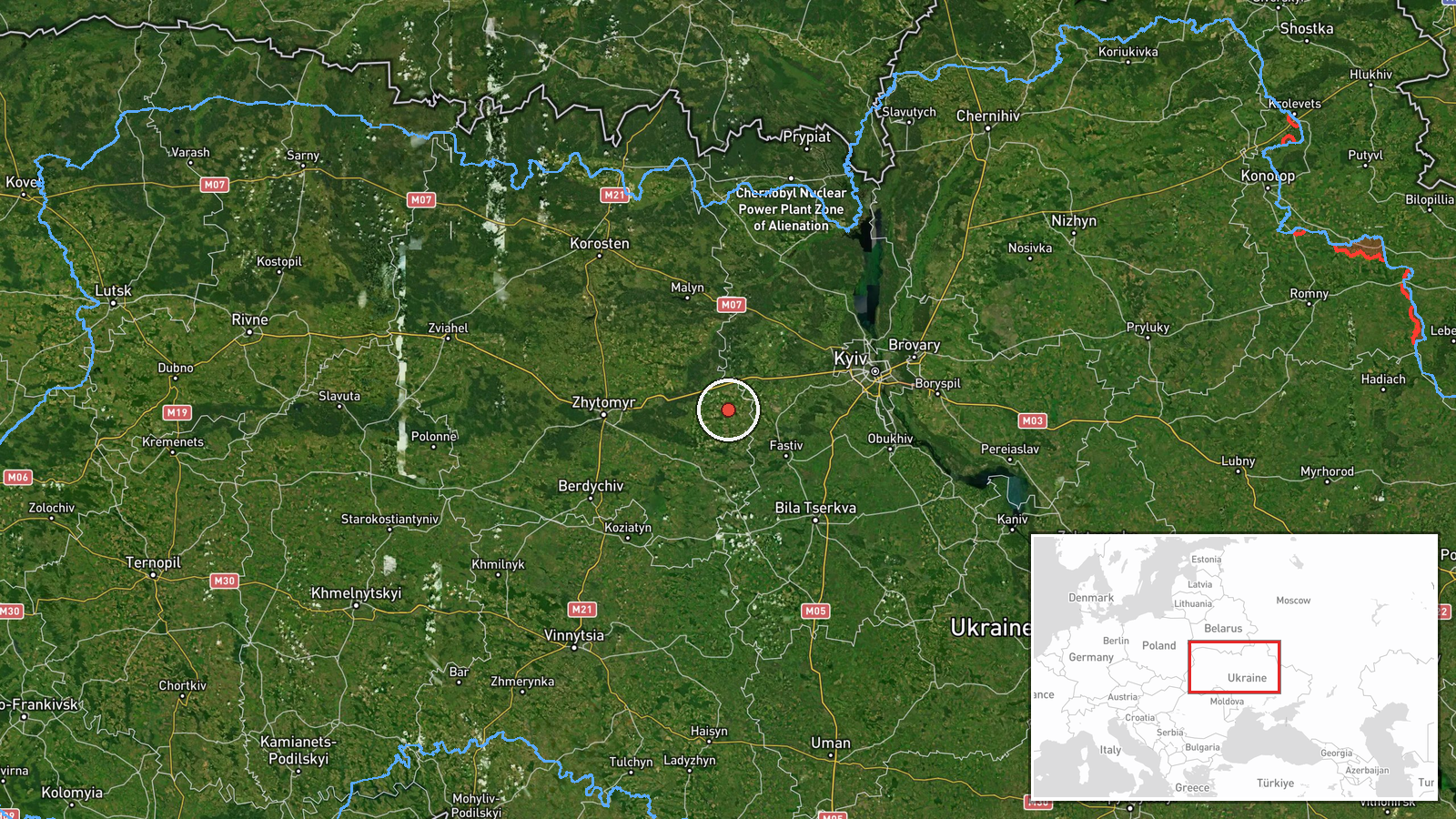
On 21 September at 16:52 UTC, a Russian jet-propelled reconnaissance drone of the Shahed class transited over the Brusylov sector in Zhytomyr Oblast, northwestern Ukraine. A second conventional unmanned aerial vehicle was separately detected over the Narodychi area in the same region. The report originated from the Telegram channel @war_monitor, which monitors air activity across Ukrainian territory.
Context and assessment
Zhytomyr Oblast lies northwest of Kyiv and has remained a secondary area of Russian drone operations throughout the conflict, though recent months have seen increased reconnaissance activity across central Ukraine. This detection occurred within hours of a major overnight Russian drone assault on 20–21 September, during which Ukrainian air defenses intercepted 147 of 172 attack drones. The transit of reconnaissance variants alongside earlier detection of similar aircraft over Kyiv Oblast and the Chornobyl Exclusion Zone suggests sustained Russian efforts to gather battlefield intelligence across the northern approaches to the capital. Such reconnaissance typically precedes subsequent targeting cycles.
Sources and confidence
Reported by Telegram channel @war_monitor on 21 September. Single-source reporting limits cross-confirmation; confidence score of 6.0 reflects typical OSINT standards for unconfirmed open-source UAV detections. Confidence would increase with corroboration from official Ukrainian military channels or additional independent monitors. The established credibility of the source channel and alignment with documented Russian drone patterns provide baseline reliability.
Location
Brusylov is a settlement in Zhytomyr Oblast approximately 90 kilometers northwest of Kyiv. Narodychi lies further north in the same oblast. Both locations sit in relatively open terrain of northwestern Ukraine, away from major urban centers, typical for transit corridors used by Russian drones approaching or surveilling the Kyiv region and central Ukrainian positions.
Related events nearby
- One Russian Shahed-type reactive (jet-powered) kamikaze drone detected in transit toward Fastiv sector, Kyiv O2026-09-21 01:17 UTC · Drone Transit · Fastiv sector, Kyiv Oblast, Ukraine
- Seven Russian reconnaissance drones transited from Bryansk Oblast through northern Chernihiv Oblast (Snovsk, B2026-09-21 16:29 UTC · Drone Transit · En route: Bryansk Oblast, Russia → Kyiv Oblast, Uk
- One Russian reconnaissance drone detected over Glevakha, Vasylkiv. Three additional Russian reconnaissance dro2026-09-21 16:40 UTC · Drone Transit · Glevakha, Vasylkiv, Kyiv Oblast, Ukraine
- Ukrainian air defenses intercepted 147 of 172 Russian attack drones (Shahed, Geran, Parody, Banderoль types) l2026-09-21 05:48 UTC · Air Defense · Kyiv Oblast, Ukraine
- Zelensky demands Russia cease targeting Ukraine's energy infrastructure and food exports, pledging reciprocal 2026-09-21 14:01 UTC · Statement · Kyiv, Ukraine
▶ View this event on the live map
Intel Mapper aggregates open-source reports from monitored Telegram and X channels, geolocates them, cross-checks duplicates across sources and assigns a confidence score. Entries are updated as new confirmations arrive. Read how we verify events.