Russian Shahed-136 drone transits over Lutsk in northwestern Ukraine
What happened
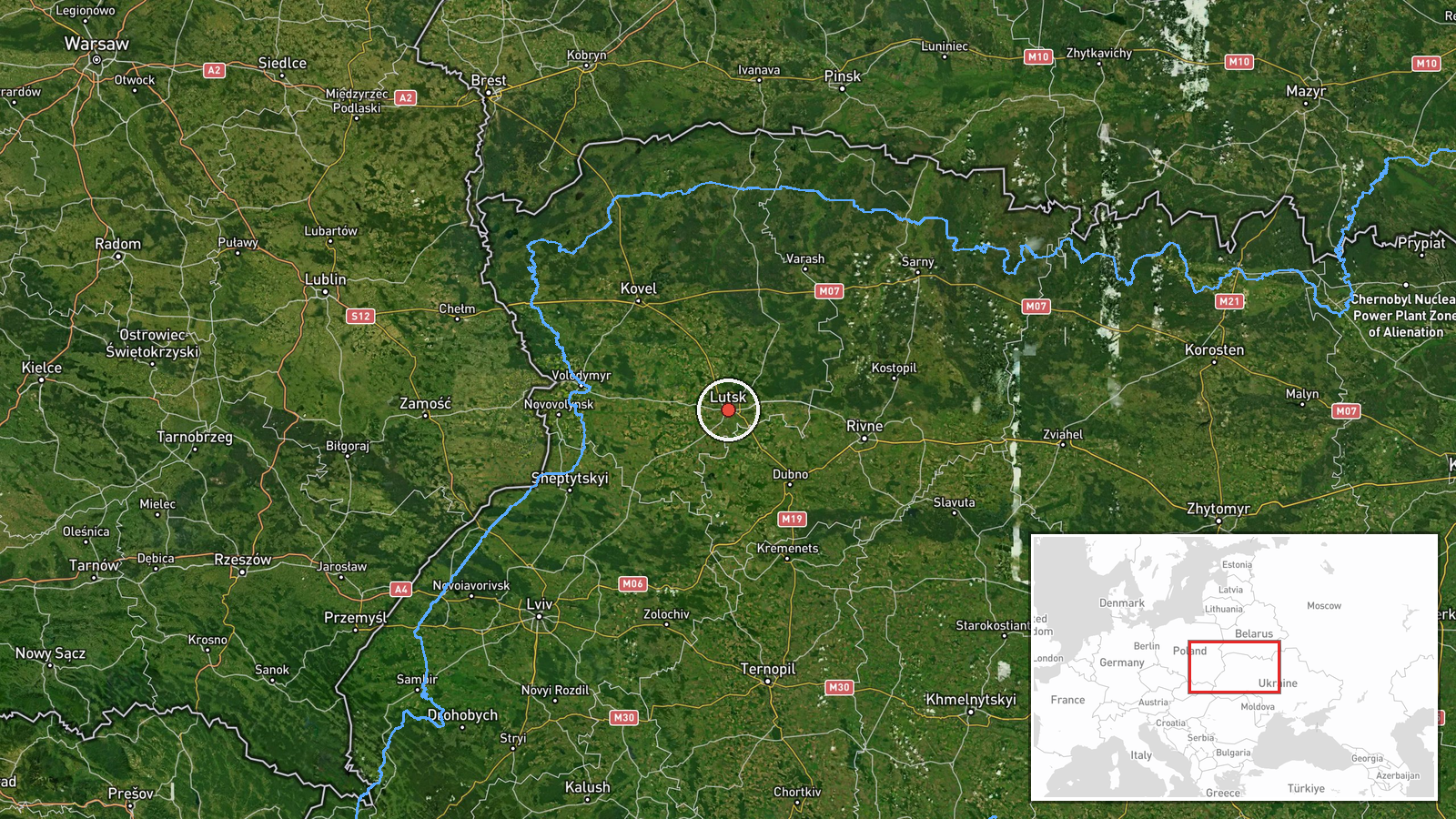
Ukrainian air monitoring detected a single Russian Shahed-136 jet-powered attack drone in transit over Lutsk, Volyn Oblast on 28 September at 18:37 UTC. The aircraft's altitude was consistent with typical Russian drone operations across Ukrainian airspace. The report came from a Ukrainian military air monitoring channel on Telegram. No strike or engagement is mentioned in the available data.
Context and assessment
Lutsk, the regional capital of Volyn Oblast in northwestern Ukraine near the Polish border, has been a repeated target of Russian drone strikes throughout the conflict. The detection of this transit drone reflects Russia's continued campaign of systematic attacks using Shahed-136 kamikaze drones against Ukrainian infrastructure and civilian areas. Related reports from the same monitoring network documented similar drone transits over nearby Rivne Oblast the previous evening, suggesting a pattern of Russian drone operations across the northwestern region. Such transit detections typically precede or accompany broader strike waves against Ukrainian targets.
Sources and confidence
Single source: Telegram channel @war_monitor, which appears to aggregate Ukrainian air defence alerts. No cross-confirmation from other monitoring networks is evident in the provided data. Confidence score of 6.0 reflects the single-source reporting and lack of secondary verification. Confirmation from additional Ukrainian official channels or visual evidence would raise confidence; absence of any Ukrainian air defence engagement claim slightly lowers the reliability assessment.
Location
Lutsk city, Volyn Oblast, northwestern Ukraine, determined at regional precision. Located approximately 80 kilometres from the Polish border and roughly 150 kilometres north of Rivne. Situated on the Styr River in historically significant northwestern Ukrainian territory. No specific facility or precise coordinates provided; detection was airspace-based rather than ground-located.
Related events nearby
- Ukrainian air monitoring detected one Russian jet-powered Shahed-variant (reactive) UAV in transit toward Rivn2026-09-27 19:31 UTC · Drone Transit · Rivne, Rivne Oblast, Ukraine
▶ View this event on the live map
Intel Mapper aggregates open-source reports from monitored Telegram and X channels, geolocates them, cross-checks duplicates across sources and assigns a confidence score. Entries are updated as new confirmations arrive. Read how we verify events.