Russia strikes Kyiv Reservoir with ballistic missiles amid overnight drone assault
What happened
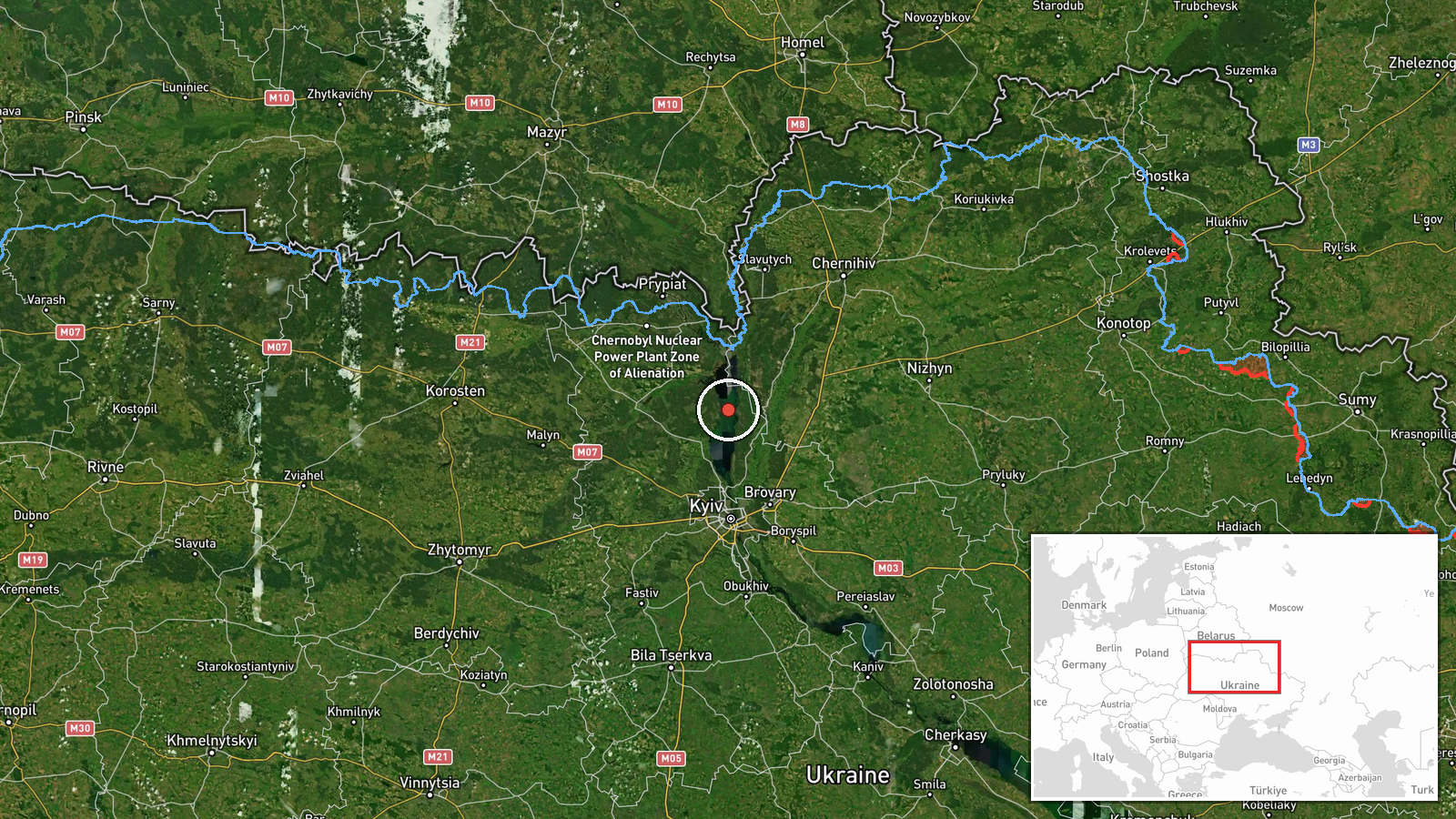
Russian forces reportedly launched two short-range ballistic or cruise missiles over the Kyiv Reservoir in Kyiv Oblast during an overnight air raid on 4 October. Ukrainian air monitoring simultaneously detected multiple Shahed-136 reactive drones transiting across the region. The attack occurred as part of a sustained air campaign; related reports from the same period document individual Shahed-136 drones detected crossing Troieshchyna District, Bucha, Brovarskyi District, and areas near Pohreby.
Context and assessment
The Kyiv Reservoir, a major freshwater and industrial asset north of the capital, has remained a recurring target in Russia's air campaign against Ukrainian infrastructure. Ballistic missile strikes paired with drone transit activity suggests a multi-vector assault pattern designed to overwhelm air defenses or target specific infrastructure nodes. The concentration of related drone detections across northwestern Kyiv Oblast and Kyiv city proper over the preceding hours indicates either a coordinated attack wave or sustained reconnaissance-strike activity. Such patterns typically reflect attempts to degrade energy facilities, water supply, or military logistics hubs serving the capital region.
Sources and confidence
Single-source reporting from Telegram channel @war_monitor, which aggregates Ukrainian air defense and reconnaissance data. No independent cross-confirmation visible in provided data. Confidence score of 6.0 reflects typical reliability of Ukrainian official monitoring channels but absence of secondary source corroboration. Confirmation by Ukrainian Ministry of Defense or multiple independent channels would elevate confidence; Russian denial or contradictory reports would lower it.
Location
Kyiv Reservoir, located approximately 20 kilometers north of central Kyiv in Kyiv Oblast. The reservoir straddles the Dnieper River and serves as a critical water supply and industrial asset for the capital region. Geographic precision is regional rather than point-specific, indicating the attack area rather than a pinpoint strike location.
Related events nearby
- One Russian reactive (jet-powered) Shahed-136 drone detected transiting from Dimер toward Kyiv during overnigh2026-10-04 07:30 UTC · Drone Transit · Dimer, Kyiv Oblast, Ukraine
- One Russian Shahed-136 reactive drone detected transiting from Pohrebi over Troieshchyna District, Kyiv, headi2026-10-04 00:00 UTC · Drone Transit · 🅿 Pohreby, Dali Kurs Troieshchyna, Ukraine
- One Russian Shahed-136 reactive (jet-powered) drone detected transiting past Zazymiia in the direction of Pohr2026-10-04 07:19 UTC · Drone Transit · Pohreby, Ukraine
- Russian Shahed-136 reactive (jet-powered) drone detected transiting toward Kyiv/Troieshchyna area. Part of ong2026-10-04 08:31 UTC · Drone Transit · Troieshchyna, Kyiv, Ukraine
- One Russian reactive/jet-powered drone (Shahed-136 variant) detected transiting over Troieshchyna District, Ky2026-10-03 22:38 UTC · Drone Transit · Troieshchyna District, Kyiv, Ukraine
▶ View this event on the live map
Intel Mapper aggregates open-source reports from monitored Telegram and X channels, geolocates them, cross-checks duplicates across sources and assigns a confidence score. Entries are updated as new confirmations arrive. Read how we verify events.