Ukrainian monitors report Shahed-136 drones transiting toward Kyiv Oblast overnight
What happened
Ukrainian air monitoring detected Russian Shahed-136 unmanned aerial vehicles in transit toward Kyiv Oblast during an overnight air raid alert on October 4. The report, issued via Telegram channel @war_monitor at 07:48 UTC, describes jet-powered drones moving through the region. The specific entry point and intended target were not detailed in the available monitoring data.
Context and assessment
The detection fits a sustained pattern of Russian drone operations against Kyiv Oblast spanning the past 24 hours. Related reports from October 3–4 document at least five separate Shahed-136 transits across Brovarskyi District and central Kyiv, alongside ballistic missile activity (Iskander or Kinzhal variants) striking western sectors. Shahed-136s, Iranian-supplied loitering munitions with effective ranges of 1,500–2,500 km, have become a signature tool in Russian strikes on Ukrainian infrastructure and civilian areas. The frequency and distribution of overnight transits suggest systematic pressure on the capital region, though immediate strike confirmation remains pending.
Sources and confidence
Single source: Telegram channel @war_monitor, a Ukrainian military monitoring outlet. No cross-confirmation from official Ukrainian Air Force statements or Western intelligence in the provided data. Confidence score of 6.0 reflects limited corroboration; confirmation via official Ukrainian military updates or subsequent damage reports would raise confidence. Secondary sources or video evidence would strengthen assessment.
Location
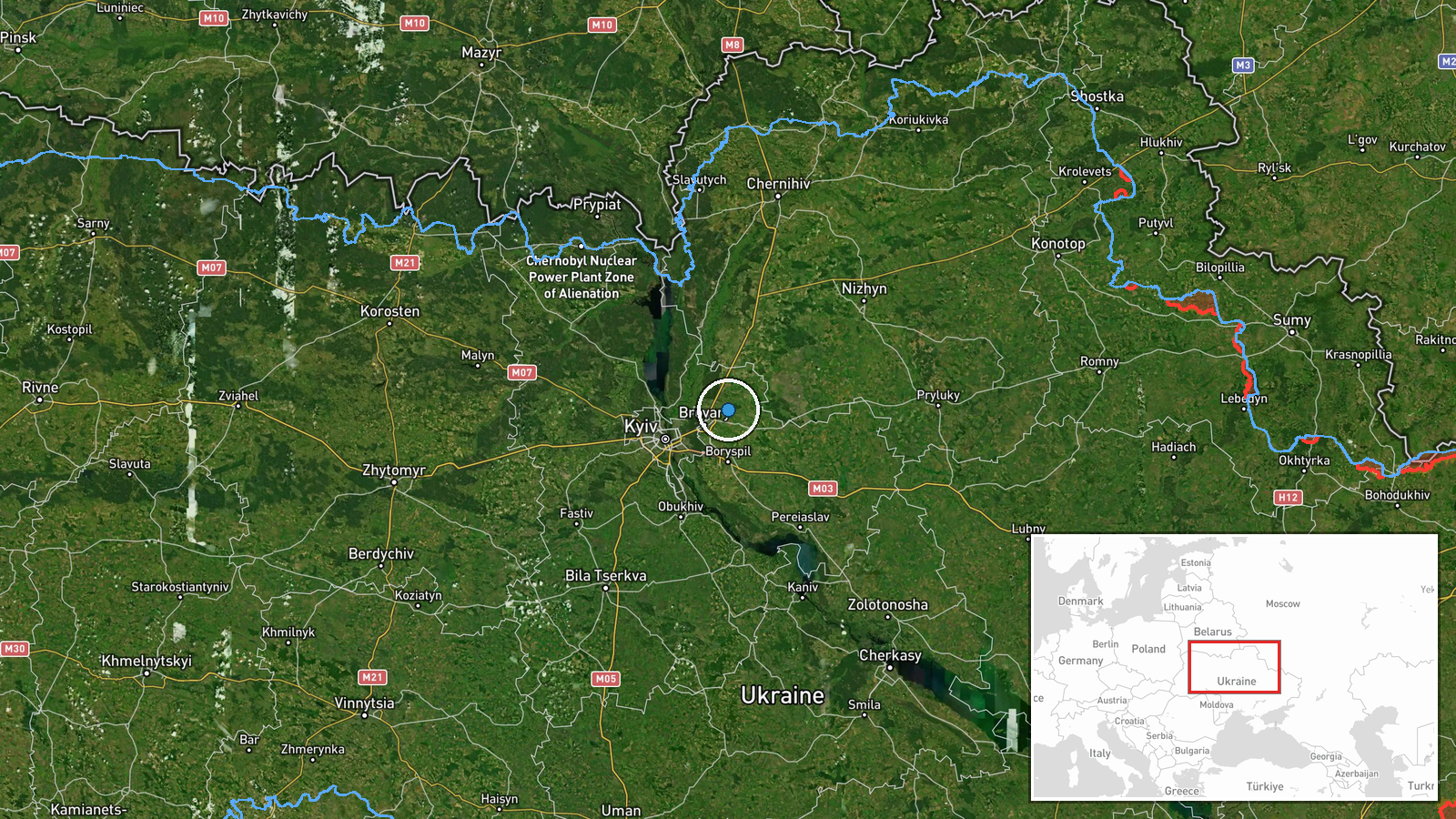
Kyiv Oblast, northeastern Ukraine, determined by Ukrainian air monitoring systems at regional precision (latitude 50.578, longitude 30.951). The oblast encompasses the capital's immediate hinterland, including Brovarskyi and Pecherskyi districts. Nearby features include the Dnipro River and extensive civilian-populated zones around metropolitan Kyiv.
Related events nearby
- One Russian reactive (jet-powered) Shahed-136 drone detected transiting from Zhytomyr Oblast toward Kyiv Oblas2026-10-04 07:48 UTC · Drone Transit · Kyiv Oblast, Ukraine
- Russian ballistic missiles (2 units, likely Iskander or Kinzhal) transited over Ivankiv in Kyiv Oblast with we2026-10-03 19:22 UTC · UAS Strike · Kyiv Oblast, Ukraine (western sector)
- One Russian reactive/jet-powered drone (Shahed-136 variant) detected transiting over Brovarskyi District, Kyiv2026-10-03 22:33 UTC · Drone Transit · Brovarskyi District, Kyiv Oblast, Ukraine
- One Russian reactive/jet-powered drone (Shahed-136 variant) transiting from Bobrovytsya toward Brovarskyi Dist2026-10-03 22:28 UTC · Drone Transit · Brovarskyi District, Kyiv Oblast, Ukraine
- One Russian Shahed-136 reactive drone detected transiting from Pohrebi over Troieshchyna District, Kyiv, headi2026-10-04 00:00 UTC · Drone Transit · 🅿 Pohreby, Dali Kurs Troieshchyna, Ukraine
▶ View this event on the live map
Intel Mapper aggregates open-source reports from monitored Telegram and X channels, geolocates them, cross-checks duplicates across sources and assigns a confidence score. Entries are updated as new confirmations arrive. Read how we verify events.