Russian Kalibr cruise missile tracked toward Kamyanske in Dnipropetrovsk Oblast
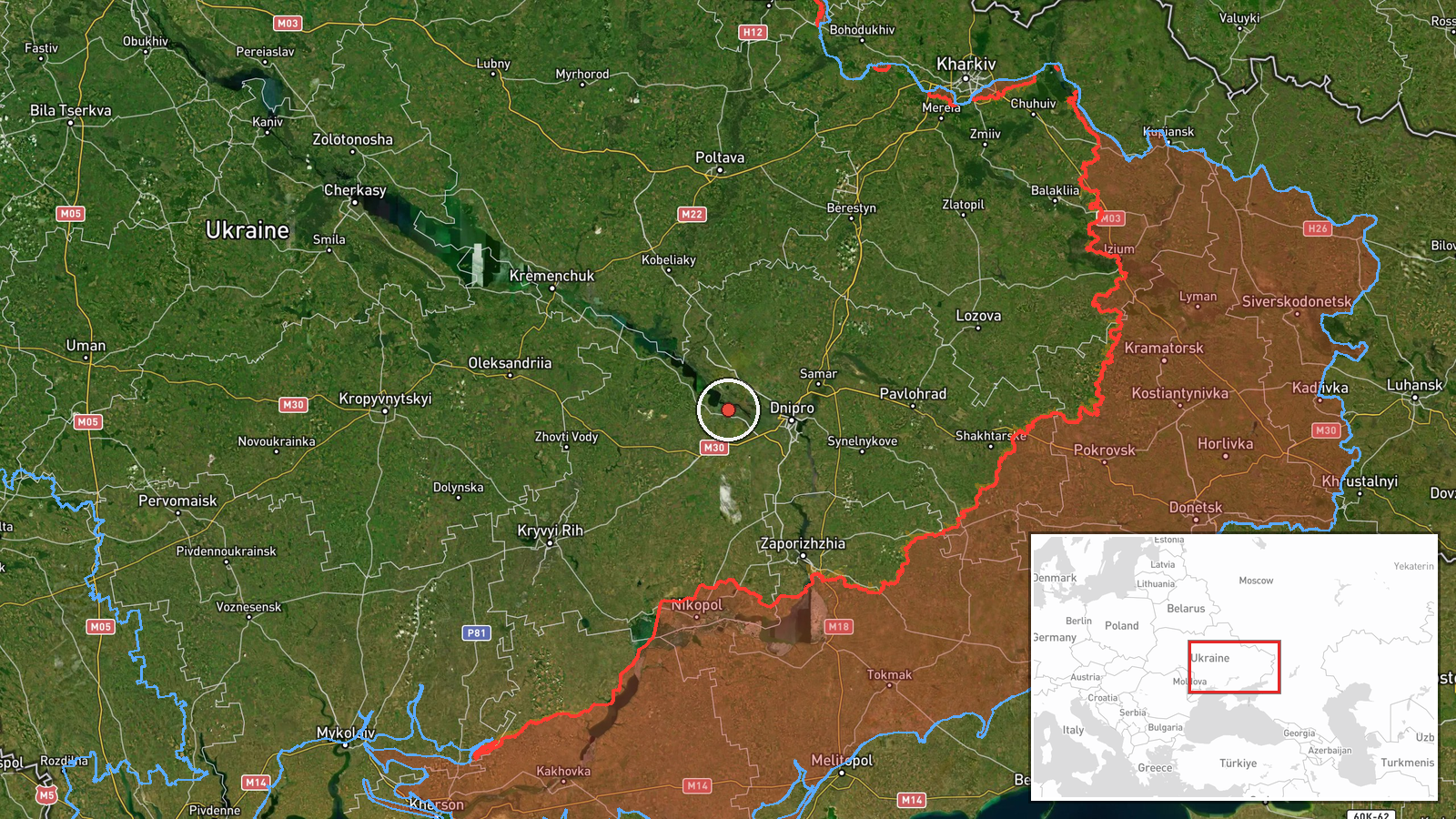
What happened
Ukrainian air monitoring reportedly detected one Russian Kalibr cruise missile heading toward Kamyanske on the morning of October 7, 2026, at approximately 01:49 UTC. The report, originating from the Telegram channel @war_monitor, describes the missile as part of a two-group formation. Kamyanske is a major industrial city in Dnipropetrovsk Oblast in southeastern Ukraine. No immediate information on interception, impact, or damage was provided in the initial monitoring report.
Context and assessment
Kamyanske hosts significant metallurgical and chemical industry infrastructure, making it a recurrent target in the Russian campaign. The detection occurs amid an intense overnight strike wave, with related reports confirming multiple ballistic missiles over nearby Dnipro in the same period (between 00:18 and 00:27 UTC), followed by at least one additional Kalibr report over Dnipro at 01:50 UTC, one minute after the Kamyanske alert. This pattern suggests a coordinated, multi-location cruise and ballistic missile attack across the region, consistent with Russian employment of these systems against Ukrainian industrial and urban centers in central and eastern Ukraine.
Sources and confidence
Report sourced from Telegram channel @war_monitor only; no corroborating confirmation from other open-source channels is indicated. Confidence score of 6.0 reflects single-source reporting, though Ukrainian air monitoring channels are generally consistent with subsequent impact reports. Confirmation would be elevated by independent Ukrainian military statements, multiple channel reports, or verified impact imagery.
Location
Kamyanske, a city of approximately 70,000 in Dnipropetrovsk Oblast, lies along the Dnieper River in southeastern Ukraine. The settlement is situated roughly 80 kilometers south of the regional capital Dnipro and serves as a major industrial hub. Geographic precision is marked as high, based on settlement-level identification rather than specific coordinates.
Related events nearby
- Ukrainian air monitoring: 1 Russian Kalibr cruise missile over Dnipro.2026-10-07 01:50 UTC · Cruise Missile · Dnipro, Ukraine
- Ukrainian air monitoring: 1 Russian ballistic missile over Dnipro.2026-10-07 00:27 UTC · Ballistic Missile · Dnipro, Ukraine
- Ukrainian air monitoring: 1 Russian ballistic missile over Dnipro.2026-10-07 00:20 UTC · Ballistic Missile · Dnipro, Ukraine
- Ukrainian air monitoring: 1 Russian ballistic missile over Dnipro.2026-10-07 00:18 UTC · Ballistic Missile · Dnipro, Ukraine
- Ukrainian air monitoring confirms ongoing Russian ballistic missile threat over Dnipro. Multiple ballistic mis2026-10-07 00:27 UTC · Ballistic Missile · Dnipro, Dnipropetrovsk Oblast, Ukraine
▶ View this event on the live map
Intel Mapper aggregates open-source reports from monitored Telegram and X channels, geolocates them, cross-checks duplicates across sources and assigns a confidence score. Entries are updated as new confirmations arrive. Read how we verify events.