Russian Shahed-type drone transits over Kyiv suburb of Korchuvate
What happened
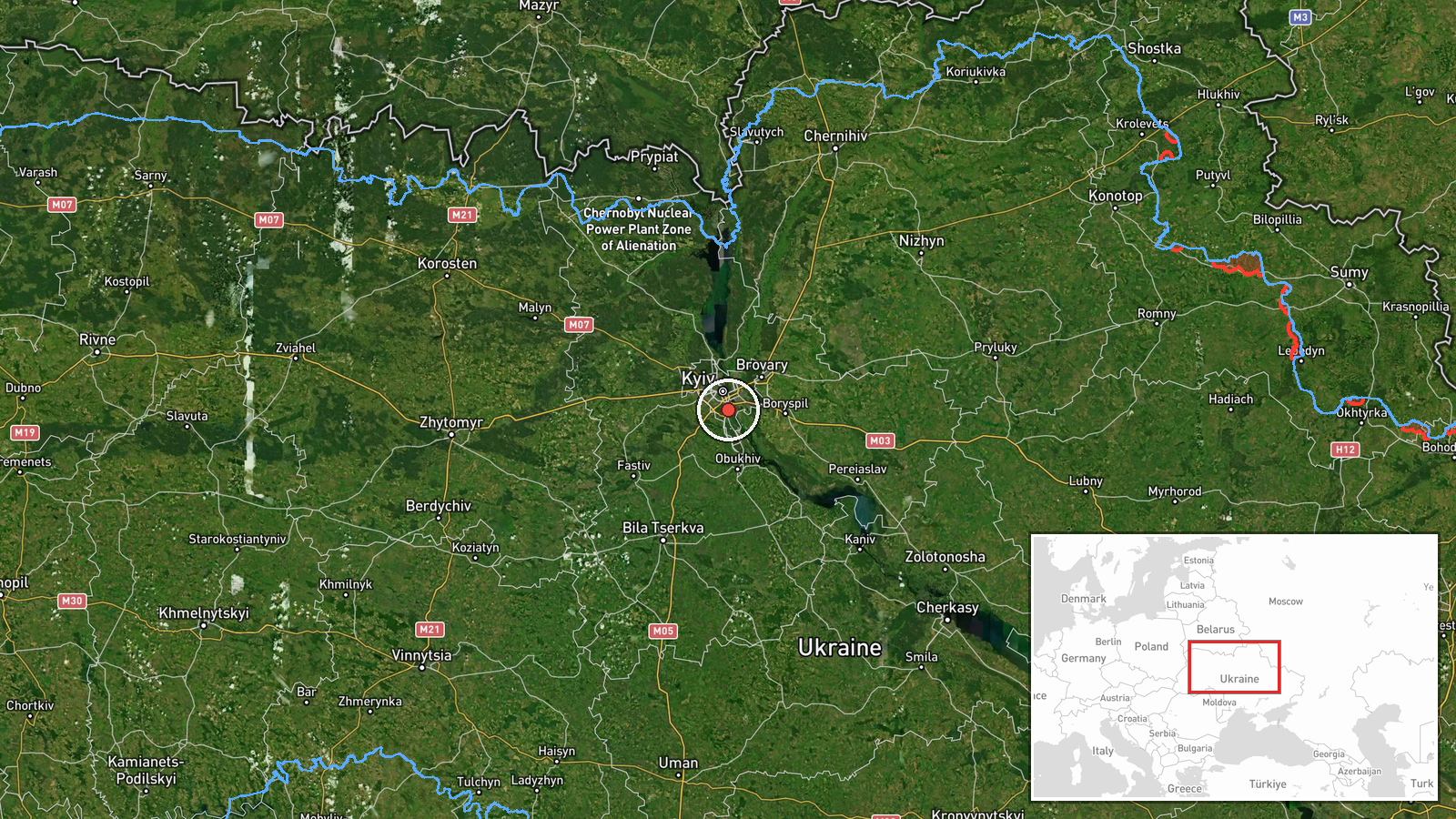
Ukrainian air monitoring detected one Russian Shahed-type drone over Korchuvate, a suburb northeast of central Kyiv, on the morning of October 8 at 06:16 UTC. The channel @war_monitor reported the transit without specifying whether the drone was intercepted, diverted, or proceeded toward a target. This marks a continuation of Russian drone activity over the capital after overnight strikes and earlier propaganda operations on October 7.
Context and assessment
Kyiv has faced sustained Russian drone operations throughout October, with overnight strikes on October 6–7 reportedly destroying or neutralizing 161 targets including cruise and ballistic missiles. Earlier on October 7, Russian forces flew Geran-4 drones bearing Putin portraits over the city, indicating concurrent psychological operations alongside kinetic strikes. Korchuvate's location on the northeastern approaches to Kyiv places it within the typical ingress corridor for Russian aerial attack vectors. The single-source detection of this transit suggests ongoing Ukrainian air defense monitoring, though the drone's ultimate disposition remains unclear.
Sources and confidence
Reported by Telegram channel @war_monitor only, with no cross-confirmation from Ukrainian military officials or independent sources noted. Confidence score of 6.0 reflects single-source validation and lack of secondary confirmation. Additional reports from official Ukrainian General Staff statements or multiple independent channels would strengthen confidence; absence of air raid alert data or interception claims would lower it.
Location
Korchuvate is a settlement in Kyiv's northeastern suburbs, approximately 12 kilometers northeast of central Kyiv. The location is determined to settlement precision based on Ukrainian air monitoring reports. The area sits near the capital's outer residential belt and represents a typical approach vector for Russian cruise and loitering munitions targeting the capital region.
Related events nearby
- Russian Geran-4 jet-powered drone flew over Kyiv with a portrait of Vladimir Putin painted on its underside, r2026-10-07 17:14 UTC · Drone Transit · Kyiv, Kyiv Oblast, Ukraine
- Russian Geran-4 jet-powered drone flew over Kyiv with a portrait of Vladimir Putin painted on its underside. I2026-10-07 16:51 UTC · Drone Transit · Kyiv, Kyiv Oblast, Ukraine
- Ukrainian MiG-29 fighter jet downed a Russian kamikaze drone over Kyiv using close-range cannon fire. Pilot su2026-10-07 12:51 UTC · Drone Shootdown · Kyiv, Kyiv Oblast, Ukraine
- Ukrainian air monitoring: 1 Russian jet-powered Shahed (Geran-3) drone heading toward Kyiv.2026-10-08 06:15 UTC · Drone Transit · Kyiv, Ukraine
- NATO Military Committee held first meeting in Ukraine in 8 years on October 6. All 32 member nations' military2026-10-07 18:09 UTC · Diplomacy · NATO HQ, Brussels, Belgium
▶ View this event on the live map
Intel Mapper aggregates open-source reports from monitored Telegram and X channels, geolocates them, cross-checks duplicates across sources and assigns a confidence score. Entries are updated as new confirmations arrive. Read how we verify events.