Ukrainian air defense intercepts ballistic missile threat over Kyiv
What happened
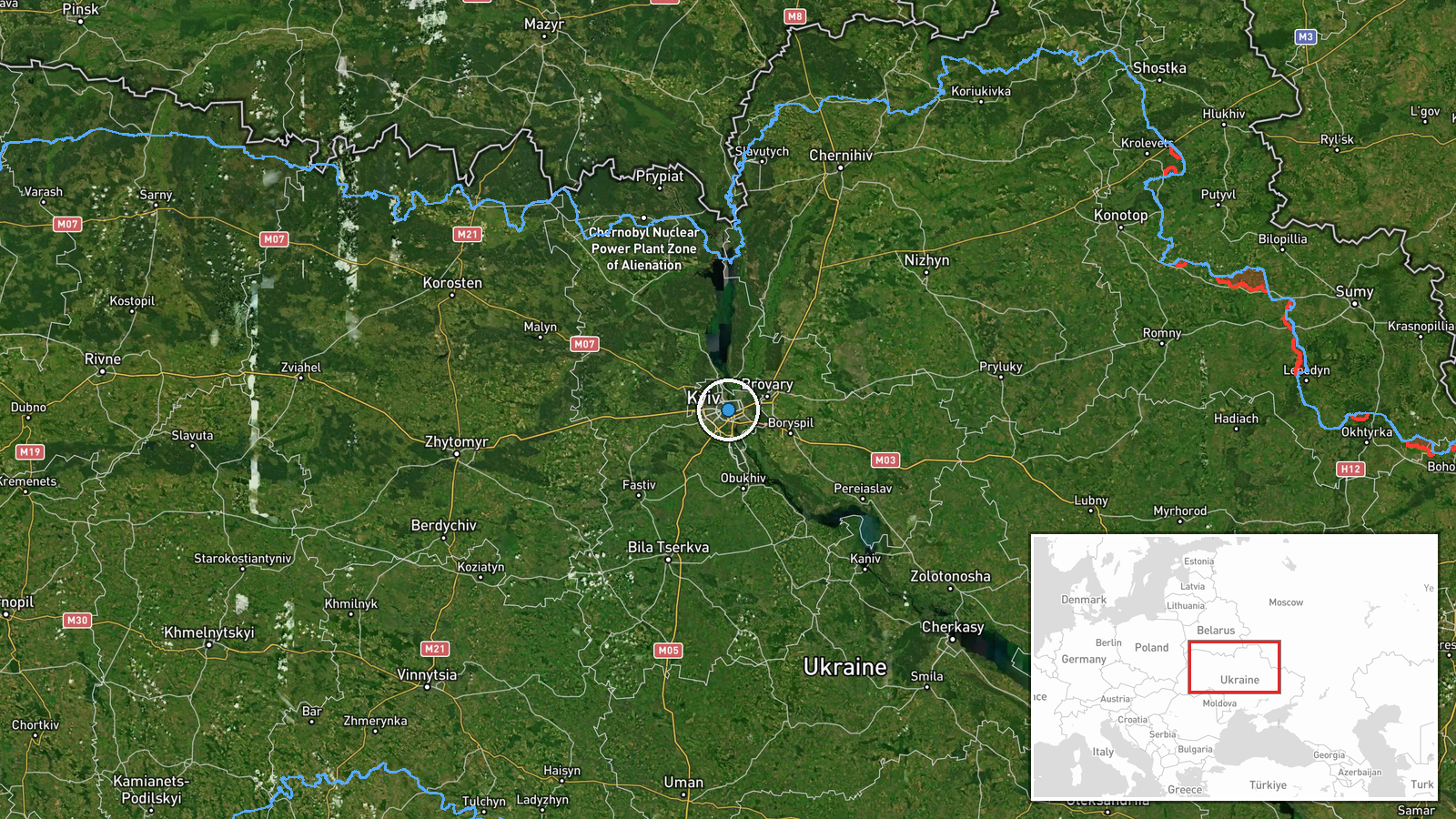
Ukrainian air defense forces reportedly repelled a ballistic missile threat over Kyiv on October 10 at 11:37 UTC, according to monitoring channels. The interception followed a series of inbound threats detected over the capital within the preceding half-hour, including at least one confirmed ballistic missile and a cruise missile (reportedly Zircon or Oniks type) passing through the Nizhyn approach corridor. Air raid alerts remained active as interception operations continued.
Context and assessment
Kyiv has faced sustained Russian strikes throughout 2026, with ballistic and cruise missiles forming a central component of Moscow's campaign against Ukrainian civilian and military infrastructure. The October 10 engagement reflects the ongoing pattern of multi-vector attacks on the capital, often launched in coordinated barrages designed to overwhelm air defenses. This particular sequence occurred amid broader Ukrainian policy statements reaffirming strikes on Russian energy infrastructure, suggesting potential escalation in the conflict's targeting calculus. Successful interceptions over Kyiv—while reducing direct impact—indicate continued strain on Ukrainian air defense resources.
Sources and confidence
Reported by Telegram channel @war_monitor. Single-source confirmation limits independent corroboration; the channel's monitoring reflects Ukrainian air defense alerts rather than independent strike verification. Confidence score of 6.0 reflects typical reliability of air defense acknowledgment channels but acknowledges lack of secondary confirmation. Cross-channel confirmation or official SBU/military statement would increase confidence; absence of damage or casualty reports may indicate successful interception.
Location
Kyiv city proper (50.4547°N, 30.5238°E), Ukraine's capital in central-northern Ukraine on the Dnieper River. Precision: settlement-level. Related inbound threats were tracked over Nizhyn to the northeast, indicating northerly approach corridors into the capital's defended airspace.
Related events nearby
- Ukraine reaffirms commitment to striking Russian oil refineries despite reported diesel agreement between Trum2026-10-10 11:17 UTC · Statement · Kyiv, Ukraine
- Ukrainian air monitoring: 1 Russian ballistic missile over Kyiv.2026-10-10 11:09 UTC · Ballistic Missile · Kyiv, Ukraine
- Ukrainian air monitoring: 1 Russian Zircon/Oniks missile passing Nizhyn, heading toward Kyiv.2026-10-10 11:07 UTC · Cruise Missile · Kyiv, Ukraine
- Ukrainian air monitoring confirms ongoing ballistic missile threat over Kyiv. Continuation of Russian overnigh2026-10-10 11:01 UTC · Ballistic Missile · Kyiv, Ukraine
- Ukrainian air monitoring: 1 Russian ballistic missile over Kyiv.2026-10-10 11:00 UTC · Ballistic Missile · Kyiv, Ukraine
▶ View this event on the live map

Intel Mapper aggregates open-source reports from monitored Telegram and X channels, geolocates them, cross-checks duplicates across sources and assigns a confidence score. Entries are updated as new confirmations arrive. Read how we verify events.