Single Russian ballistic missile reportedly tracked over Kyiv after cruise missiles approached from north
What happened
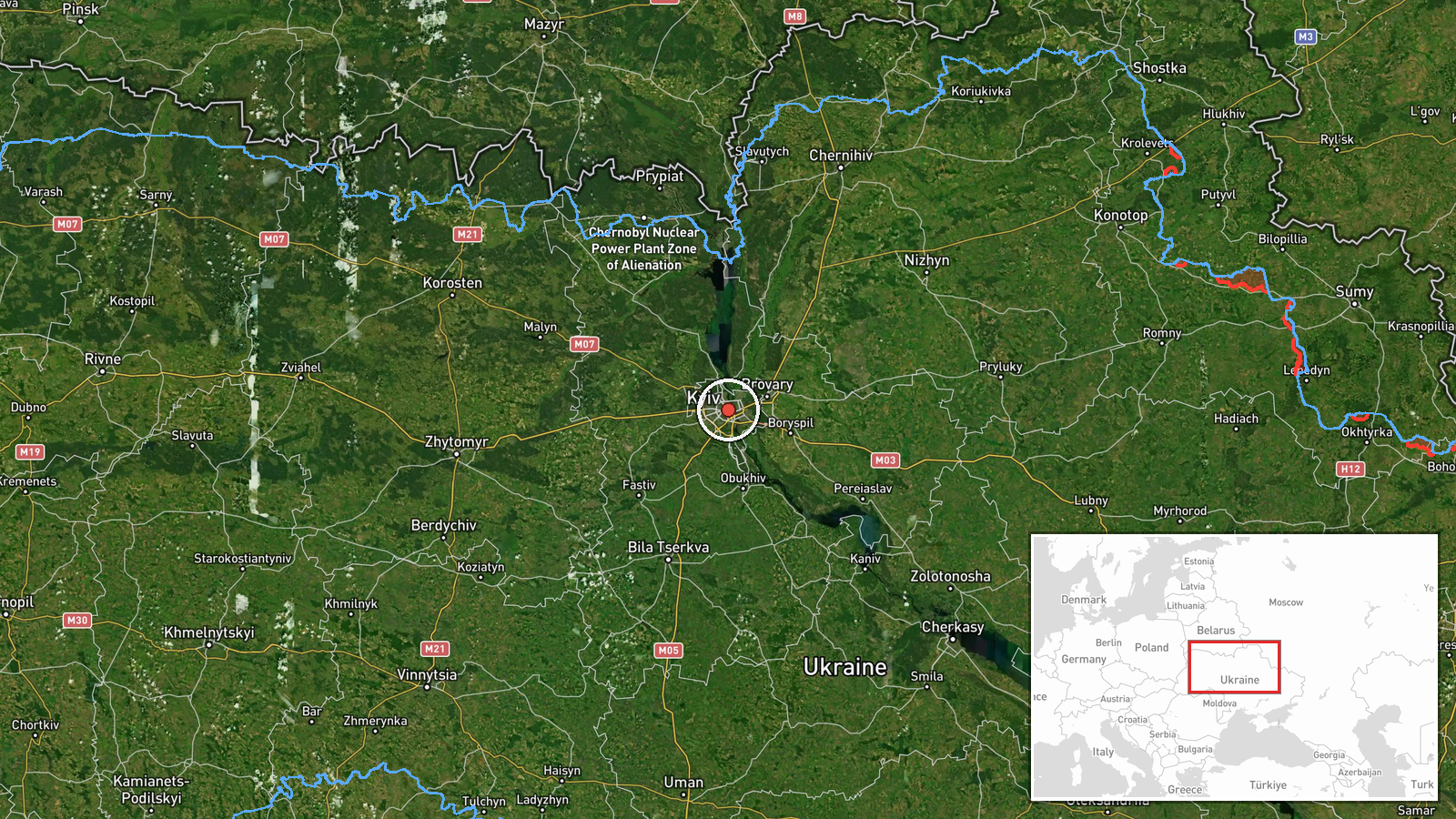
A Telegram channel, @war_monitor, reported at 00:09 UTC on 22 October 2026 that one Russian ballistic missile was over Kyiv. The post was a short Ukrainian-language alert reading roughly 'ballistics descending! 11th and 12th.' The wording is terse and does not clearly explain what the numbers refer to, so it may describe counted projectiles or alert sequence numbers rather than a separate second missile. The report names no impact site, casualties, or damage, and the channel is the only source for this entry. Related entries from the same monitoring stream describe Zircon or Oniks cruise missiles passing Baryshivka and Luben' between 23:00 and 23:00 UTC on 21 October, and Nizhyn shortly before 00:05 UTC on 22 October, each described as heading toward Kyiv. The ballistic report followed at 00:06 and 00:09 UTC.
Context and assessment
Kyiv is the national capital and seat of government, and its air defence and command infrastructure make it a recurring target for Russian long-range strikes. The sequence in the related events suggests a layered attack. Cruise missiles tracked from the north-east, moving through the Chernihiv and Kyiv oblasts, were followed minutes later by a ballistic missile reported over the city. A common interpretation of such patterns is that cruise missiles are sent first to draw interceptors and sensors, with ballistic missiles arriving in the same window to exploit reduced defensive capacity. This is a widely discussed pattern, but a single monitoring stream cannot confirm intent or targeting. The Zircon and Oniks designations are reported by Ukrainian monitors and are not independently verified here. Their role as land-attack weapons would make this route consistent with strikes on urban or infrastructure targets, though the data do not identify the intended target. Any further reports from the same window would be needed to establish whether the attack was concentrated or dispersed.
Sources and confidence
The entry rests on one Telegram channel, @war_monitor, which posts Ukrainian air-alert material and has no independent corroboration in the provided data. The confidence score of 6.0 reflects a single-source report with an ambiguous text, offset by a plausible sequence of related alerts from the same monitoring stream. Confidence would rise if Ukrainian Air Force statements, official city or military administration reports, or wire services confirmed the ballistic launch or its track over Kyiv. It would fall if the detection were attributed to a different event, if the numbers in the original post turned out to be unrelated, or if later official reporting did not mention a ballistic missile over the city.
Location
The coordinates place the event at the settlement level in central Kyiv, which is marked high confidence in the data. This precision indicates the city as a whole rather than a specific street or facility, since air-alert reports typically cover the city area and not an exact point. Kyiv sits on the right, or western, bank of the Dnipro River, with the wider river and its left-bank districts to the east. The city's high ground and dense built-up centre affect how alerts and debris are reported.
Related events nearby
- Russia launched fresh overnight missile attacks on Kyiv, injuring six people. Missiles struck homes and a petr2026-10-22 01:20 UTC · Ballistic Missile · Kyiv, Ukraine
- Ukrainian air monitoring: 1 Russian Zircon/Oniks missile passing Nizhyn, heading toward Kyiv.2026-10-22 00:33 UTC · Cruise Missile · Kyiv, Ukraine
- Ukrainian air monitoring: 1 Russian ballistic missile over Kyiv.2026-10-22 00:09 UTC · Ballistic Missile · Kyiv, Ukraine
- Ukrainian air monitoring: 1 Russian ballistic missile over Kyiv.2026-10-22 00:06 UTC · Ballistic Missile · Kyiv, Ukraine
- Ukrainian air monitoring: 2 Russian Zircon/Oniks missiles passing Nizhyn, heading toward Kyiv.2026-10-22 00:05 UTC · Cruise Missile · Kyiv, Ukraine
▶ View this event on the live map

Intel Mapper aggregates open-source reports from monitored Telegram and X channels, geolocates them, cross-checks duplicates across sources and assigns a confidence score. Entries are updated as new confirmations arrive. Read how we verify events.