Iran's military warns of escalating attacks on US naval vessels if blockade continues
What happened
Iran's military command issued a statement on September 5 warning that attacks against US military vessels in the Persian Gulf region will intensify if Washington maintains what it describes as a naval blockade. The threat was framed as a response to ongoing US naval pressure in the region. The statement was reported via Telegram channel @warmonitors and lacks attribution to a specific Iranian military official or branch.
Context and assessment
The warning reflects escalating rhetoric between Iran and the United States in the Persian Gulf, a strategically vital waterway through which roughly one-third of global seaborne petroleum passes. US naval presence in the region has long been a flashpoint in Iran-US tensions. This statement comes amid a series of Iranian political communications, including criticism from Tehran's Foreign Ministry of US support for Israeli military actions and claims from US President Trump regarding American military capabilities against Iranian targets. The threat language suggests Iranian military officials are responding to perceived US pressure, though the specific nature of the alleged blockade remains unclear from available reporting.
Sources and confidence
Reported by a single Telegram channel (@warmonitors) with no cross-confirmation from established news agencies or Iranian state media. The low confidence score of 6.0 reflects single-source reporting and lack of direct attribution to named Iranian officials. Confidence would increase substantially with confirmation from Reuters, AP, or Iranian state news outlets, or with a named military commander issuing the warning.
Location
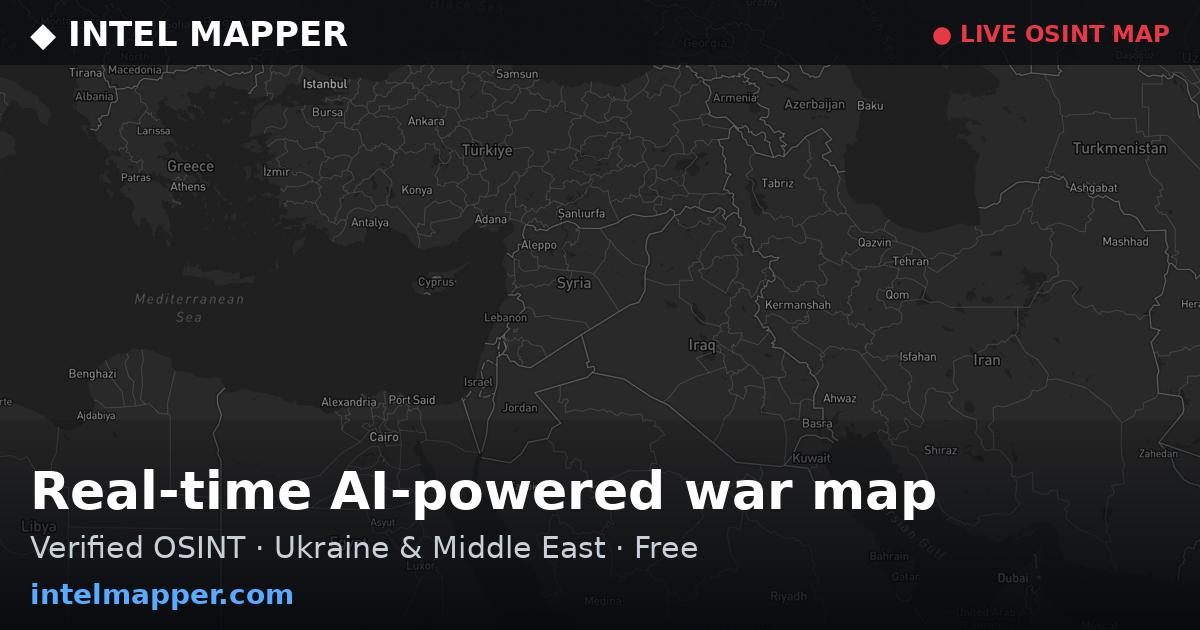
Tehran, Iran, the capital and seat of Iran's government and military command structures. The statement originated from Iranian military leadership based in the capital but addresses the Persian Gulf region to the south, a body of water bounded by Iran, Saudi Arabia, the UAE, Qatar, Bahrain, Kuwait, and Iraq, approximately 1,000 kilometers from Tehran.
Related events nearby
- Iran's Border Guard Commander declares readiness to counter any threats and states forces will not permit even2026-09-06 11:37 UTC · Statement · Tehran, Iran
- IRGC releases footage claiming monitoring and interception of vessels in Strait of Hormuz, warning of targetin2026-09-05 20:58 UTC · Statement · Tehran, Iran
▶ View this event on the live map
Intel Mapper aggregates open-source reports from monitored Telegram and X channels, geolocates them, cross-checks duplicates across sources and assigns a confidence score. Entries are updated as new confirmations arrive. Read how we verify events.