Russian drone attack reported on Kyiv; explosions heard across capital
What happened
Explosions were reportedly heard across Kyiv on the evening of 29 September 2026 as Russian forces conducted a large-scale unmanned aerial attack on the Ukrainian capital. Multiple drones targeted the city, with impacts and casualty figures still under assessment at the time of reporting. The attack follows a sustained pattern of Russian drone operations against Kyiv over recent days.
Context and assessment
Kyiv, Ukraine's largest city and seat of government, remains a priority target for Russian air operations throughout the conflict. This attack represents the latest in an intensive sequence: overnight on 28–29 September, Ukrainian air defenses reported intercepting over 100 Russian drones and missiles, including Shahed-136 kamikaze unmanned aircraft, Iskander-M ballistic missiles, and cruise weapons. Drone transits over Kyiv and surrounding areas in Kyiv Oblast have been consistently detected in preceding hours. The sustained frequency and scale of these attacks suggest Russia maintains an operational focus on degrading Ukrainian air defenses and striking civilian and military infrastructure in and around the capital.
Sources and confidence
Reported by Telegram channel @warmonitors. Currently sourced from a single channel with no cross-confirmation visible in available data. Confidence level of 6.0 reflects the preliminary nature of the report and lack of corroboration. Confirmation from Ukrainian official sources or multiple independent channels would strengthen confidence; detailed casualty or damage figures from verified sources would raise confidence further.
Location
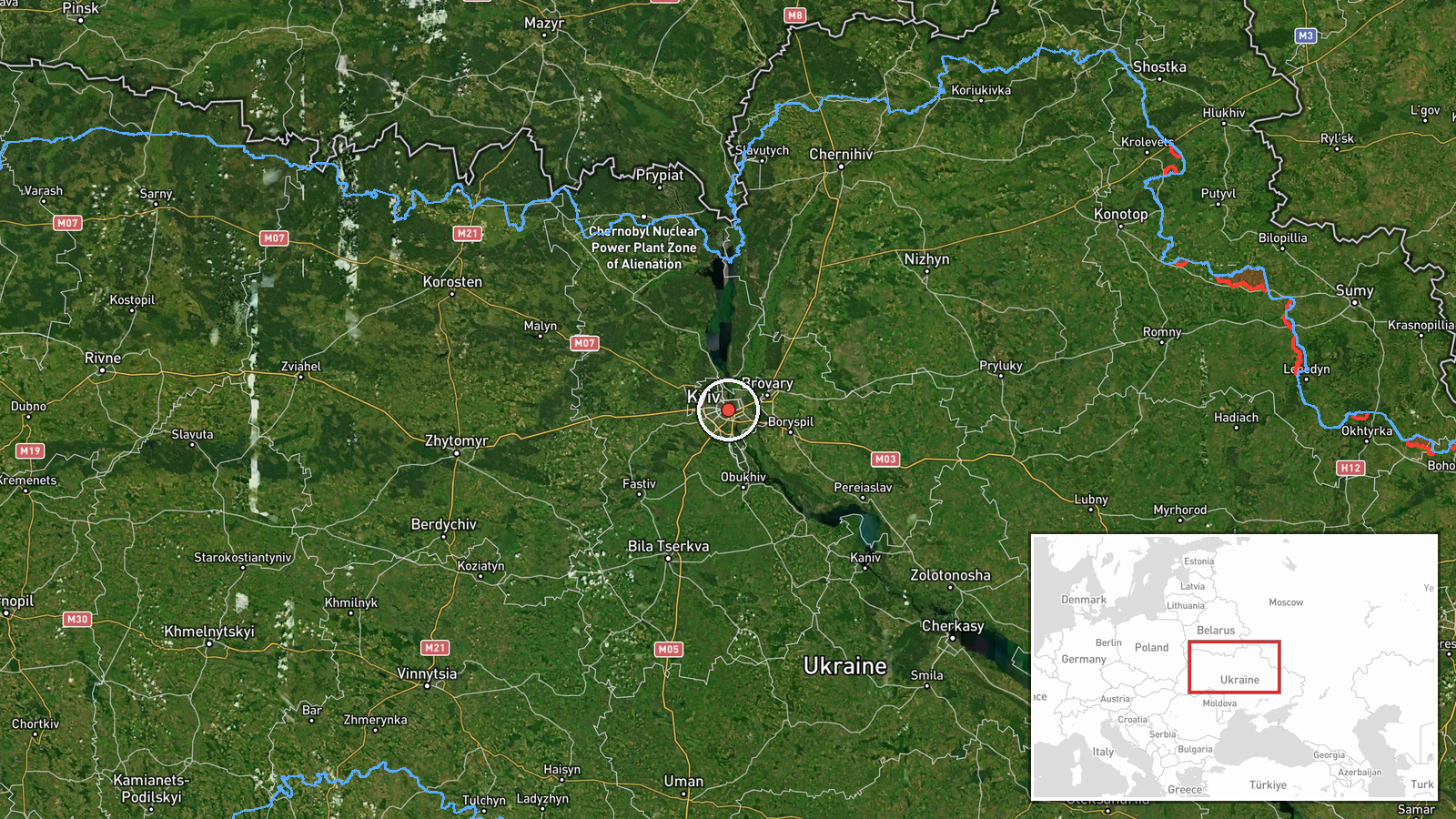
Kyiv city proper, located at the confluence of the Dnieper River in north-central Ukraine. Precision: settlement-level. The capital remains under Ukrainian control and is regularly targeted by Russian stand-off weapons launched from distant positions. Related drone transits detected over northern Kyiv districts (Osokorky, Zvirynets) and nearby areas (Bucha) in the hours preceding this attack.
Related events nearby
- Asian volunteer fighters serving in Ukrainian forces. Report documents non-Ukrainian combatants fighting along2026-09-29 14:55 UTC · Deployment · Kyiv, Ukraine
- Russian forces conducted massed drone attack on night of 28–29 September 2026: 100+ Shahed-136 reactive (jet-p2026-09-29 05:52 UTC · UAS Strike · Kyiv, Kyiv City, Ukraine
- Ukrainian air defenses intercepted 109 Russian targets in overnight attack of Sept 28-29: 1 Zircon/Onyx cruise2026-09-29 05:26 UTC · Air Defense · Kyiv, Kyiv City, Ukraine
- Ukrainian air monitoring reports Russian drone transits over Kyiv: 1 drone at Osokorky (1km), 1 drone at Zviry2026-09-29 18:17 UTC · Drone Transit · Livoberezhny Massif, Kyiv, Ukraine
- Ukrainian air monitoring reported Shahed-136 reactive kamikaze drones transiting over Kyiv Oblast through end 2026-09-29 08:13 UTC · Drone Transit · Kyiv Oblast, Ukraine
▶ View this event on the live map
Intel Mapper aggregates open-source reports from monitored Telegram and X channels, geolocates them, cross-checks duplicates across sources and assigns a confidence score. Entries are updated as new confirmations arrive. Read how we verify events.