Saudi coalition destroys two Houthi ballistic missiles over Asir province
What happened
The Saudi-led coalition reported successfully intercepting and destroying two ballistic missiles fired by Houthi forces toward Khamis Mushait in Asir province on October 13. According to the coalition statement, air defense systems neutralized both projectiles with no reported damage or casualties resulting from the attack. The interception occurred in the early morning hours local time.
Context and assessment
Khamis Mushait hosts significant Saudi military infrastructure, including air bases and command facilities, making it a recurring target for Houthi drone and missile strikes. The attack reflects the ongoing pattern of Iranian-aligned Houthi forces testing Saudi air defenses across southern and western Saudi territory. Such intercepts are frequently reported by coalition sources, though independent verification remains limited. The persistence of these strikes despite years of coalition air campaigns suggests either sustained Houthi capability or evolving tactical approaches, though reported interception rates remain high according to official Saudi statements.
Sources and confidence
Report sourced from Telegram channel @warmonitors with no corroborating independent confirmation noted. Single-source reporting at this confidence level reflects reliance on coalition statements, which routinely claim successful air defense engagement. Confidence score of 6.0 reflects moderate reliability based on source type and lack of cross-confirmation. Verification would benefit from independent satellite imagery, third-party monitoring, or Houthi statements regarding mission outcome.
Location
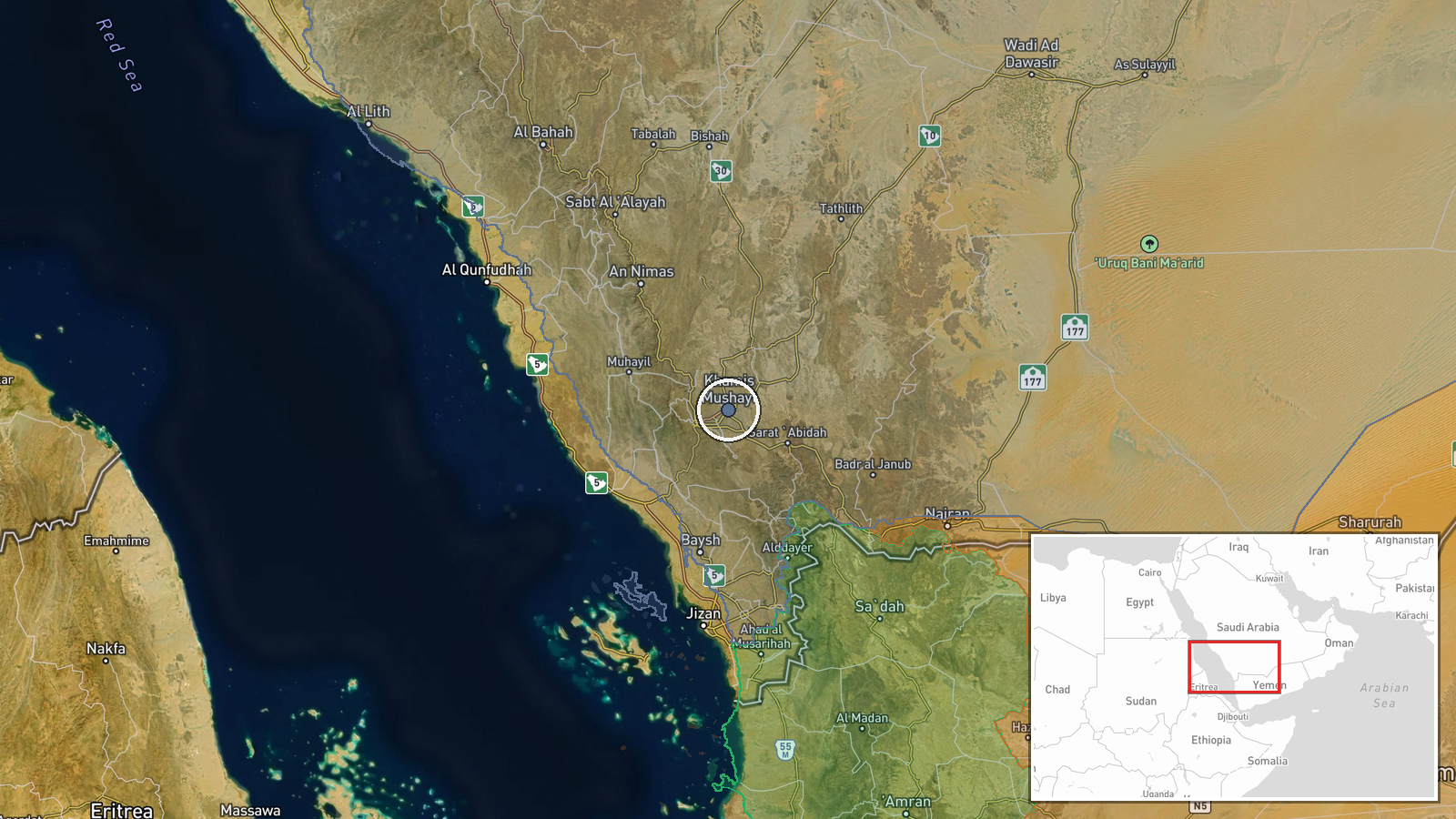
Khamis Mushait is a city in Asir province in southwestern Saudi Arabia near the Yemen border, approximately 870 kilometers south of Riyadh. The settlement serves as a major military hub. Geo-precision is set at settlement level with high confidence based on explicit naming in reports. The location sits in mountainous terrain near established Houthi missile launch zones.
▶ View this event on the live map

Intel Mapper aggregates open-source reports from monitored Telegram and X channels, geolocates them, cross-checks duplicates across sources and assigns a confidence score. Entries are updated as new confirmations arrive. Read how we verify events.