Russia strikes Kyiv-area airports as U.S. diplomatic delegation diverts to rail route
What happened
Russia conducted overnight airstrikes on airports near Kyiv that were reportedly designated as landing sites for a U.S. diplomatic delegation, according to a report from social media channel @WarMonitor3. The strikes forced the American visitors to travel by train from Poland instead. Ukrainian President Zelensky separately confirmed that Russian military action prevented the delegation's planned air arrival, requiring them to use alternative transport to reach the capital.
Context and assessment
Kyiv's airports—particularly Boryspil, the capital's primary civilian hub—remain strategic targets for Russian air operations given their role in military resupply and potential diplomatic movements. The timing coincides with an apparent diplomatic initiative involving U.S. envoys Kushner and Witkoff, suggesting Russia may be attempting to disrupt high-level peace talks or raise costs on Western engagement. This fits a pattern of Russian airstrikes on Kyiv infrastructure observed on September 5–6, alongside intelligence assessments that Russia is preparing larger strikes on energy facilities. The incident also follows Zelensky's conditional 72-hour ceasefire proposal, indicating Russia may be signaling rejection through military pressure.
Sources and confidence
Reported by @WarMonitor3 on X, with corroborating confirmation from President Zelensky's own statement on the same date. Single-source reporting on the airstrike itself lowers confidence to 6.0 (moderate), though the underlying diplomatic context is substantiated by Ukrainian official channels. Confirmation from U.S. or NATO officials, or detailed damage assessment, would strengthen confidence.
Location
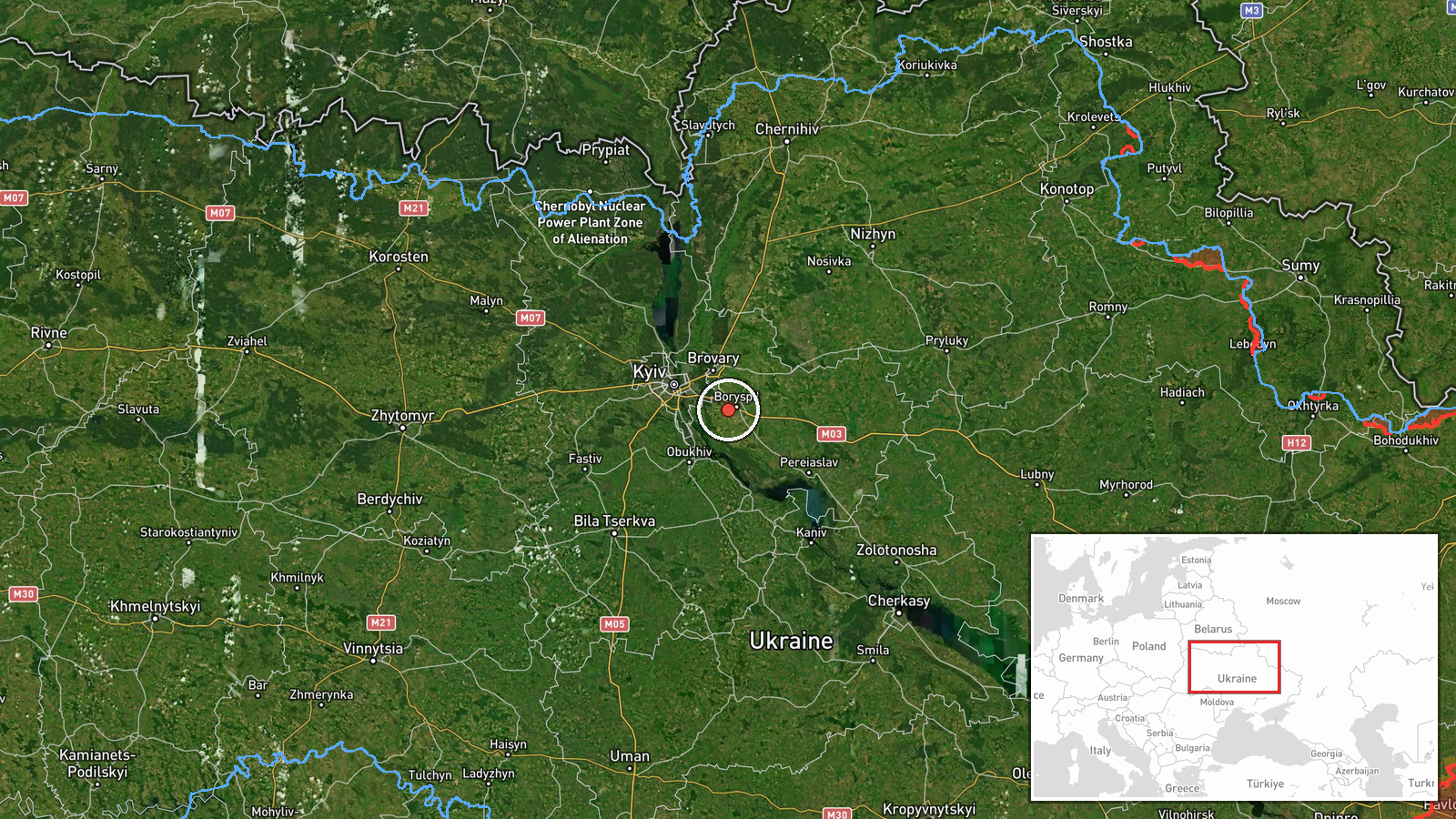
Kyiv Boryspil Airport (Zhulhany), located approximately 29 kilometers southeast of central Kyiv in Kyiv Oblast. The airport serves as Ukraine's main civilian and strategic military aviation hub. Coordinates place the strike near the settlement of Boryspil, south of the Dnipro River in the regional flatlands.
Related events nearby
- Ukrainian President Zelensky meets with U.S. President's representatives Steve Witkoff and Jared Kushner in Ky2026-09-06 17:59 UTC · Diplomacy · Kyiv, Kyiv Oblast, Ukraine
- Ukrainian President Zelensky announces Ukrainian anti-ballistic system coming soon and notes U.S. will increas2026-09-06 17:23 UTC · Statement · Kyiv, Kyiv Oblast, Ukraine
- National security advisors from Germany, France, and the United Kingdom arrived in Kyiv for diplomatic consult2026-09-06 14:22 UTC · Diplomacy · Kyiv, Kyiv Oblast, Ukraine
- Ukrainian General Staff operational briefing (00:00 07.09.26): Strategic aviation inactive; singular UAVs over2026-09-06 21:01 UTC · Statement · Ukraine
▶ View this event on the live map
Intel Mapper aggregates open-source reports from monitored Telegram and X channels, geolocates them, cross-checks duplicates across sources and assigns a confidence score. Entries are updated as new confirmations arrive. Read how we verify events.