U.S. embassies issue Middle East travel warnings as Iran raises military alert to highest level
What happened
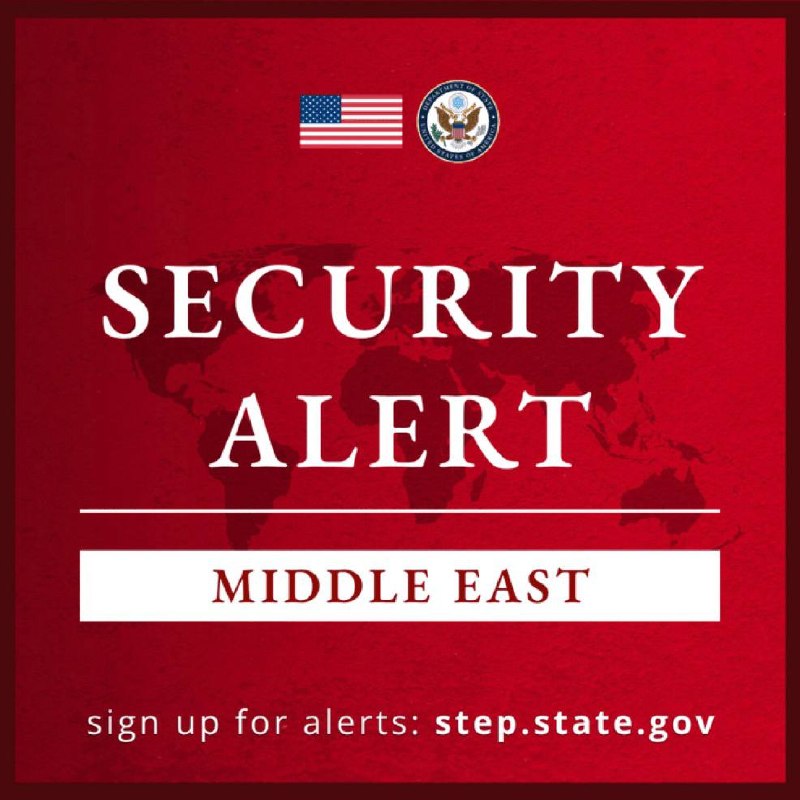
The U.S. State Department has issued travel warnings across the Middle East, according to reporting on September 20. Simultaneously, Iran has placed the Islamic Revolutionary Guard Corps (IRGC), its armed forces, and police on their highest alert level. The timing and coordinated nature of these moves suggest heightened regional tensions, though the specific trigger or expected event remains unspecified in available reporting.
Context and assessment
The alerts occur within a context of escalating U.S.–Iran tensions. Recent statements from CENTCOM leadership have highlighted the effects of a U.S.-led naval blockade that has prevented Iranian crude oil exports while allowing over one billion barrels from other Gulf producers to transit freely. A Washington Post report from the same period indicated U.S. military casualty figures in Iran-related operations exceed publicly disclosed Pentagon numbers. Iran's decision to raise all security forces to maximum alert suggests preparation for a potential military response or major security incident, while U.S. embassy warnings indicate Washington assesses imminent regional risk.
Sources and confidence
Reported via X account @WarMonitor3 on September 20. The claim lacks independent cross-confirmation in the available event data. Confidence of 6.0 reflects single-source reporting of a significant diplomatic statement that would typically generate multiple official confirmations. Verification through official State Department advisories or Iranian government statements would substantially raise confidence. Absence of follow-up reporting on specific threats would lower assessment.
Location
The warnings originate from Washington, D.C., the seat of the U.S. State Department, though their scope covers the Middle East region broadly. Iran's alert level applies nationwide across IRGC, armed forces, and police command structures, suggesting a country-wide readiness posture rather than response to a specific localized threat.
Related events nearby
- Trump departed Camp David early Saturday with no public explanation. Analysis suggests Iran escalation: Tehran2026-09-20 01:28 UTC · Statement · Washington, D.C., USA
- CENTCOM Commander Adm. Brad Cooper announces over 1 billion barrels of crude exported from the Gulf in 2 month2026-09-19 19:26 UTC · Statement ·
- Washington Post reports U.S. military casualty figures in ongoing Iran-related operations in the Middle East e2026-09-19 14:15 UTC · Statement · Washington, D.C., United States
- CENTCOM Commander Admiral Brad Cooper announces U.S.-led naval blockade has prevented Iran from exporting crud2026-09-19 13:02 UTC · Statement · Washington, D.C., United States
▶ View this event on the live map
Intel Mapper aggregates open-source reports from monitored Telegram and X channels, geolocates them, cross-checks duplicates across sources and assigns a confidence score. Entries are updated as new confirmations arrive. Read how we verify events.