Belarus deploys balloons toward Vilnius airport in reported hybrid attack
What happened
According to a single report on X, Belarus on 22 September launched what was characterized as a hybrid attack on Lithuania, deploying balloons in the direction of Vilnius airport. The stated purpose was to disrupt airspace and test NATO air defense response times. The deployment reportedly occurred on Russian direction. No confirmation of balloon interception, airspace closure, or operational impact has been reported.
Context and assessment
Vilnius airport is a critical civilian and potential military asset for NATO member Lithuania, situated near the Belarusian and Russian borders. The incident follows a broader pattern of hybrid pressure on Lithuania's infrastructure and borders; on the same day, Lithuania reinforced the Gizai power substation near Kaliningrad with anti-ram barriers and drone defenses, suggesting elevated threat awareness. Such balloon deployments may reflect attempts to probe NATO air defense capabilities and response protocols without direct military escalation, consistent with earlier hybrid operations. The coordination of timing between the balloon deployment and infrastructure hardening suggests Lithuanian authorities anticipated increased pressure.
Sources and confidence
Reported by X account @WarMonitor3 only; no corroboration from NATO, Lithuanian defense ministry, or other open sources. Confidence score of 6.0 reflects single-source reporting and lack of official confirmation. Raising confidence would require statements from Lithuanian air force, NATO, or Belarusian sources; lowering it would require contradictory official denials.
Location
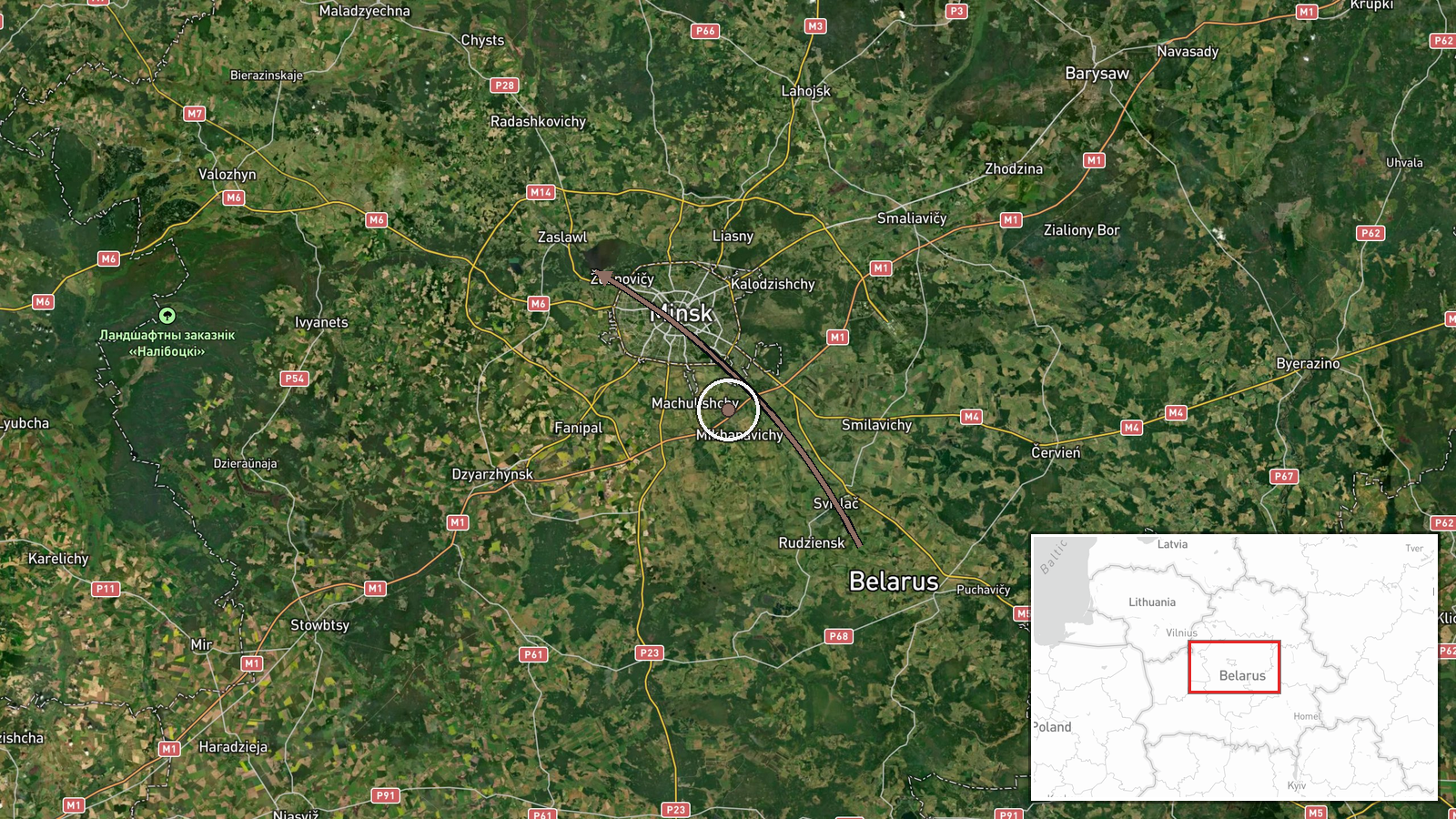
Deployment origin located to Minsk, Belarus (54.00°N, 27.29°E), the capital and primary staging area for Belarusian military operations. The target area is Vilnius airport, approximately 200 km south in central Lithuania near the Belarusian border. The proximity to Kaliningrad and established Belarusian-Russian coordination suggests use of territory under joint operational planning.
Related events nearby
- Lithuania begins fortification of electrical substations on Kaliningrad border as preemptive measure against a2026-09-22 10:05 UTC · Deployment · Šalčininkai, Vilnius District, Lithuania
- Lithuania fortifies Gizai power substation near Kaliningrad with anti-ram fencing, tunnel sensors, reinforced 2026-09-22 08:53 UTC · Deployment · Gizai Power Substation, Vilnius District, Lithuani
▶ View this event on the live map
Intel Mapper aggregates open-source reports from monitored Telegram and X channels, geolocates them, cross-checks duplicates across sources and assigns a confidence score. Entries are updated as new confirmations arrive. Read how we verify events.