Pakistan conducts test launch of extended-range Fatah-IV cruise missile
What happened
Pakistan's military announced a successful test launch of an extended-range variant of the Fatah-IV ground-launched cruise missile on 6 October 2026. The test was conducted in Balochistan Province according to the military's media wing. The Fatah-IV is a domestically developed system, and this variant represents an extended-range capability over previous iterations of the platform.
Context and assessment
The Fatah-IV cruise missile forms part of Pakistan's indigenous defense production capabilities and fits within the broader pattern of South Asian missile development. Extended-range variants typically indicate efforts to enhance strike depth and operational flexibility. Such tests are generally conducted to validate design improvements and demonstrate technological progress. Pakistan has pursued domestic missile development as a strategic priority to reduce external dependencies and maintain credible deterrence capabilities in a region marked by regional tensions.
Sources and confidence
The announcement originated from Pakistan's military media wing and was reported via X (@Osint613). The confidence score of 6.0 reflects reliance on a single reporting channel without independent cross-confirmation from other sources. Confirmation by additional international defense monitoring agencies or Pakistani official statements would increase confidence. The military's own media disclosure provides inherent reliability but lacks third-party verification typical of higher-confidence assessments.
Location
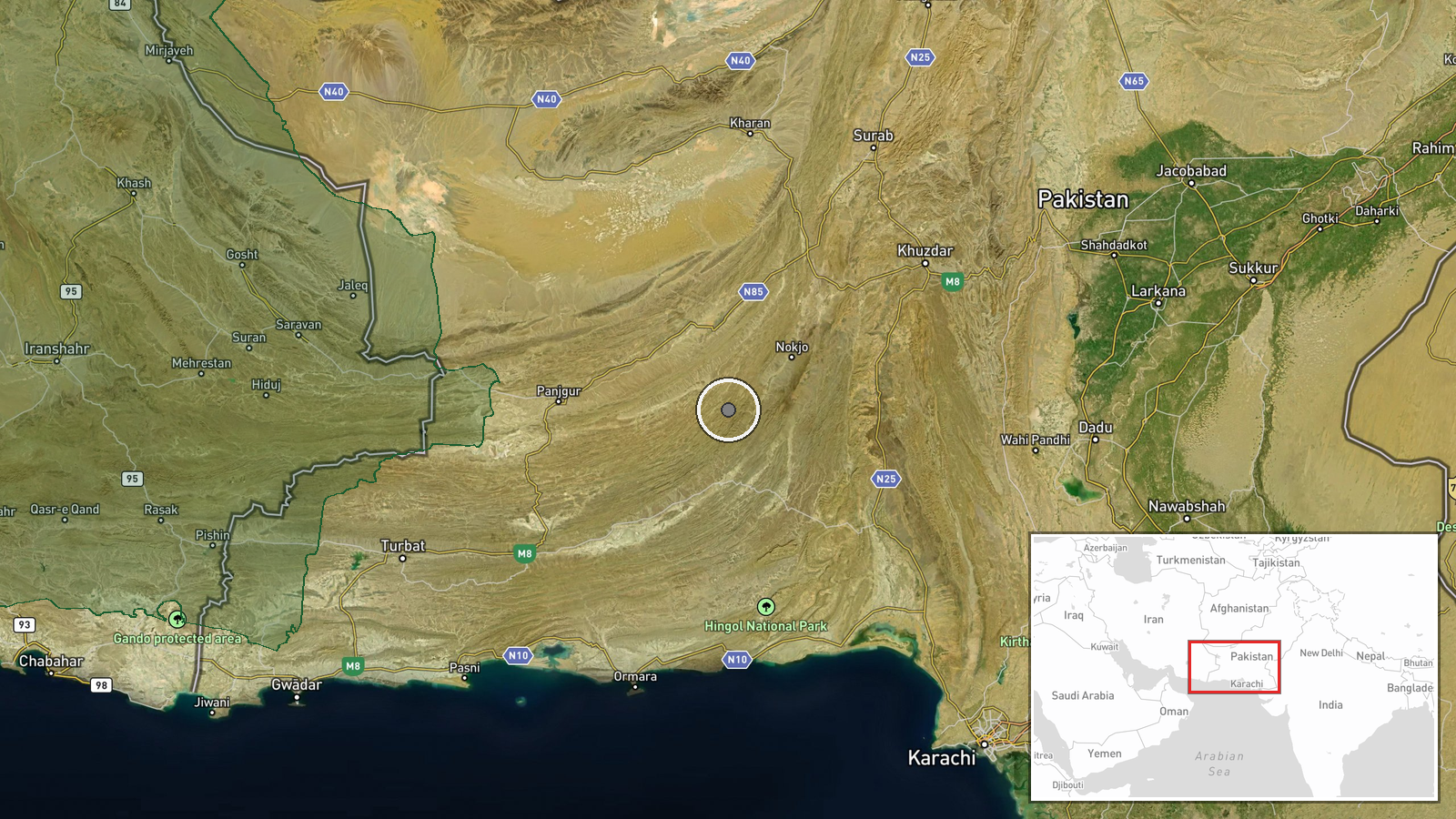
Balochistan Province in southwestern Pakistan, determined to settlement-level precision. Balochistan's geography includes vast open terrain and designated test ranges suitable for missile trials. The province's location provides strategic depth for weapons testing while maintaining distance from populated centers in core Pakistani territory.
▶ View this event on the live map
Intel Mapper aggregates open-source reports from monitored Telegram and X channels, geolocates them, cross-checks duplicates across sources and assigns a confidence score. Entries are updated as new confirmations arrive. Read how we verify events.