U.S. Treasury sanctions 17 more Iran shadow fleet tankers, claims majority neutralized
What happened
The U.S. Treasury Department's Office of Foreign Assets Control (OFAC) announced sanctions against 17 additional vessels in Iran's shadow fleet on October 8, targeting tankers carrying crude oil, naphtha, liquefied petroleum gas, fuel oil, bitumen, methanol, and ammonia destined for South and East Asian markets. The sanctions cover 13 petroleum and 5 petrochemical designations linked to owners and operators across multiple jurisdictions. Treasury stated the action "effectively neutralizes the vast majority" of Iran's remaining covert shipping capacity. Two container ships, HAKUNA MATATA and PINOCCHIO, were delisted after being transferred to non-sanctioned, U.S.-aligned operators.
Context and assessment
Iran's shadow fleet—vessels operating outside international regulatory frameworks—has become critical infrastructure for circumventing Western sanctions on crude exports, the country's primary revenue source. These tankers typically operate with obscured ownership structures, disabled tracking systems, and frequent name changes. The latest designations occur amid escalating tensions: on the same day, France announced a 2,000-troop deployment to the Persian Gulf to bolster air and missile defenses, while Iran's atomic energy organization reaffirmed uranium enrichment commitments and rejected international pressure. Concurrently, diplomatic channels remained nominally open, with Iran's Foreign Ministry claiming ongoing negotiations with Washington. The timing suggests the U.S. is pursuing dual-track pressure—economic isolation through shipping restrictions paired with regional military reinforcement—while testing whether negotiations can progress.
Sources and confidence
Reported by X (@Osint613), a single-source channel. No cross-confirmation from official Treasury statements, mainstream news outlets, or alternative OSINT channels is noted in the dataset. Confidence score of 6.0 reflects reliance on social media reporting rather than primary government documentation. Confirmation from Treasury.gov or secondary news coverage would substantially raise confidence. Contradictory information from Iranian sources or evidence of tracking inaccuracies would lower it.
Location
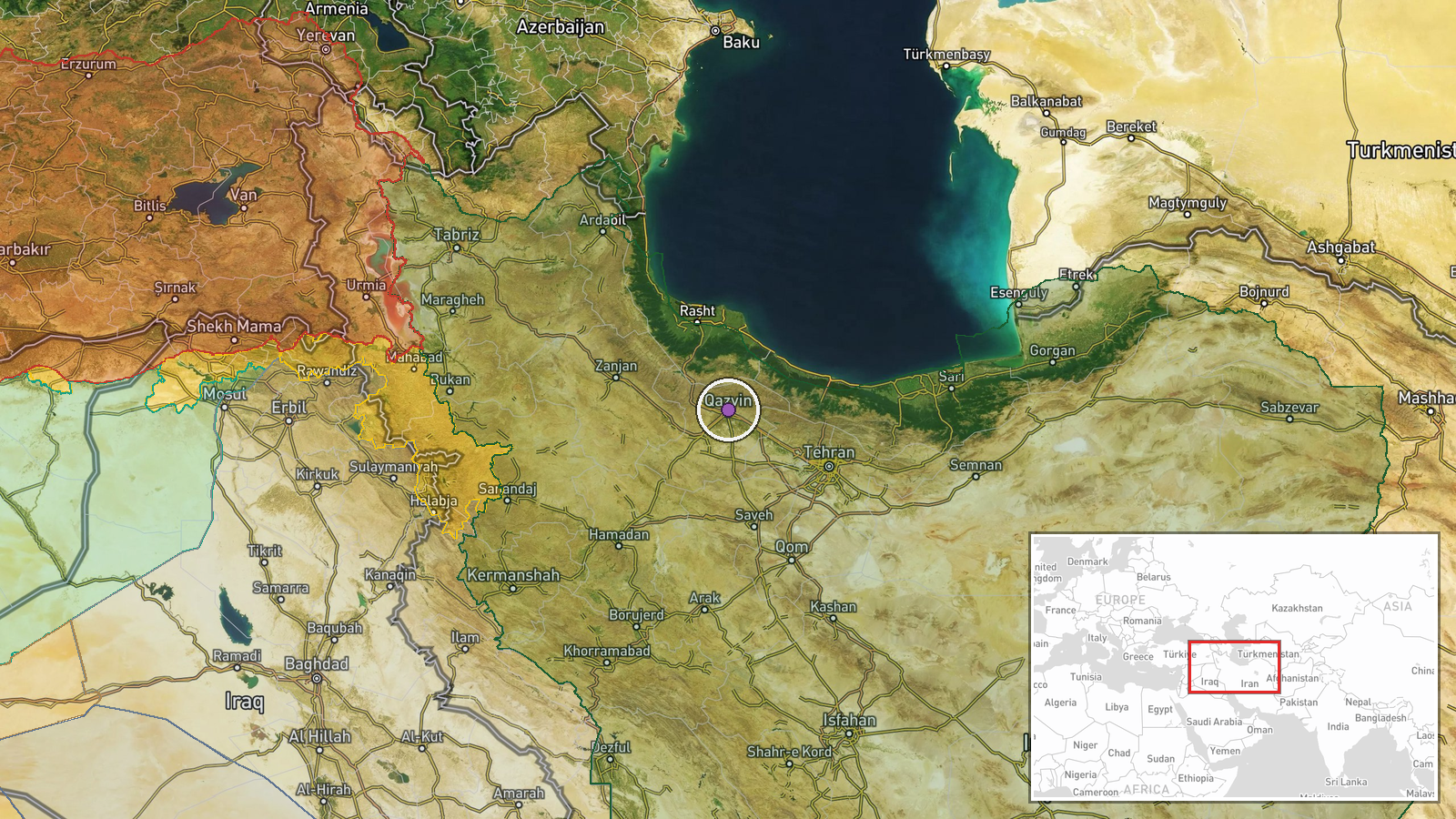
The designation targets Iran's shadow fleet operationally based in and around the Persian Gulf, with cargo destined for South and East Asian markets (China, India, Southeast Asia). Regional precision is low; specific ports or chokepoints are not identified. The Strait of Hormuz remains the critical transit route for these tankers exiting the Gulf toward Asian buyers.
Related events nearby
- France deployed over 2,000 soldiers to the Gulf region to strengthen air and missile defense capabilities agai2026-10-08 20:09 UTC · Deployment · Persian Gulf, Gulf States
- Iran's Foreign Minister Abbas Araghchi states that nuclear/diplomatic negotiations with the US are ongoing. Ir2026-10-08 11:49 UTC · Statement · Tehran, Iran
- Unverified footage purports to show an Iranian underground military base under construction. Source credibilit2026-10-08 19:31 UTC · Report · Unknown Military Facility, Iran
- Iran's Atomic Energy Organization reaffirms commitment to uranium enrichment and refusal to surrender uranium 2026-10-08 17:01 UTC · Statement · Tehran, Iran
- Iran's Foreign Minister Abbas Araghchi claims Iranian Armed Forces have destroyed 81 U.S. military aircraft (u2026-10-08 07:21 UTC · Statement · Tehran, Iran
▶ View this event on the live map

Intel Mapper aggregates open-source reports from monitored Telegram and X channels, geolocates them, cross-checks duplicates across sources and assigns a confidence score. Entries are updated as new confirmations arrive. Read how we verify events.