IDF air defense fires on unidentified aerial target near Kfar Shouba in southern Lebanon
What happened
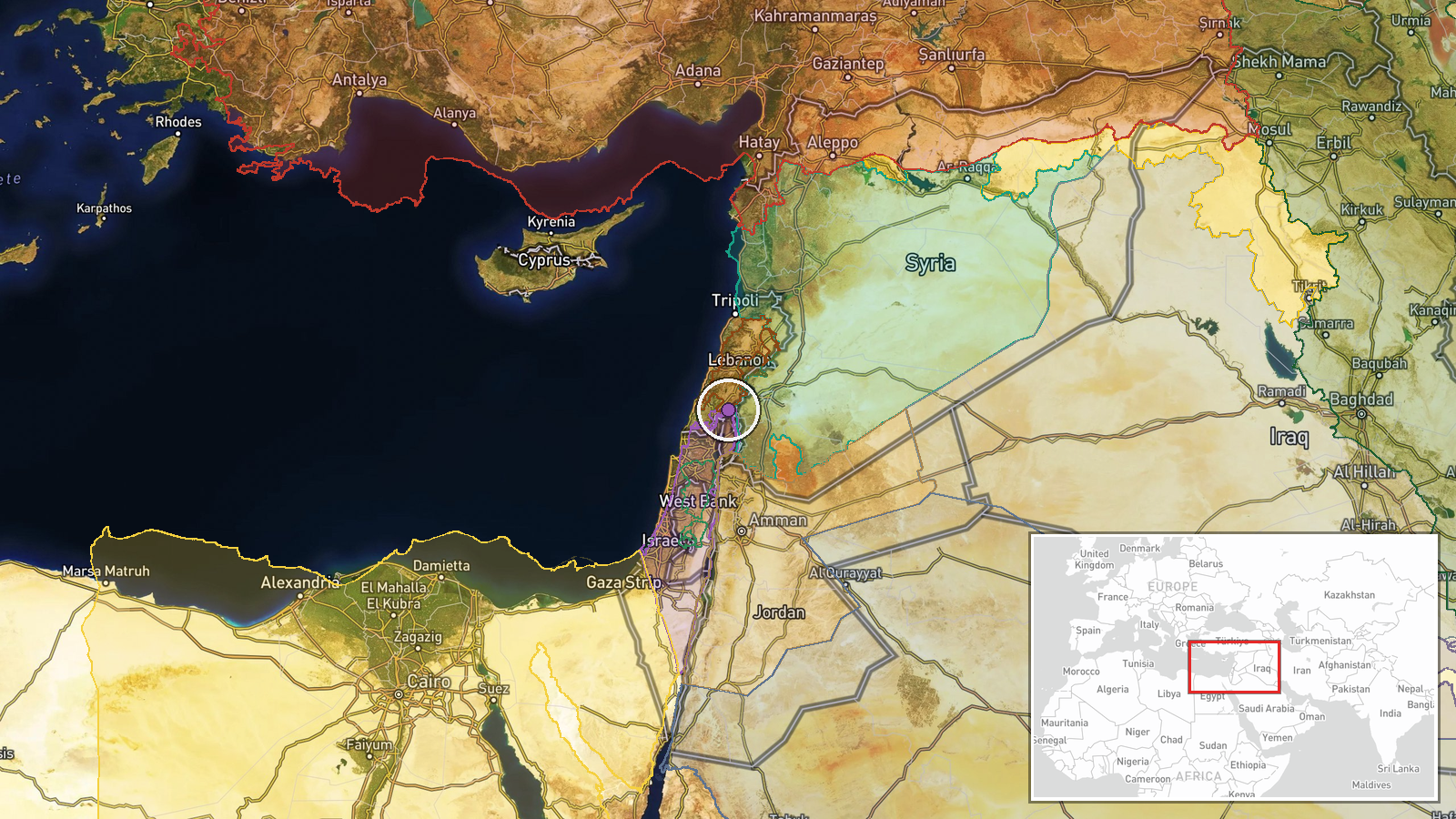
The Israeli Defense Force reportedly launched an interceptor at an unidentified aerial target over southern Lebanon near Kfar Shouba in the Nabatieh district on October 12 at 07:23 UTC. The IDF statement indicates the target was detected in an area where Israeli military forces are actively operating, likely near the current front line. The report does not confirm whether the interceptor successfully struck the target or provide details on the nature of the aerial object.
Context and assessment
This incident occurs amid sustained Israeli military operations in the border region between Lebanon and Syria's Quneitra Governorate. Related reports from October 11 document Israeli forces conducting operations in Quneitra and Daraa rural areas, with air raid sirens activated near the Lebanese border following detection of another unidentified aerial object. The pattern suggests heightened air activity and surveillance operations in the region, possibly indicating drone or reconnaissance aircraft movement. The Nabatieh district has seen increased Israeli military activity as part of broader operations along the Lebanese frontier.
Sources and confidence
Reported by X account @Osint613 on October 12. Single source reporting limits confidence. No corroboration from official IDF statements, Lebanese sources, or independent regional monitoring services has been identified. Confirmation of interception outcome would substantially increase confidence. Cross-verification from Hezbollah, Lebanese military, or additional open-source monitors would strengthen assessment.
Location
Kfar Shouba, a village in Nabatieh District in southern Lebanon, approximately 2 kilometers from the Israeli-Lebanese border and near the Golan Heights frontier area. The location is in active Israeli operational territory along the southern Lebanon front line. Geographic precision is classified as regional due to lack of specific facility confirmation, though proximity to known operational areas is noted.
Related events nearby
- Israeli forces conducting multiple military operations and violations in Quneitra and Daraa rural areas (Octob2026-10-11 19:54 UTC · Combat · Quneitra Governorate, Syria
- Hezbollah allegedly working to obstruct investigation into seized explosives truck in Bekaa Valley. Opposition2026-10-12 06:53 UTC · Security · Bekaa Valley, Lebanon
- Air raid sirens activated in Arab al Aramsha near Lebanese border after Israeli lookouts spotted unidentified 2026-10-11 17:11 UTC · Siren · Arab al Aramsha, Quneitra Governorate, Syria
- Israeli occupation forces infiltrated the vicinity of Saida village in Quneitra's Golan and abducted 3 sheep h2026-10-11 11:53 UTC · Security · Saida, Quneitra Governorate, Syria
- Syrian Foreign Minister Al-Shaibani expressed full solidarity with Saudi Arabia during call with Saudi counter2026-10-11 17:38 UTC · Statement · Damascus, Syria
▶ View this event on the live map

Intel Mapper aggregates open-source reports from monitored Telegram and X channels, geolocates them, cross-checks duplicates across sources and assigns a confidence score. Entries are updated as new confirmations arrive. Read how we verify events.