U.S. forces destroy Iranian-affiliated dhow in Gulf of Oman surveillance operation
What happened
On October 6, U.S. forces destroyed an Iranian-affiliated dhow that was reportedly conducting surveillance and targeting operations against U.S. Navy vessels in the Gulf of Oman, according to CENTCOM. The crew was safely evacuated before the vessel's destruction, with repatriation efforts described as ongoing. The operation occurred amid what CENTCOM characterizes as a seven-month intensification of harassment by Iran's Islamic Revolutionary Guard Corps targeting both civilian mariners and U.S. Navy ships across the region.
Context and assessment
The Gulf of Oman lies at the strategic entrance to the Strait of Hormuz, one of the world's most critical shipping lanes for global oil transit. Iran's maritime operations in these waters have drawn repeated U.S. responses, reflecting broader tensions over regional naval presence and freedom of navigation. The destruction of the dhow fits a pattern of U.S. military actions responding to what American officials describe as Iranian reconnaissance and targeting activities. Whether characterized as surveillance or harassment, such incidents underscore the persistent risk of escalation in the region's crowded shipping lanes, where civilian and military vessels navigate in close proximity.
Sources and confidence
Reported by CENTCOM via X account @Osint613, representing official U.S. military channels. Single-source attribution limits independent cross-confirmation. Confidence score reflects official statement reliability but geographic precision remains regional rather than precise. Score would increase with corroborating maritime reports or Iranian acknowledgment; would decrease if details prove contradictory or unverified.
Location
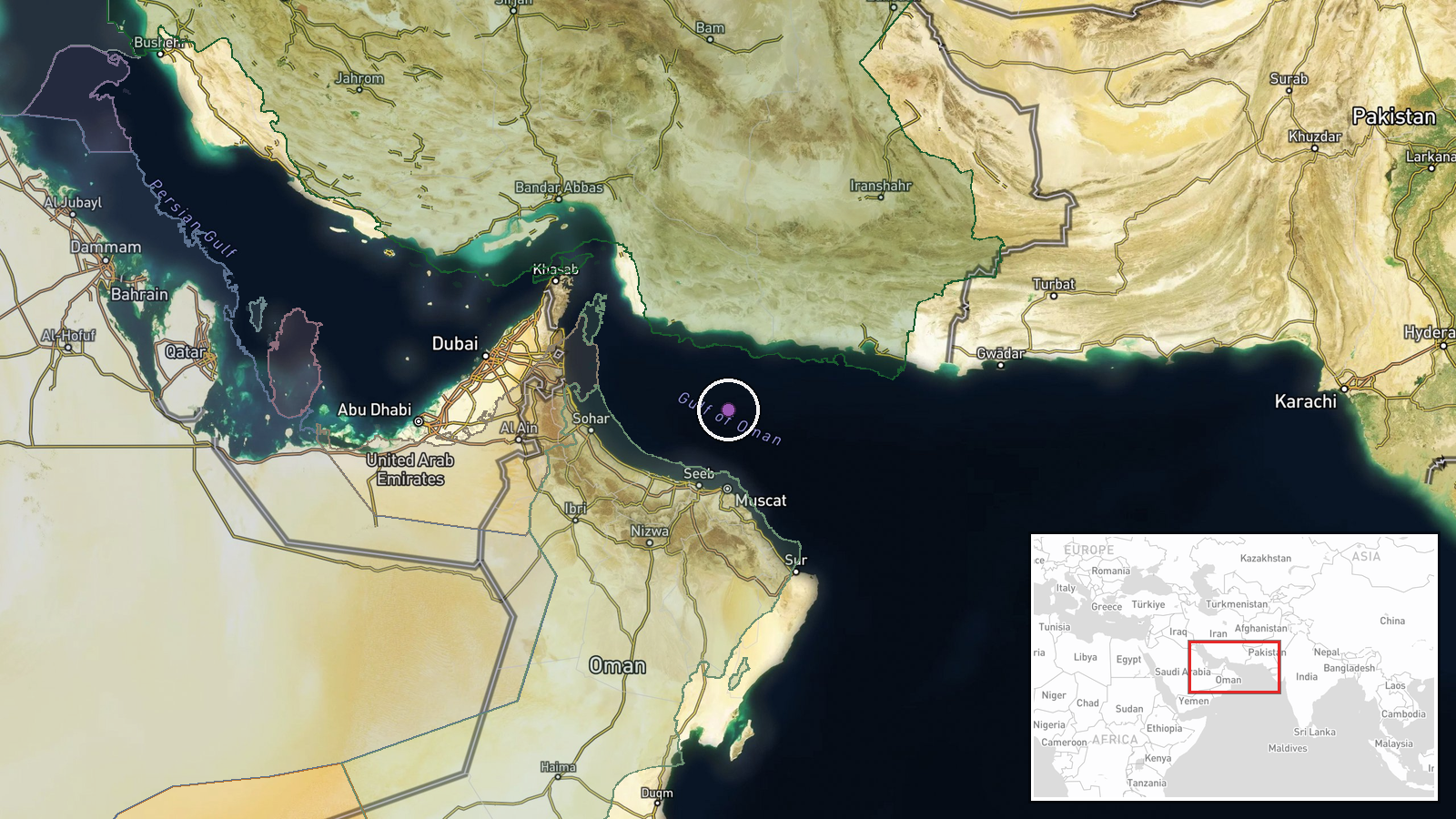
The Gulf of Oman extends between the Sultanate of Oman and Iran, connecting the Arabian Sea to the Strait of Hormuz. The reported coordinates place the incident in the central gulf region. Specific facility or settlement identification is absent; the location confidence remains low due to the maritime context and lack of named reference points in the statement.
▶ View this event on the live map

Intel Mapper aggregates open-source reports from monitored Telegram and X channels, geolocates them, cross-checks duplicates across sources and assigns a confidence score. Entries are updated as new confirmations arrive. Read how we verify events.