Single-channel reports say Moscow had no flights for two consecutive nights
What happened
A Turkish-language post shared on X attributes to NEXTA the claim that no flights took place in Moscow on two consecutive nights, a report the event record describes as indicating reported airspace restrictions. The post was published on 17 October 2026 at 07:03 UTC and is listed against the Russian capital. The wording is brief. It does not state the cause of the disruption, the number of affected flights, the airports involved, or any official explanation. The entry is categorized as an airspace closure, but that label is an editorial inference from the reported absence of flights rather than a confirmed aviation notice or government announcement. No corroborating statement from Russian aviation authorities or airport operators appears in the data.
Context and assessment
Moscow is the seat of the Russian government and one of the country's largest aviation hubs, so a sustained halt in flights there would carry weight beyond the immediate airspace. The report sits within a day of heavy official messaging. On 16 October, the related events in the record include Gerasimov's claim of more than 1,800 square kilometres recaptured by September and a main offensive in Donbas, Putin's pledge to keep advancing in Donetsk, and his praise for strikes on Ukrainian military-industrial sites and logistics centres while calling for better protection of Russian facilities. Dmitriev's remarks on possible US sanctions relief and Moscow's refusal to hand over Bashar al-Assad were logged the same day. None of these statements describes an attack on Moscow, and the record does not connect them to the airspace report. Still, the emphasis on protecting Russian facilities and logistics could be read as background to precautionary air-defence measures. If the restrictions were real, they would more plausibly reflect a defensive posture against long-range drones or missiles, though temporary closures can also stem from exercises, weather, or administrative causes. Each explanation remains unverified here.
Sources and confidence
The item was posted on X and attributes the information to NEXTA, yet the channel field lists X (@ConflictTR) as the sole source. The record contains one source only, and no independent outlet, aviation tracker, or official body has confirmed the claim. The confidence score of 6.1 reflects that single-source status, the brief wording, and the absence of named airports or official notices. Confidence would rise if flight-tracking data showing sustained gaps at Moscow airports were published, if an aviation authority issued a notice, or if NEXTA posted supporting detail. It would fall if the gap proved to be a scheduling or data outage.
Location
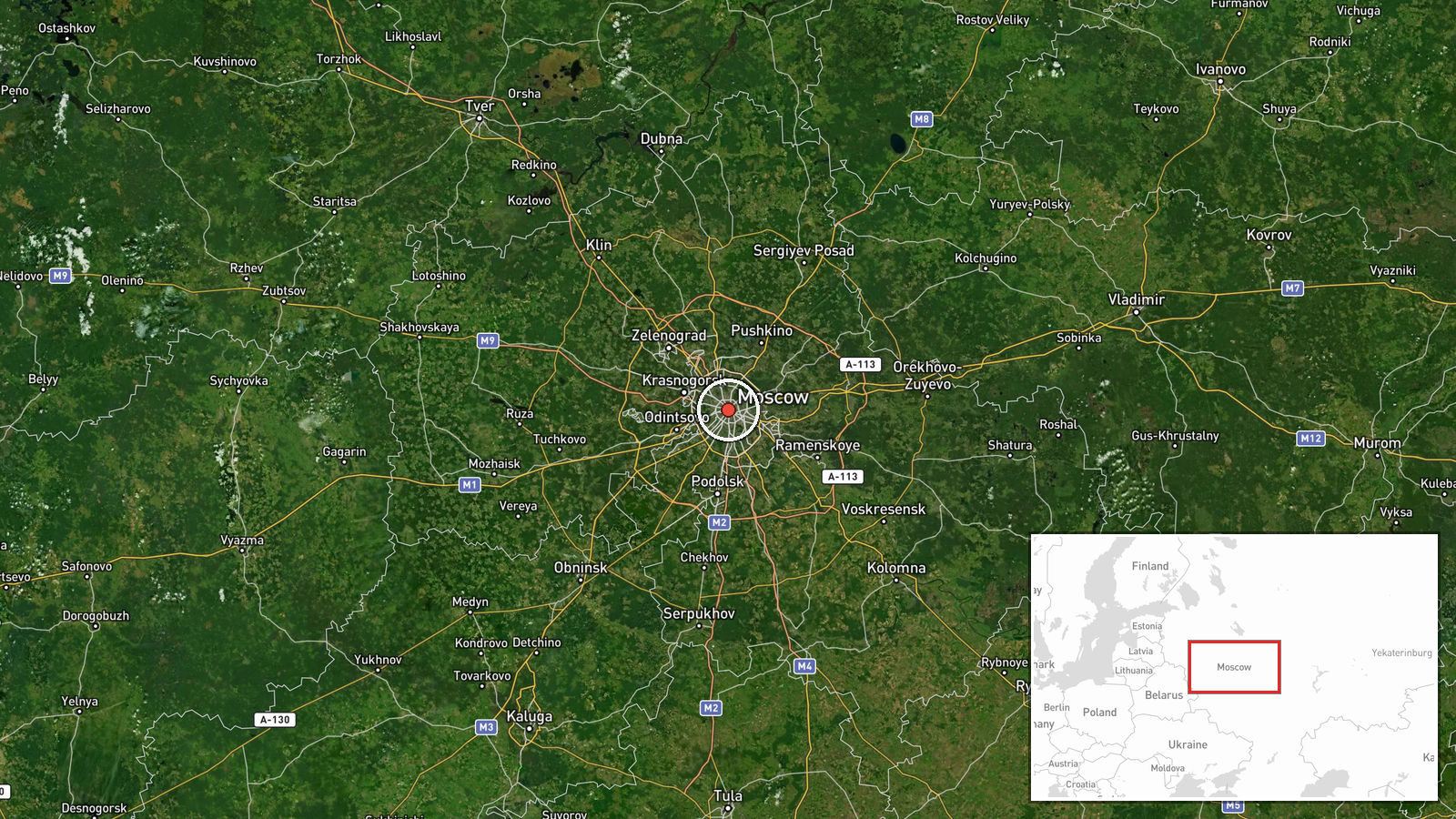
The location is recorded at settlement precision and placed at the central coordinates of Moscow, 55.7558 N, 37.6173 E, rather than at any airport. The report refers to flights across the city generally, so the pin marks the capital as a whole, not a specific runway or air corridor. Moscow lies on the Moscow River in western Russia, and several major airports surround the city on its northern, western, and southern sides. Those airports would be the likely focus if restrictions were localised.
Related events nearby
- Russian envoy Kirill Dmitriev says Ukrainian hostility to a Russia-US deal has worsened Ukraine-US relations; 2026-10-17 07:59 UTC · Statement · Moscow, Russia
- Gerasimov claims over 1,800 km² recaptured by September and a main offensive in Donbas; says 2,000 enemy troop2026-10-16 16:05 UTC · Statement · Moscow, Russia
- Putin vows to continue advancing in Donetsk, claiming Kyiv controls under 10% of DPR and 16.5% of Zaporizhzhia2026-10-16 16:03 UTC · Statement · Moscow, Russia
- Putin praises the effectiveness of Russian strikes on Ukrainian military-industrial facilities and logistics c2026-10-16 15:48 UTC · Statement · Moscow, Russia
- Kremlin-linked spokesman Kirill Dmitriev says the US is weighing options to lift sanctions on Russia, a develo2026-10-16 15:14 UTC · Statement · Moscow, Russia
▶ View this event on the live map

Intel Mapper aggregates open-source reports from monitored Telegram and X channels, geolocates them, cross-checks duplicates across sources and assigns a confidence score. Entries are updated as new confirmations arrive. Read how we verify events.