Ballistic missiles reportedly hit Kyiv thermal plants TPP-5 and TPP-6, OSINT channels report
What happened
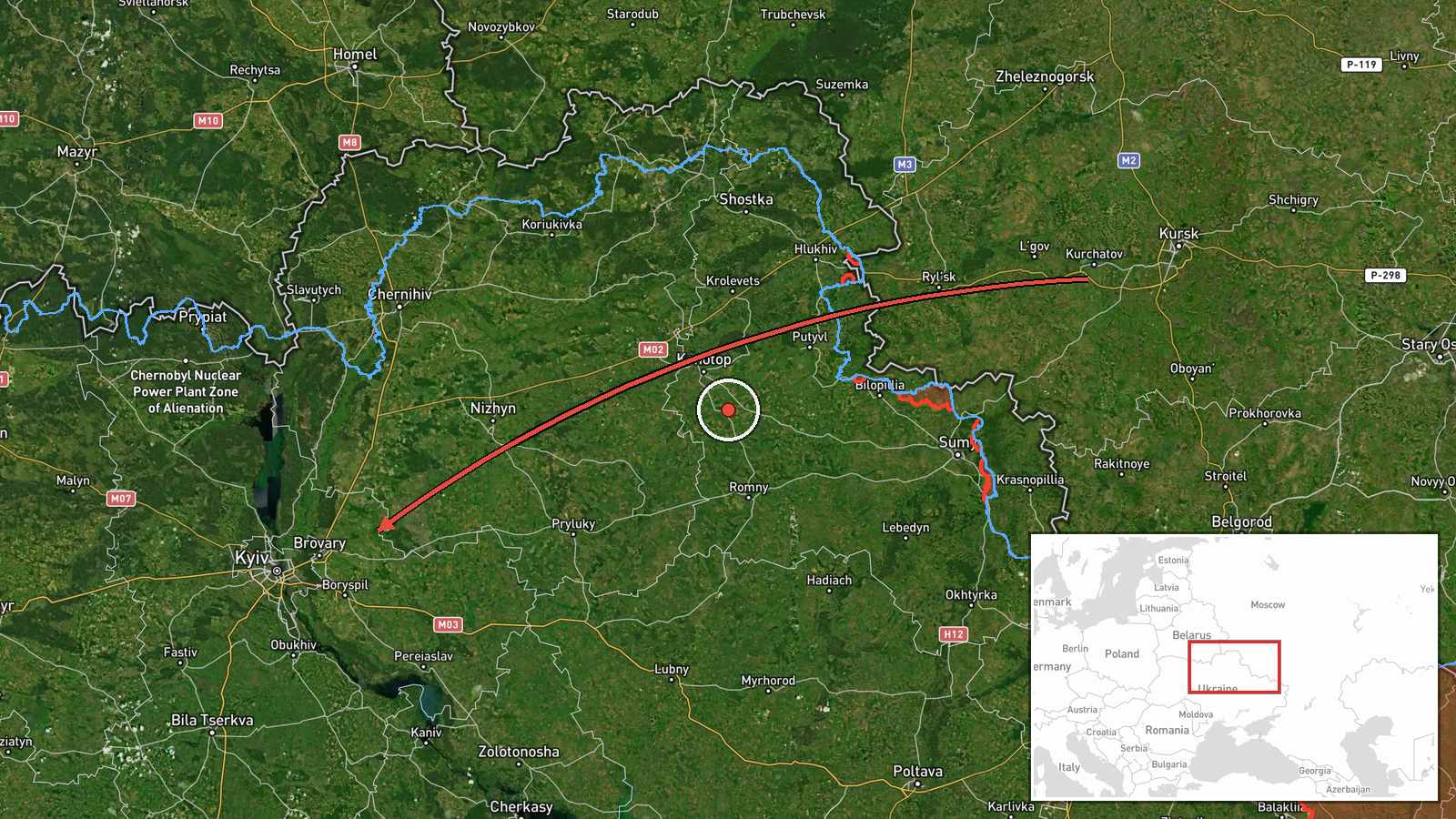
Two X accounts, @Osint613 and @WarMonitor3, reported that ballistic missiles directly struck TPP-5 in Vydubychi and TPP-6 in Troyeschyna, Kyiv, on 18 October 2026 at about 20:04 UTC, with further strikes reported on southern Kyiv. The underlying post, contributed by @BeamTracker_, is a live warning that four Russian ballistic missiles were heading toward the city's left bank and that energy infrastructure was likely being targeted. That wording describes a forecast of targeting rather than a confirmed impact, so the strike claims in the summary rest on the aggregated reporting. The summary also estimates that up to 16 ballistic missiles may have been available for the attack. Attribution to Russia and the launch origin in Kursk Region, Russia, are as recorded in the event data.
Context and assessment
Energy infrastructure has been a recurring target in Russian strike campaigns against Ukraine, and thermal power plants matter because they supply heat and electricity to large urban populations during the cold season. Strikes on TPP-5 and TPP-6 would fit that pattern if confirmed. The related statements the same afternoon add political context. Zelensky said the United States now delivers only about 12 Patriot interceptors per month, roughly a quarter of Biden-era volumes, and called the shortfall political. He also argued that Shahed jet drones fly at 450 to 550 km/h while Ukraine's interceptors reach only 161 km/h, and urged the US to restore Starlink access. Taken together, these statements suggest a concern that air-defense shortfalls could leave high-value civilian infrastructure more exposed. Ballistic missiles are harder to intercept than slower drones, given their high speed and steep descent, so a small salvo aimed at power generation would be a plausible concern for defenders. Whether the Kursk origin reflects a launch from Russian territory or a routing detail in the reporting is not established by the data.
Sources and confidence
Two X accounts are cited, @Osint613 as the listed channel and @WarMonitor3 as the second. Both are single-platform social media sources, and the data shows no official Ukrainian or independent wire confirmation. The confidence score of 7.5 reflects two sources that are not clearly independent of each other, plus the mismatch between the pre-impact warning text and the strike claims in the summary. Confidence would rise with satellite or ground imagery of damage at the named plants, statements from Ukraine's energy operator or air force, or confirmation by established news agencies. It would fall if imagery showed no impact at the named sites, if the accounts retracted or corrected the claim, or if the two accounts were found to share a single origin.
Location
The coordinates (50.4501, 30.5234) sit in central Kyiv and carry a region-level precision flag, so the pin marks the city rather than the individual plants. The named facilities, TPP-5 in Vydubychi and TPP-6 in Troyeschyna, come from the report text. Kyiv is built on both banks of the Dnipro River, and the source's reference to the left bank places the strike area on the river's eastern side. The river and its floodplain are the main nearby features, and they shape the city's energy and transport routes.
Related events nearby
- Zelensky says Trump has a good relationship with Putin but cannot force Putin to end the war.2026-10-18 20:22 UTC · Statement · Kyiv, Ukraine
- Zelensky says the US now supplies about 12 Patriot interceptors per month, roughly a quarter of Biden-era volu2026-10-18 20:18 UTC · Statement · Kyiv, Ukraine
- Zelensky says steps have been taken to pressure Ukraine into capitulation and fears US partners may accept a w2026-10-18 20:16 UTC · Statement · Kyiv, Ukraine
- Zelensky urges the US to restore Starlink access, saying Ukraine will keep defending itself but calls the rest2026-10-18 16:55 UTC · Statement · Kyiv, Ukraine
- Zelensky says Shahed jet drones fly at 450-550 km/h, but Ukraine's interceptors reach only 161 km/h, so they c2026-10-18 16:42 UTC · Statement · Kyiv, Ukraine
▶ View this event on the live map

Intel Mapper aggregates open-source reports from monitored Telegram and X channels, geolocates them, cross-checks duplicates across sources and assigns a confidence score. Entries are updated as new confirmations arrive. Read how we verify events.