IRGC spokesperson threatens to destroy seven undersea internet cables near Hormuz if Iran is attacked
What happened
On 20 October 2026, at 08:38 UTC, the account X (@ConflictTR) posted a breaking-news item citing a spokesperson for Iran's Islamic Revolutionary Guard Corps (IRGC). The Turkish-language post says that in the event of a possible attack on Iran, the IRGC would destroy seven submarine internet cables that pass beneath the Strait of Hormuz. The item describes a verbal threat only. It reports no attack, damage, outage, or cable incident. The wording 'imha edeceklerini' translates as 'they would destroy' and is explicitly conditional on an attack on Iran. The spokesperson is not named in the item, and the post links to a short URL without including a document or video in the data available here.
Context and assessment
The Strait of Hormuz is one of the most important maritime chokepoints in the world, carrying a large share of seaborne oil and liquefied natural gas from the Gulf. Undersea cables that cross it are part of the internet and data routes linking Gulf states, South Asia, and Europe, so any threat to them draws attention beyond Iran. The statement fits a sequence of related messages from Tehran over the past day. On 19 October, an IRGC spokesman had already flagged seven undersea cables under the strait as a warning to the enemy. That evening, an IRGC spokesperson posted an image of a ballistic missile launch with the caption 'The world will see what will happen!' Earlier, Foreign Minister Araghchi said US bases in the region had failed to protect their hosts and had been destroyed in the recent war, and he backed foreign-free regional security arrangements. Foreign Ministry comments on negotiations and on neighbors hosting an aggressor followed on 20 October. Taken together, the pattern suggests a deliberate deterrence and signalling campaign aimed at Washington and regional governments. Cutting cables would be hard to attribute and could affect Iran's own connectivity, so the threat may be intended mainly as leverage rather than a planned operation.
Sources and confidence
Only one channel, X (@ConflictTR), carried this item, and no other outlet in the data confirms the quoted threat or identifies the spokesperson. The post contains no official IRGC document, video, or transcript. The confidence score of 6.3 reflects a single-source report with a clear, specific quote but no independent verification. Confidence would rise with confirmation from IRGC official channels, Iranian state media, or a major wire service that carries the full remarks. It would fall if the quote is traced to a misattributed or altered statement, or to commentary rather than an official remark.
Location
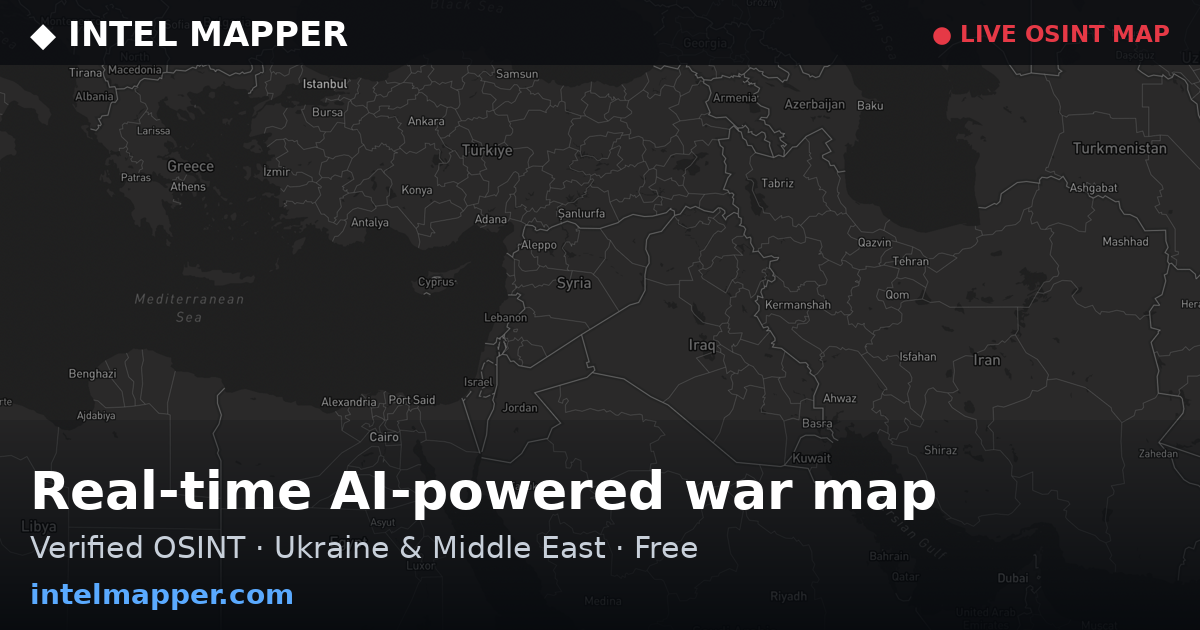
The map pin is placed at the centre of Tehran, the settlement where the statement is attributed to the IRGC and the Iranian government, as shown in the related events. The threatened cables, however, lie beneath the Strait of Hormuz, a narrow waterway of roughly 39 kilometres at its narrowest point between Iran's southern coast and Oman's Musandam Peninsula, and the pin does not mark that location. The strait is a major shipping lane with heavy tanker traffic, and its shallow seabed and dense traffic bear on how cables there are laid and maintained.
Related events nearby
- Iranian Foreign Ministry spokesman says American arrogance is obstructing progress in negotiations.2026-10-20 08:12 UTC · Statement · Tehran, Iran
- Iranian Foreign Ministry spokesman Esmail Baghaei says good neighborly relations are impossible while neighbor2026-10-20 07:56 UTC · Statement · Tehran, Iran
- IRGC spokesperson Hossein Mohabbi posted a ballistic missile launch image with the warning "The world will see2026-10-19 20:21 UTC · Statement · Tehran, Iran
- IRGC spokesman issued a veiled threat that seven undersea internet cables under the Strait of Hormuz are being2026-10-19 18:59 UTC · Statement · Tehran, Iran
- Araghchi says US bases in the region failed to protect their hosts and were destroyed in the recent war; he ba2026-10-19 15:42 UTC · Statement · Tehran, Iran
▶ View this event on the live map

Intel Mapper aggregates open-source reports from monitored Telegram and X channels, geolocates them, cross-checks duplicates across sources and assigns a confidence score. Entries are updated as new confirmations arrive. Read how we verify events.