Iranian media report captain killed by shrapnel after reported U.S. attack on vessel in Persian Gulf
What happened
An X account, @Osint613, reported that Iranian ship captain Nasser Ebrahimi Nejadian, a native of Abadan, was killed by shrapnel after a U.S. attack on a vessel in international waters of the Persian Gulf. The post attributes the claim to Iranian media and says the death occurred on Saturday, November 8. The event is logged with a timestamp of November 1, 2026 at 16:06 UTC, a discrepancy with the date given in the original wording that has not been resolved. The source does not name the vessel, its flag, its operator, the weapon used, or any other casualties, and no independent imagery accompanies it. The attack is categorized as an explosion, with the United States listed as the actor based solely on the account's description. Because the claim is relayed from state-affiliated media without corroboration, it should be read as an attributed claim rather than a confirmed event.
Context and assessment
The Persian Gulf is one of the world's most heavily used energy shipping corridors, so reports of attacks on vessels there carry weight for insurers, crews and regional governments. The related record shows how difficult this maritime theatre is to verify. Footage previously reported as a new Iranian tanker attack may instead show the earlier sinking of the bulk carrier Cape Dao, which was struck on September 23 and sunk in mid-October. That case suggests that recycled or misdated video can easily be presented as a fresh incident, and that attribution in these waters often depends on details that are hard to establish quickly. A separate entry from the same day describes smoke over Dammam in Saudi Arabia's Eastern Province, on the Gulf coast, with the cause unclear and two videos circulating. That report is not linked to the captain's death, but it shows that the wider Gulf environment was producing unverified incidents at the same time. Operationally, if a commercial vessel was struck and crew members were killed, this could point to strikes on shipping or on vessels linked to a particular state, though the account gives no evidence of the target's identity or purpose. Any such inference remains provisional until the vessel and its circumstances are documented.
Sources and confidence
The event rests on a single channel, X account @Osint613, which relays a claim attributed to Iranian media. No second outlet, official maritime notice or independent observer has been identified in the available material, so the cross-confirmation status is unconfirmed. The confidence score of 6.0 reflects one source, an unnamed vessel, a date conflict within the report, and dependence on state-affiliated reporting. Confidence would rise if the vessel were named and matched to shipping registries, if UKMTO or another maritime security body issued an advisory, if the shipping operator or flag state confirmed the incident, or if independent imagery or a U.S. military statement addressed it. It would fall if the date discrepancy persisted, if no vessel could be identified, or if the footage or claim were traced to an earlier event.
Location
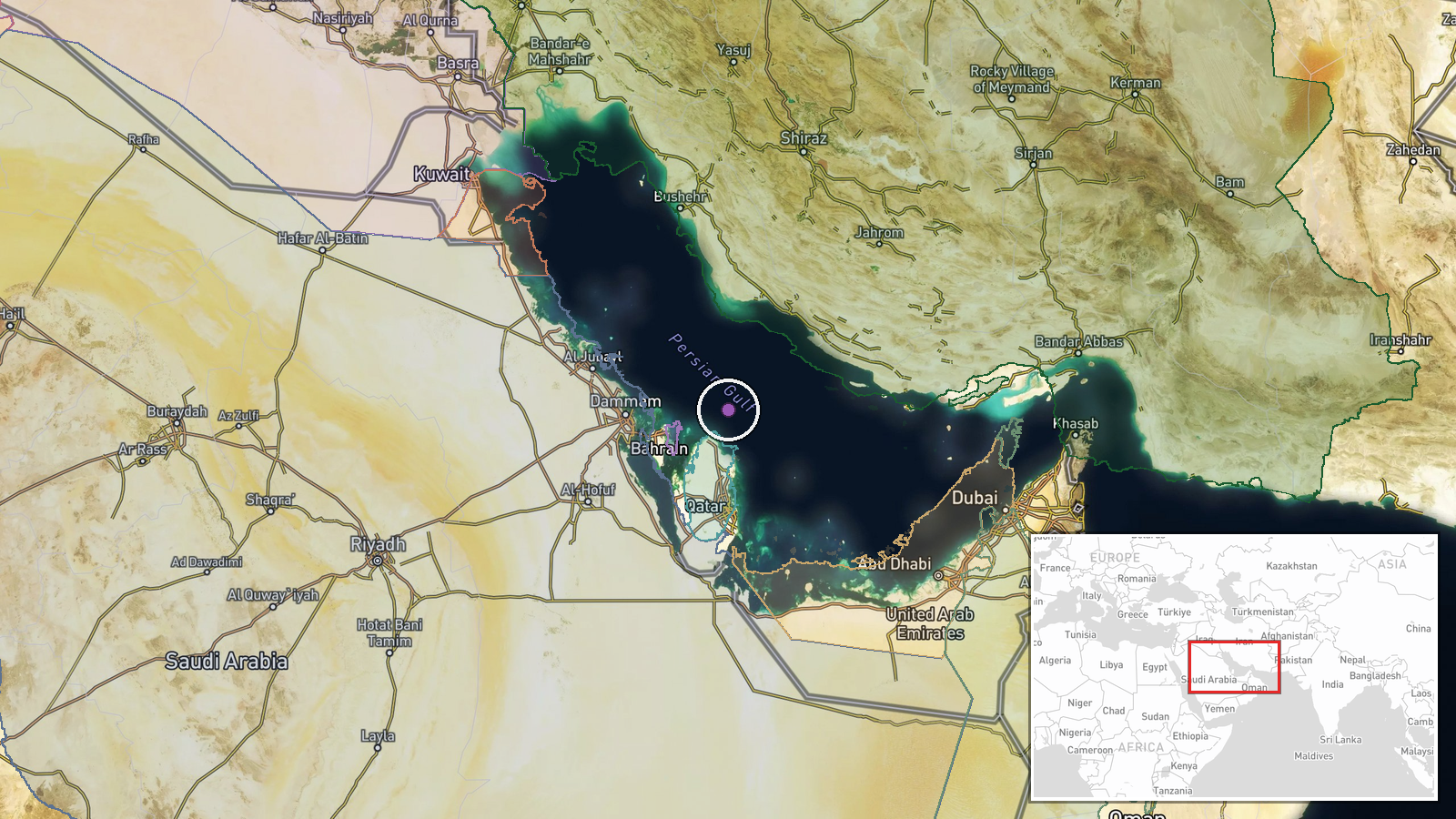
The location is region-level, not a fixed point. The coordinates of 26.5 north and 51.5 east lie in open water in the central Persian Gulf, north of Qatar's peninsula and off Iran's southern coast, and are an approximation rather than the site of a recorded incident. Abadan, the captain's hometown, is a city on the Shatt al-Arab near the Iraqi border and is not where the attack is reported to have occurred. The Strait of Hormuz lies to the southeast and is a key transit point for tankers.
Related events nearby
- Footage previously reported as a new Iranian tanker attack may show the earlier sinking of bulk carrier Cape D2026-11-01 09:19 UTC · Explosion · Persian Gulf
- Columns of smoke rising over Dammam in Saudi Arabia's Eastern Province; cause unclear, two videos released.2026-11-01 10:57 UTC · Explosion · Dammam, Eastern Province, Saudi Arabia
▶ View this event on the live map
Intel Mapper aggregates open-source reports from monitored Telegram and X channels, geolocates them, cross-checks duplicates across sources and assigns a confidence score. Entries are updated as new confirmations arrive. Read how we verify events.