Iranian state media broadcast nuclear-attack civil-defense video; single-source report, no attack
What happened
A post on X from the account @ConflictTR reports that Iranian state television and news agencies broadcast a civil-defense warning video about a possible nuclear attack. The reported content tells citizens not to look at the flash of an explosion, to move into shelters, to take precautions against radioactive contamination, and to remain indoors for at least 24 hours. The event is dated 3 November 2026 at 05:34 UTC and is geolocated to Tehran at settlement precision. The original post is written in Turkish and links to a video that this record does not independently verify. The item is classed as a siren-type event, but no detonation, attack or casualty is reported. The account describes the broadcast as reported; it does not establish when the video was produced or whether it was new material.
Context and assessment
Tehran is Iran's capital and the seat of its government, parliament and senior security institutions, so a national broadcast originating or amplified there carries weight as an official signal. The item appears against a cluster of statements from the same day. Mohsen Rezaei said there would be no further steps until the United States meets seven conditions listed in his post. Araghchi described mediated talks through Qatar and Pakistan as very intensive and said the outcome depends on Washington. Separately, Iran claimed that 13 ships transiting the Strait of Hormuz had struck naval mines within ten days, a claim that remains Iran's own. Rezaei also held a call with Putin on regional affairs. Taken together, the pattern in the related reporting is diplomatic and maritime rather than kinetic. A civil-defense video may therefore be read as public messaging meant to prepare or reassure a domestic audience during a period of perceived threat. It could also be routine preparedness material that resurfaced in a tense news cycle. The record alone cannot distinguish these readings.
Sources and confidence
The event rests on one channel, X (@ConflictTR), and no second outlet is recorded as carrying the broadcast. The 6.3 confidence score reflects that single-source status and the absence of a primary Iranian state broadcast link or independent monitoring record. Confidence would rise if state television, IRNA or another named agency published the video with a timestamp, or if an independent monitoring group confirmed airing on a specific date. It would fall if the footage proves to be archival, reused from an earlier campaign, or if the original post's wording cannot be matched to any broadcast.
Location
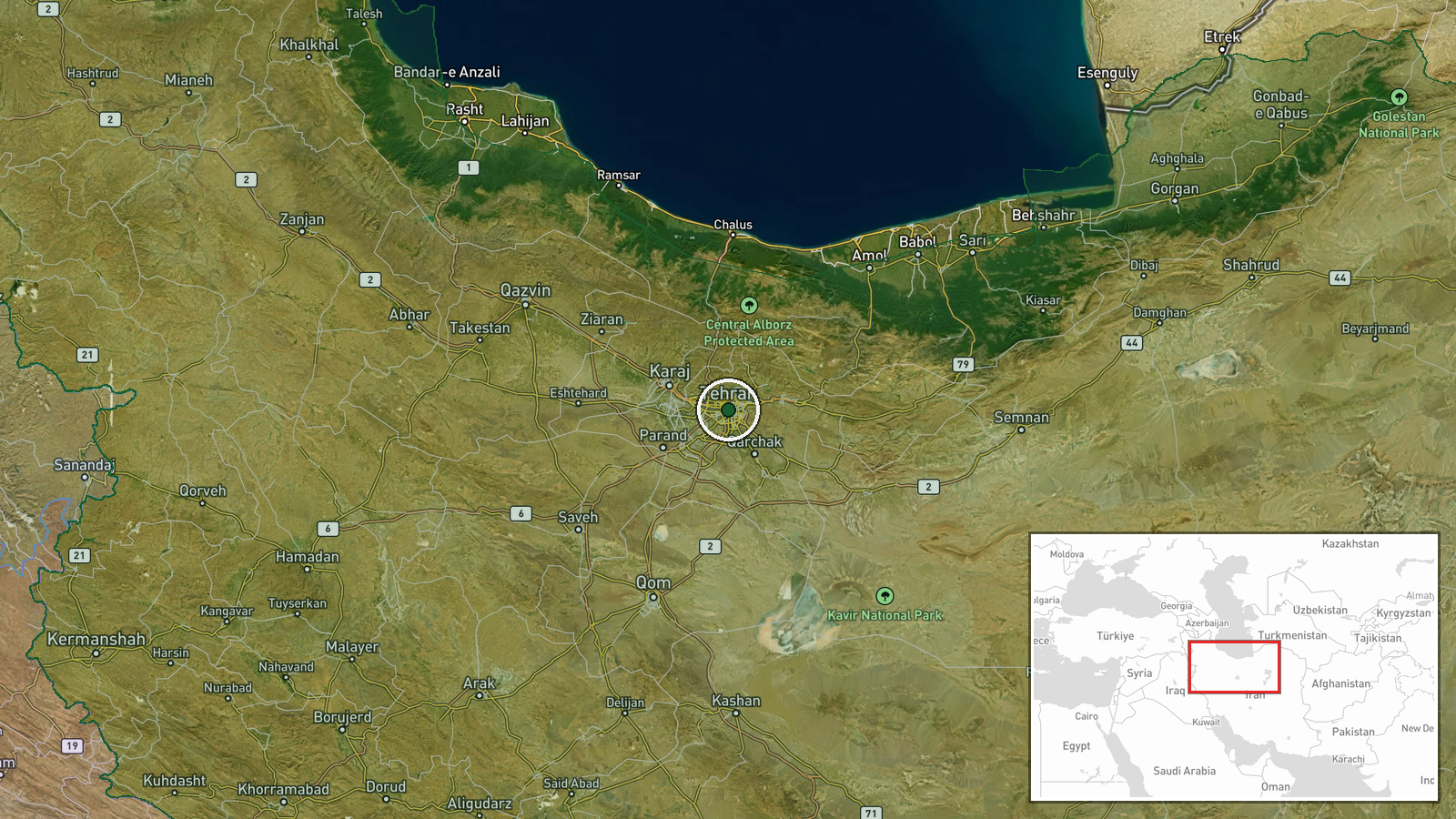
The location is recorded at settlement precision, using coordinates for central Tehran (about 35.69 N, 51.39 E). This reflects the city as a whole rather than a specific broadcaster's studio, ministry or facility, and no location confidence value is given. Tehran lies on a high plateau at the southern foot of the Alborz mountains, which rise to the north of the urban area. The city's large, densely built footprint and its elevation gradient are notable features for any reader assessing the geography of the broadcast.
Related events nearby
- Mohsen Rezaei says there will be no further developments or actions until the US meets Iran's seven conditions2026-11-02 18:46 UTC · Statement · Tehran, Iran
- IRNA quotes an Iranian official warning U.S. aggression endangers fishermen, after Iran claimed 13 Hormuz-tran2026-11-02 16:46 UTC · Statement · Tehran, Iran
- Iran's SNSC Deputy Secretary Bagheri, visiting China, says Iran will help restore Middle East stability via re2026-11-02 15:56 UTC · Statement · Tehran, Iran
- Araghchi says mediated talks via Qatar and Pakistan are very intensive; Iran has presented its terms and plan,2026-11-02 14:19 UTC · Statement · Tehran, Iran
- Rezaei and Putin held a phone call on West Asia; Rezaei thanked Moscow for support, and both sides reaffirmed 2026-11-02 14:26 UTC · Diplomacy · Tehran, Iran
▶ View this event on the live map

Intel Mapper aggregates open-source reports from monitored Telegram and X channels, geolocates them, cross-checks duplicates across sources and assigns a confidence score. Entries are updated as new confirmations arrive. Read how we verify events.