Iran strikes U.S. bases in Jordan; Ukraine hits Russian Black Sea fleet; diplomatic fissures widen
Key developments
- Iran conducted ballistic missile strikes on U.S. air bases in Jordan, damaging multiple aircraft including one A-10 Thunderbolt, demonstrating direct kinetic engagement capability.
- Ukraine struck Russian Black Sea Fleet at Novorossiysk and Caspian Sea port at Makhachkala, destroying or damaging at least three naval vessels and expanding geographic scope of strikes on Russian territory.
- Algeria severed diplomatic relations with the UAE over regional destabilization, closing airspace and ordering ambassador departure within 48 hours.
- Russian Shahed-136 drone strikes killed at least 5 civilians including 3 in Pavlohrad shopping center attack; multiple drones detected transiting Ukrainian airspace with most intercepted.
- NATO Secretary General and Western allies reinforced military support commitments to Ukraine amid intelligence warnings of expanded Russian hybrid threats across Europe.
- Israeli-Hezbollah-Lebanese territorial control remained contested in Nabatîyé with all three parties reporting area expansions; Israeli operations continued against infrastructure in southern Lebanon.
- Iran detected new activity at Pickaxe Mountain underground nuclear facility; U.S. Navy confirmed February strike on NSA Bahrain caused approximately $400 million damage.
Middle East 30 tracked events
Iran conducted a significant ballistic missile barrage against U.S. military installations in Jordan, striking both Al-Azraq and Muwaffaq Salti air bases. Satellite imagery confirms eight F-15 fighters sustained light damage and returned to service at one location, while one A-10 Thunderbolt was struck and lost a wing. These strikes represent a measured demonstration of Iranian capability, calibrated to inflict damage without triggering immediate escalatory response. The attacks underscore persistent tensions in the Persian Gulf and Iran's demonstrated willingness to engage U.S. forces directly when operationally feasible.
Iranian forces deployed electro-optical camera-guided missiles against U.S. warships in the Persian Gulf this week, reflecting technological advancement in precision targeting. Separately, Iran's Revolutionary Guards provided weapons, military advisers, and tactical personnel to Houthi forces during their offensive to seize Mocha port, demonstrating sustained proxy engagement in Yemen. The U.S. Navy confirmed Iran struck NSA Bahrain on 28 February, causing approximately $400 million in damage and rendering the Fifth Fleet headquarters temporarily unusable. These incidents establish a pattern of Iranian escalation across multiple maritime and air domains.
Israeli operations in southern Lebanon continued with airstrikes on infrastructure at Beaufort and Ali Taher ridges, and ground forces destroyed tunnel systems reportedly linked to Iranian-aligned positions. Merkava main battle tanks maintain positions on Baraachit Ridge. Territorial control in the Nabatîyé area remained contested, with Israeli forces expanding approximately 44 square kilometers of controlled territory, while Hezbollah expanded approximately 117 square kilometers and Lebanese forces expanded approximately 15 square kilometers. Meanwhile, diplomatic rifts widened as Algeria severed ties with the UAE over regional destabilization concerns, closing airspace to UAE aircraft and ordering the UAE ambassador to depart within 48 hours.
Pakistan's Foreign Ministry reiterated that no military response to Houthi attacks on Saudi Arabia is under current discussion, stating action will come 'when the time comes,' reflecting measured posture on broader regional tensions. Turkey's Defense Ministry addressed integration of Syrian forces by justifying weapons transfers to the Syrian Army as necessary to the 'single army' principle and counter-terrorism operations against the Kurdish-aligned SDG/YPG. Turkey additionally condemned Israeli systematic attacks in Lebanon and Gaza as genocidal policies. Iran announced temporary suspension of a 10% freight surcharge on foreign vessels carrying oil and petroleum products, a tactical measure to attract shipping amid transport disruptions. The IAEA reported detection of new activity at Iran's Pickaxe Mountain underground nuclear complex, though inspectors lack direct access and rely on satellite imagery.
- Pakistan's Foreign Ministry reiterates no military response to Houthi attacks on Saudi Arabia is currently und
- Turkish Ministry of National Defense states that weapon and military vehicle handover to Syrian Army is a natu
- Satellite imagery of Al-Azraq air base in Jordan shows damage from Iran's latest ballistic missile barrage. Ei
- Algeria severs diplomatic relations with UAE after exhausting all options to preserve ties. No military dimens
- Iran deployed electro-optical missiles with camera-guided course-correction capability against U.S. warships i
- Iranian ballistic missiles struck Muwaffaq Salti Air Base in Jordan overnight Tuesday-Wednesday. Eight U.S. F-
Ukraine 30 tracked events
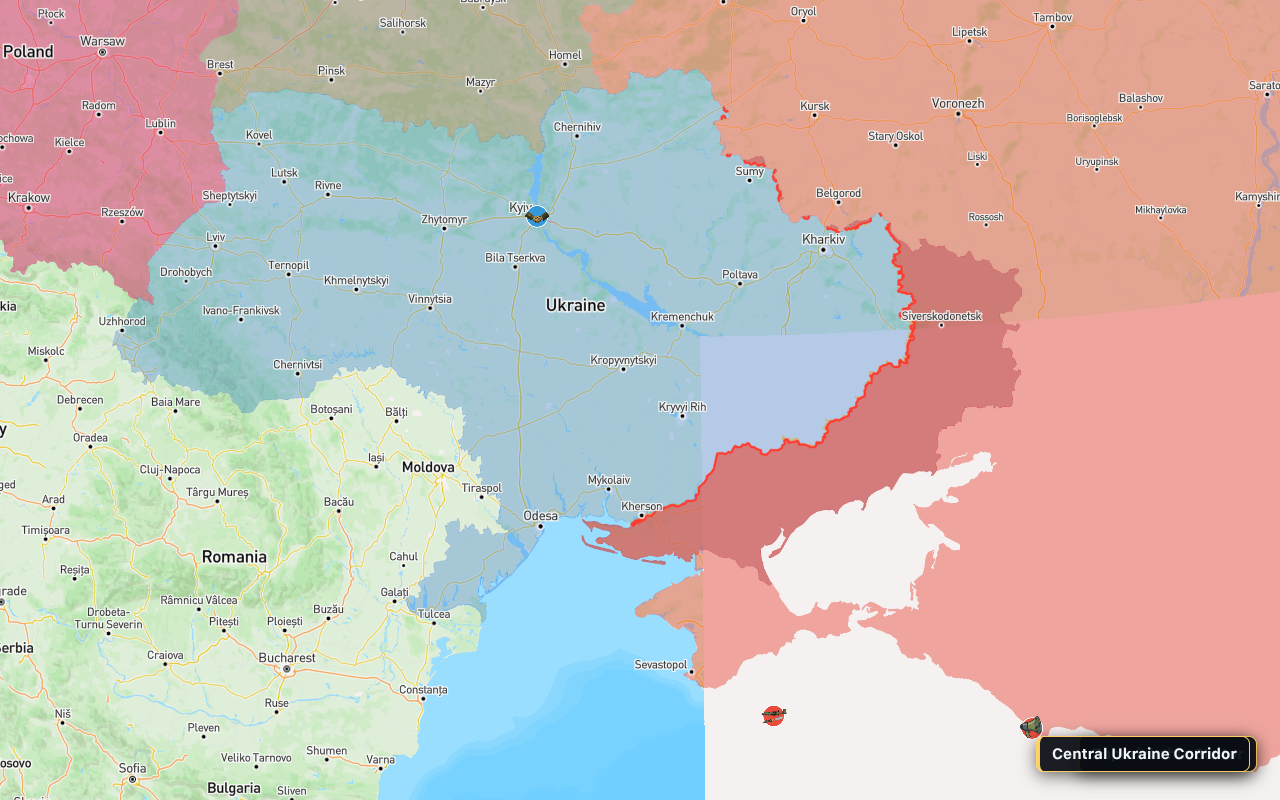
Ukrainian forces conducted strikes on Russian military infrastructure spanning Arctic to Caspian Sea, including strikes on Makhachkala Maritime Trade Port and the Novorossiysk Black Sea Fleet base. Satellite imagery confirms damage to at least three Russian Navy vessels: the Buyan-M corvette, Admiral Essen frigate, and Admiral Makarov frigate. The minesweeper Zheleznyakov was also confirmed struck. These strikes represent an expansion of Ukrainian targeting scope against Russian rear-area logistics and naval assets, demonstrating sustained capability to project force well into Russian territory despite battlefield constraints.
Russian drone operations continued with significant intensity. Shahed-136 kamikaze drones struck a shopping center in Pavlohrad, killing 3 and injuring over 30 civilians. Russian UAVs targeted the Starokozache Ukraine-Moldova border crossing, killing two and destroying critical civilian-military crossing infrastructure. Multiple Shahed-136 drone transits were detected over Kyiv, Kyiv Oblast, Volyn, Dnipropetrovsk, and Mykolaiv oblasts, though most were reportedly intercepted. Russian forces advanced approximately five square kilometers in the Oleksiievo-Druzhkivka sector with no settlement-level changes.
NATO and Western allies reinforced commitment to Ukraine's defense. NATO Secretary General Rutte declared alliance unity against Russian attempts to divide NATO and pledged increased military support to Ukraine. German Foreign Minister Wadephul warned of escalating Russian hybrid threats including drones, cyberattacks, and critical infrastructure attacks, announcing Germany's commitment to enhanced response capabilities. NATO disrupted a Russian GUGI directorate covert undersea operation near Svalbard involving seabed cable-disabling exercises. Polish PM Tusk received CIA briefing from Director Ratcliffe on anticipated Russian developments; Polish and Ukrainian services jointly averted an attack on a border crossing overnight. Poland's defense contractor PGZ signed a memorandum with Turkey's TOLGA on close-air defense systems, reflecting NATO interoperability initiatives.
- Ukrainian forces struck Makhachkala Maritime Trade Port on night of 9-10 September 2026, confirming fire on th
- German Foreign Minister Wadephul warns of escalating Russian hybrid threats (drones, cyberattacks, sabotage, d
- NATO Secretary General Rutte declares NATO unity against Russian attempts to divide the alliance and pledges i
- Russian Security Council Deputy Chair Medvedev reiterates Russia must maintain great-power status to survive,
- NATO forces disrupted Russian GUGI directorate covert undersea operation near Svalbard. British, Norwegian, an
- Canadian PM Mark Carney reiterates Ukraine's four-year, 198-day resistance against Russian invasion, refuting
What to watch
Monitor Iranian response to any U.S. counteraction following Jordan air base strikes; assess whether escalation remains calibrated or shifts toward broader confrontation. Watch for continued Ukrainian strikes on Russian rear-area logistics and naval assets, and Russian intensification of drone campaigns targeting civilian infrastructure. Track developments from CIA-Poland intelligence briefing regarding anticipated Russian moves. Observe whether Algeria-UAE diplomatic rupture influences wider Gulf alignment dynamics. Monitor NATO's military assistance acceleration pipeline to Ukraine and German hybrid threat response measures. Watch for statements from Saudi Arabia, Pakistan, or other Gulf actors on potential military participation in regional tensions.