Train strike near Polish border, Gulf shipping attacks, Syria diplomacy amid fuel crisis
Key developments
- Russian drone struck passenger train near Polish border reportedly carrying British PM Boris Johnson and other Western officials, with Ukraine citing 1,700 railway staff deaths in infrastructure attacks.
- Ukrainian ballistic missiles struck Russian refineries at Slavyansk-na-Kubani and Nizhnekamsk, causing fires; Trump called on Zelenski to halt fuel infrastructure attacks citing global supply disruptions.
- Turkish FM Fidan concluded Damascus visit focused on Syria stability and reconstruction as domestic fuel protests continued across Syrian cities following 40 percent price increase.
- Iranian cargo ship struck in Persian Gulf with one crew member killed; Iran-Gulf states security dialogue postponed; Western officials reportedly disclosed Iranian drone acquisition requests from Russia.
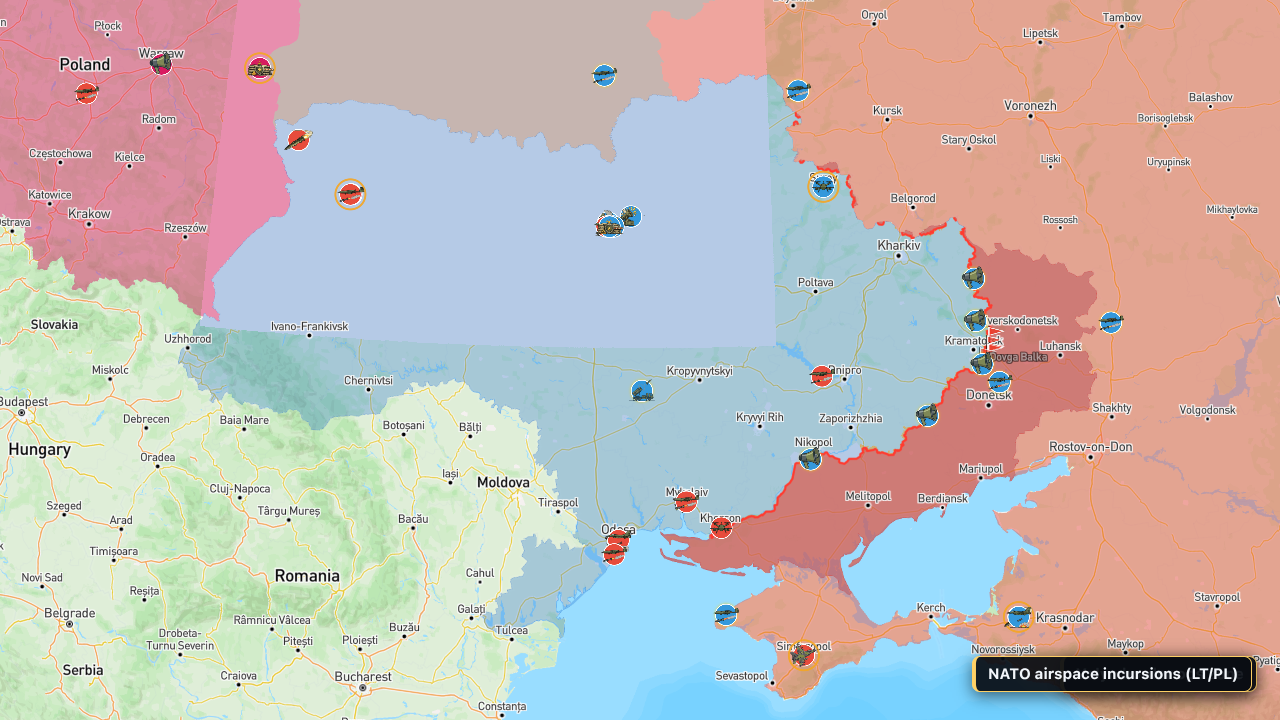
- Polish military heightened eastern border defensive posture amid warnings of intensified Russian activity; NATO scrambled fighters over Lithuania as drone transited NATO airspace.
- Houthi forces advanced in Yemen with equipment capture from government forces; Israeli operations continued in Lebanon and Syria border areas.
- Russian Defense Ministry reported retaliatory strikes on Ukrainian UAV production in Odesa as both sides escalate industrial-base targeting.
Middle East 30 tracked events
Turkish Foreign Minister Hakan Fidan concluded a two-day official visit to Damascus, holding bilateral and trilateral talks with Syrian President Ahmed Shara and Interior Minister Enes Hattab focused on stability, reconstruction, and strengthening post-Assad Turkey-Syria relations. The visit signals deepening engagement, with President Erdoğan planning a forthcoming official visit to Syria. During discussions, Syrian authorities confirmed Turkish language will remain optional in school curricula, addressing a potential friction point. This diplomatic activity occurs against a backdrop of public economic discontent, as protesters blocked the Damascus-Aleppo highway in Maarat al-Numan and fuel price demonstrations continued across Deir ez-Zor and other Syrian cities following a 40 percent fuel price increase, indicating latent domestic pressures despite improving regional ties.
Iranian maritime incidents escalated in the Strait of Hormuz and Persian Gulf, with a cargo ship struck near Qeshm Island early on 13 September resulting in one crew member killed and four wounded. Iranian officials attributed blame to the US, though independent attribution remains unclear. UK Maritime Trade Operations separately reported a projectile strike on a commercial vessel consistent with Iranian anti-ship missile activity. These incidents follow a planned Iran-Gulf states security dialogue in Oman, which was postponed. Western security officials reportedly disclosed that Iran requested advanced Geran kamikaze drones from Russia this year for use against Israel and the US, reflecting Tehran's continued weapons procurement and capability development amid regional tensions.
Ground activity in Yemen continued as Bani Hashish tribal forces mobilized with armed technicals, pledging readiness to advance on Marib, the last major government-held stronghold in northern Yemen, with Houthi forces reportedly reinforcing positions. Separately, Houthi forces captured multiple military vehicles and equipment from Saudi-backed Yemeni Government forces, including tanks, armored vehicles, and artillery pieces. Israeli forces conducted a twenty-hour military operation near Tal Ahmar in northern Quneitra countryside, subsequently withdrawing, while one unattributed sonic explosion was reported near a church in Hama's Al-Madina district. An Israeli detention of a shepherd near a UN-affiliated facility west of Al-Rafid was followed by release. Israeli Air Force airstrikes on southern Lebanon and artillery attacks on Beit Yahoun continued the pattern of cross-border operations.
- Turkish FM Hakan Fidan accuses Israel of systematically destabilizing Syria and supporting terrorist organizat
- Turkish Foreign Minister Hakan Fidan announces President Erdoğan plans an official visit to Syria in the near
- Protesters blocked the Damascus-Aleppo highway in Maarat al-Numan, rejecting fuel price increases and cost-of-
- A sonic bomb explosion reported near a church in the Al-Madina district of Hama. No casualties or actor attrib
- Fuel price protests continue across Syrian cities including Deir ez-Zor following 40% price increase. Governme
- Turkish FM Hakan Fidan holds bilateral talks with Syrian FM Asaad al-Shaibani at Tishreen Palace in Damascus.
Ukraine 30 tracked events
A Russian drone or missile struck a passenger train locomotive near the Yahodyn border crossing in Volyn Oblast on 13 September. The attack occurred on a route reportedly used by a chartered security convoy carrying British Prime Minister Boris Johnson alongside German Chancellor, French, and Italian security staff. Ukrainian sources allege approximately 1,700 railway staff have been killed in attacks on critical infrastructure. The incident underscores Russian willingness to target civilian transportation infrastructure near NATO territory and represents a potential escalation given the proximity to Polish borders and presence of Western leadership figures in the operational area.
Ukrainian forces conducted precision strikes deep into Russian territory, striking the Slavyansk Oil Refinery in Krasnodar Krai and the Nizhnekamsk oil refinery in Tatarstan with ballistic missiles, including Oreshnik systems, causing fires and significant damage to critical energy infrastructure. The Slavyansk facility processes approximately 5.2 million tonnes annually. These strikes continue Ukraine's sustained campaign against Russian petroleum refining capacity. President Trump called on Zelenski to halt Ukrainian strikes on Russian diesel fuel facilities, citing global fuel supply disruptions. The Russian Defense Ministry reported retaliatory airstrikes on Ukrainian UAV production facilities in Odesa, targeting logistics centers, a cargo ship carrying drone components, and power stations supplying UAV production.
Polish military posture escalated significantly in response to reported Russian military activity intensification near Polish territory. PM Tusk warned of potential escalation affecting Polish territory in coming weeks or months, signaling heightened NATO alert status. Polish FM Sikorski asserted Poland would rapidly defeat Russia if attacked, claiming overwhelming air superiority and capability to destroy Russian refining capacity within six weeks. Polish military deployed troops along the eastern border with full protective gear and evacuation protocols activated. NATO scrambled fighter jets in response to a Russian drone transiting Lithuanian airspace from Belarus toward Kaliningrad, described by NATO as a deliberate test of regional air defense capabilities. A separate drone threat led to flight suspensions at Vilnius International Airport.
- Russian drone struck stationary Ukrainian passenger train (locomotive) near Polish border. Boris Johnson was a
- US President Trump calls on Zelenski to halt Ukrainian strikes on Russian diesel fuel facilities, citing fuel
- Russian forces struck a passenger train locomotive near the Polish border with a drone or missile. The same ro
- Polish PM Tusk warns of intensified Russian military activity in coming weeks/months, cannot rule out escalati
- Polish FM Sikorski claims Poland has overwhelming air superiority over Russia and could destroy Russian refini
- Ukrainian forces struck the Slavyansk Oil Refinery in Krasnodar Krai with ballistic missiles overnight on 13 S
What to watch
Monitor next 24-48 hours for Polish and NATO response formalization to airspace violations and reported Russian military activity intensification. Watch for any official statements clarifying the train incident near Yahodyn and identity verification of Western officials reportedly aboard. Track Ukrainian damage assessments from Russian strikes on Odesa UAV facilities and follow potential Trump administration pressure on Ukrainian targeting decisions. Observe Iran-Gulf states dialogue rescheduling and any escalation in Strait of Hormuz incidents. Monitor Syrian domestic economic situation and whether fuel protests expand amid ongoing Turkish diplomatic engagement. Track Houthi operations near Marib and potential impact on regional stability.