Russia sustains massive overnight strike campaign; Israel reports 100k cumulative strikes across theatres
Key developments
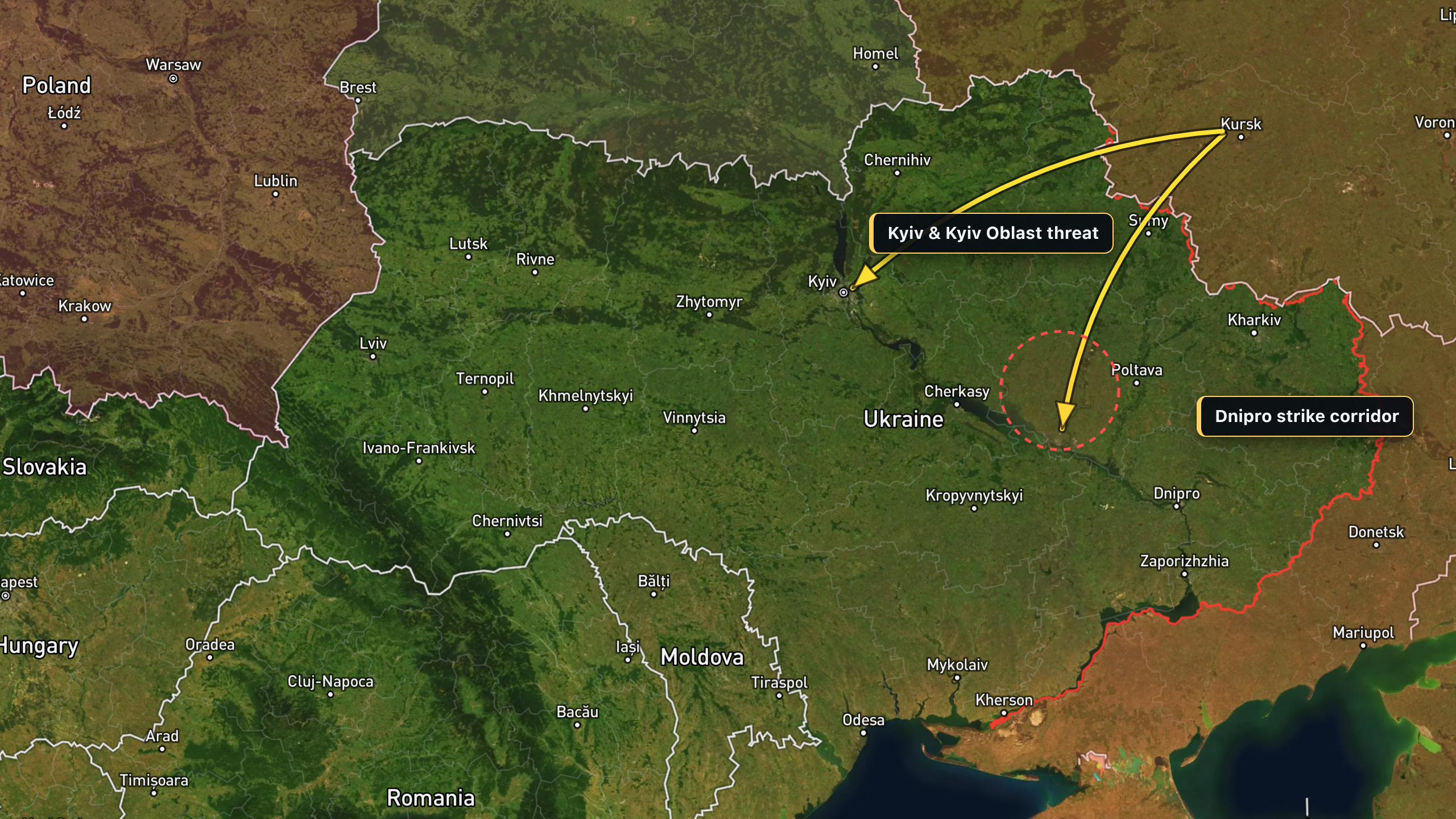
- Russia conducted massed overnight ballistic and cruise missile strikes across central and northern Ukraine targeting Kyiv, Dnipro, and Pryluky with residential areas confirmed damaged.
- Israeli military reports 100,000 cumulative strikes since October 2023: 65,000 Gaza, 28,000 Lebanon/Syria, 4,500 Iran, 80 Yemen.
- Saudi-led coalition air defense intercepted Houthi ballistic missile north of Riyadh, continuing baseline pattern of contested airspace.
- Polish airspace restrictions activated over Lublin and Rzeszów following Russian strikes, reflecting NATO member contingency protocols.
- Aframax tanker Rio reportedly damaged off Sochi with oil spill detected; containment operations reportedly not yet commenced.
- Ukrainian General Staff reported 202 combat engagements, 85 Russian airstrikes, and 9,728 unmanned systems deployed in 24-hour period.
Middle East 3 tracked events
The Israeli military released cumulative strike data spanning three years of operations, reporting 100,000 total strikes across multiple theatres since October 7, 2023. The breakdown reveals concentrated pressure on Gaza with approximately 65,000 strikes, followed by 28,000 across Lebanon and Syria, 4,500 against Iranian targets, and 80 strikes into Yemen. This metric underscores the sustained intensity and geographic scope of Israeli air operations, though it does not differentiate between strike types, munition payloads, or damage assessments. The figure serves as an operational summary of campaign scale rather than a measure of tactical or strategic outcome.
Meanwhile, Saudi-led coalition air defenses intercepted and destroyed a Houthi ballistic missile north of Riyadh, continuing a pattern of contested airspace over the Arabian Peninsula. This engagement reflects ongoing Houthi capability to launch long-range threats despite three years of degradation, though interception success rates remain high. The incident maintains baseline tension in regional airspace but does not represent escalation beyond established patterns of Houthi strikes and coalition responses.
Separate to the core conflict zones, an Aframax-class tanker, the Rio, was reportedly damaged or attacked off Sochi with resulting oil spill. NASA detected two active fire zones associated with the incident, though containment operations reportedly have not yet commenced. The event's origin and attribution remain unclear from available reporting, but it adds to broader patterns of maritime disruption affecting regional commercial shipping and energy infrastructure.
- Israeli military reports 100,000 total strikes since October 7, 2023: ~65,000 in Gaza, ~28,000 in Lebanon/Syri
- Aframax tanker Rio damaged/attacked off Sochi; oil spill reported. NASA detected two active fire zones. Contai
- Saudi-led coalition successfully intercepted and destroyed a Houthi-launched ballistic missile north of Riyadh
Ukraine 30 tracked events
Russia executed a massed overnight ballistic and cruise missile strike across Ukraine with multiple strike packages originating from interior Russian territory. Confirmed launches included 10 Iskander/RK-48U ballistic missiles from Bryansk targeting Kyiv, 4 Iskander-M/KN-23 variants from Voronezh and Taganrog targeting Dnipro, and 6 Zircon quasi-ballistic missiles from undisclosed origin. Cruise missile groups consisting of multiple Kh-101 variants and Kalibr systems tracked toward Pryluky, Kremenchuk, Oleksandriya, and other interior targets. This represents a sustained multi-vector strike pattern characteristic of recent Russian operational tempo, with geographic distribution across central and northern Ukraine.
Ukrainian air defense and monitoring reported active engagement throughout the strike window with air raid sirens maintained across multiple regions and civilian shelter-in-place protocols activated. Residential areas in Pryluky sustained confirmed strikes from cruise missile impact, with multiple buildings damaged. The Ukrainian General Staff recorded 202 combat engagements across frontline positions on day 1687 of the war, alongside reported Russian employment of 85 airstrikes using 278 guided munitions and deployment of 9,728 unmanned aerial systems. These figures reflect sustained Russian attrition-focused air campaign patterns combined with ground pressure.
Polish authorities closed airspace over Lublin and Rzeszów via NOTAMs in response to unplanned military activity related to state security following Russian strikes. This precautionary measure indicates regional response protocols activated by cross-border missile transits and reflects NATO member contingency procedures. The Ukrainian General Staff released casualty claims attributing 1,545,950 total Russian personnel losses since campaign onset, with 1,690 additions in the preceding 24 hours, alongside equipment losses including 12,396 tanks and 25,498 armored vehicles. Independent verification of these figures remains limited.
- Russia conducted massed overnight strike on Ukraine: 10 Iskander/RK-48U ballistic missiles (Bryansk) on Kyiv;
- Ukrainian air monitoring: 1 Russian ballistic missile over Atak.
- Ukrainian air monitoring: 1 Russian cruise missile over Atak.
- Ukrainian air monitoring: 1 Russian ballistic missile over Atak.
- Ukrainian General Staff operational summary for day 1687 of war: 202 combat engagements recorded; Russian forc
- Russian cruise missiles struck residential areas in Pryluky, Ukraine. Multiple cruise missile groups tracked t
What to watch
Monitor Russian strike pattern continuation, particularly coordination timing between ballistic and cruise systems across multi-vector targeting. Track Ukrainian air defense effectiveness metrics and civilian casualty reports from confirmed strike zones. Observe Polish/NATO response measures and any escalatory signaling from regional capitals. Watch Houthi capability for additional launches and Saudi response readiness. Monitor maritime domain for further incident reports near Russian Black Sea ports. Track weather conditions affecting air operations and visibility for damage assessment over next 48 hours.