Syria arrests war crimes suspect; Ukraine defies ceasefire calls amid massive drone barrages
Key developments
- Syria arrested Mihraç Ural, primary suspect in 2013 Banias massacre, during attempted border escape; public celebrations reported in affected communities.
- Israeli airstrikes targeted Mount Hermon positions in Rif Dimashq; infiltration operations conducted in Daraa countryside with fires set to civilian structures.
- Israeli President Herzog circumvented Turkish airspace restrictions to attend Baku summit with Iranian representative; multiple regional delegations protested his attendance.
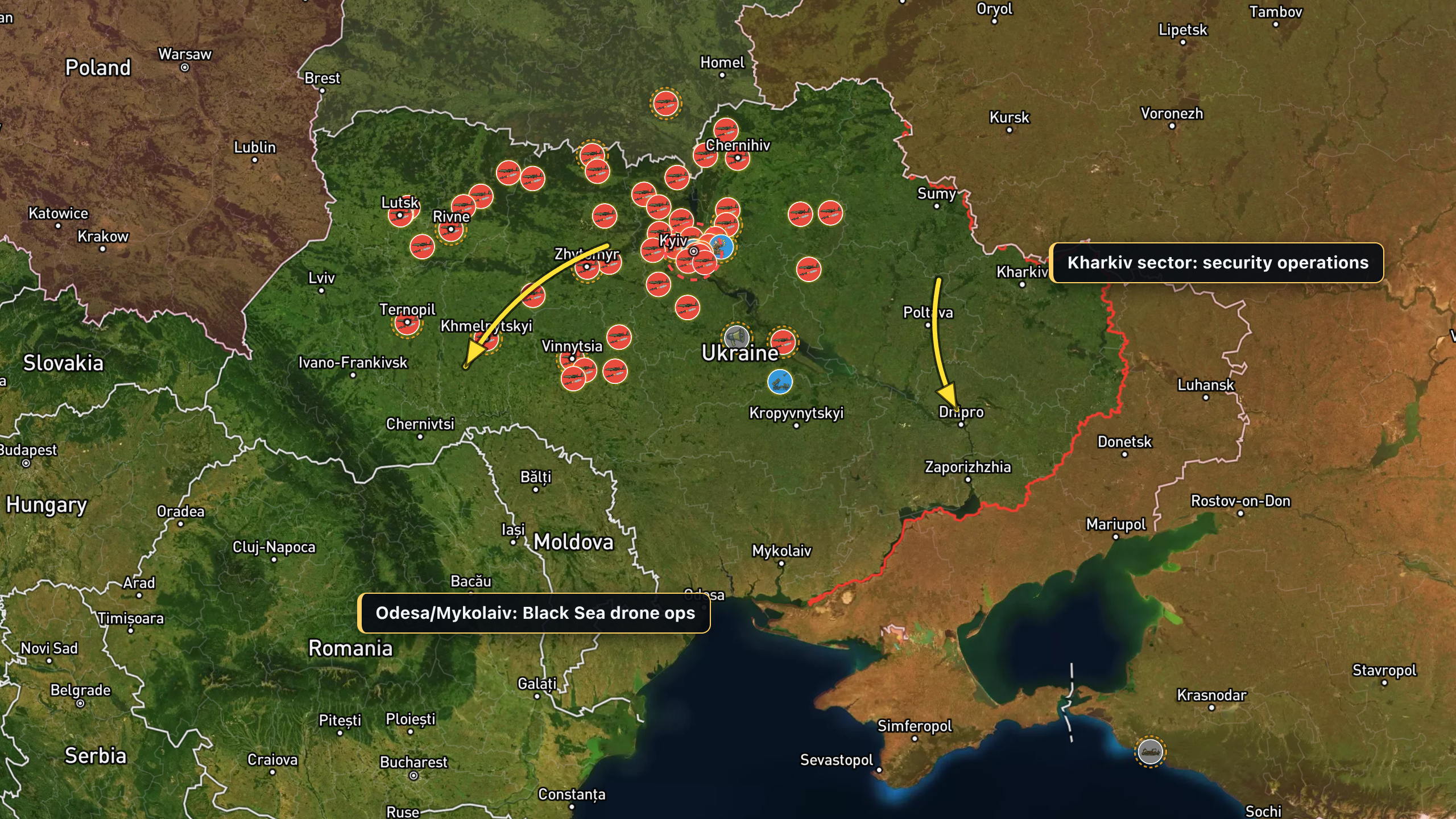
- Ukraine sustained massive Russian drone and missile barrage across six oblasts; three Kyiv power plants lost all production capacity; civilian supermarket struck in Mayaky.
- President Zelensky declared Ukraine will resume Russian refinery strikes despite Trump ceasefire calls, citing continued Russian attacks and alleged U.S. intelligence restrictions.
- Ukrainian forces struck Russian refinery in Ryazan Oblast; civilian cargo vessel damaged by drones in Romanian Black Sea waters.
- Iran reportedly conducted ballistic missile test from Zanjan during IRGC readiness drills; U.S. reportedly developed contingency plans for strikes on Iranian nuclear infrastructure.
Middle East 21 tracked events
Syrian General Intelligence arrested Mihraç Ural (also known as Ali Kayali) on October 15, the primary suspect in the 2013 Banias massacre that killed dozens of civilians. Ural, suspected leader of the pro-Assad militia Syrian Resistance, was apprehended during an attempted border escape. Public celebrations erupted in Banias village with residents chanting takbir in response to the arrest, indicating significant local support for accountability measures. The arrest represents a notable shift in post-conflict justice mechanisms within Syria's transitional security environment, though details regarding the interrogation and formal charges remain limited.
Israeli military operations continued across Syrian territory with airstrikes targeting positions on Mount Hermon slopes above Baqsam village in Rif Dimashq governorate. Separately, Israeli forces conducted infiltration operations in Wadi al-Raqad, Daraa countryside, setting fires to agricultural storage and residential structures; no casualties were reported. These operations reflect ongoing Israeli presence and military engagement in southern Syria despite broader regional diplomatic developments. The incidents underscore persistent Israeli security concerns regarding cross-border threats originating from Syrian territory.
Diplomatic engagement in the region showed mixed signals. Israeli President Herzog traveled to Baku via commercial flight through Turkish airspace to attend a summit reportedly including an Iranian representative—a notable circumvention of Ankara's ban on Israeli state aircraft. Simultaneously, Qatar's Interior Minister met with Syrian counterparts in Damascus to strengthen bilateral security cooperation, signaling normalization efforts with the HTS-led Syrian government. However, delegations from Turkey, Iran, Kuwait, Pakistan, and the Palestinian Authority walked out of the CICA summit in Baku to protest Herzog's attendance, reflecting persistent divisions over Israeli participation in regional forums.
- Syrian General Intelligence arrested Ali Kayali (alias Mihrac Ural), suspected leader of pro-Assad militia Syr
- Syrian General Intelligence and Interior Ministry arrested Mihraç Ural (alias Ali Kayali), the primary suspect
- Syrian General Intelligence and Interior Ministry arrested Mihraç Ural (alias Ali Kayali), the primary suspect
- Israeli occupation forces conducted airstrikes on military positions on Mount Hermon slopes above Baqsam villa
- Iran test-launched a ballistic missile from Zanjan as part of ongoing IRGC missile readiness drills. No target
- Israeli President Herzog traveled to Baku aboard commercial AZAL flight via Turkish airspace, circumventing An
Ukraine 30 tracked events
Ukraine faced an intense Russian drone and missile campaign on October 15, with air monitoring systems tracking multiple Shahed-type drones and Banderol cruise missiles targeting installations across northern and central regions including Kyiv, Vinnytsia, Khmelnytskyi, Poltava, and Dnipro oblasts. A Geran-4 drone struck the Tavria V supermarket in Mayaky, Odesa Oblast, injuring multiple civilians. Three major Kyiv power plants reportedly lost all electricity production capacity following Russian strikes, indicating critical infrastructure degradation. The sustained scale and geographic distribution of strikes demonstrate Russia's continued commitment to energy and civilian infrastructure targeting despite ceasefire negotiations.
President Zelensky declared that Ukraine would resume strikes on Russian oil refineries despite Trump's ceasefire announcement, citing Moscow's continued attacks on Ukrainian energy infrastructure as justification. Zelensky claimed that U.S. intelligence threatened to block intelligence sharing if Ukraine halted such strikes, and he linked alleged intelligence restrictions to Elon Musk's decision to throttle Starlink services. Ukrainian forces struck a Russian refinery in Ryazan Oblast overnight, demonstrating operational follow-through. Zelensky also stated that Iran possesses missiles and drones with 4,000+ kilometer range and argued no European nation possesses adequate air defense capability for massed drone attacks at this scale.
Ukrainian air defenses remained active throughout the day with sirens activated in Kyiv and multiple regions warning of incoming threats. A civilian cargo vessel, Wine Trader, was damaged by two drone strikes in Romanian territorial waters of the Black Sea, with four crew members remaining aboard as rough seas prevented rescue operations. This incident highlights the extension of Ukrainian-Russian conflict dynamics into international waters and NATO-member territory. The cumulative effects of infrastructure damage, extended air raid warnings, and civilian casualties continue to characterize the operational environment despite international ceasefire initiatives.
- President Zelensky claims U.S. intelligence threatened to block sharing if Ukraine did not halt strikes. Zelen
- President Zelensky declares Ukraine will resume strikes on Russian oil refineries despite Trump's ceasefire an
- Ukrainian air monitoring: 1 Russian jet-powered Shahed (Geran-3) drone heading toward Vinnytsia Oblast, destin
- Ukrainian air monitoring: 1 Russian jet-powered Shahed (Geran-3) drone heading toward Khmelnytskyi Oblast.
- Ukrainian air monitoring reports 1+ Russian jet-powered Shahed (Geran-3) drone(s) transiting northern Zhytomyr
- Zelensky claims Iran possesses missiles and drones with 4,000+ km range, states no European nation has capabil
What to watch
Monitor Syrian judicial proceedings against arrested suspects and potential extradition requests from international courts. Assess whether Israeli operations in southern Syria escalate or stabilize. Track Zelensky-Trump communications regarding ceasefire compliance and intelligence sharing. Watch for Iranian responses to U.S. contingency planning statements and any escalation in ballistic missile testing. Observe whether Russian drone campaign intensity continues at current levels or adjusts. Monitor regional diplomatic activity around Baku summit outcomes and Israeli-Iranian contact channels. Assess civilian casualty patterns in Ukraine and critical infrastructure recovery timelines.