Russian Shahed drone tracked transiting northern Zhytomyr toward Rivne Oblast
What happened
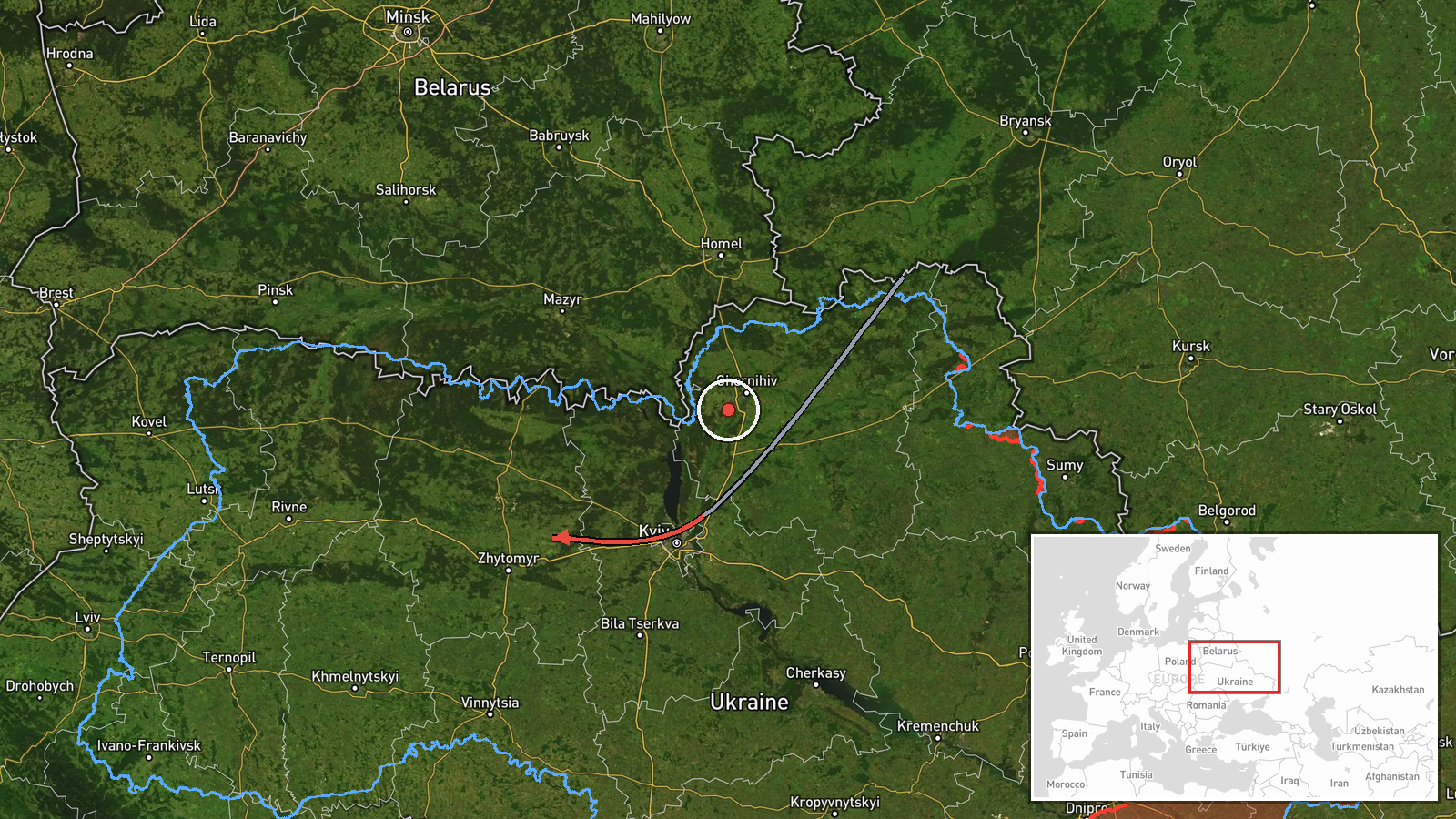
Ukrainian air monitoring reported at least one Russian jet-powered Shahed (Geran-3) drone in transit over northern Zhytomyr Oblast on October 15 at approximately 12:10 UTC, heading toward Rivne Oblast. The Shahed is a long-range loitering munition capable of striking targets at extended range. The report was issued by the Kyiv Post System of Air Monitoring (@kpszsu) via Telegram. No interception or impact details were provided in the initial report.
Context and assessment
Zhytomyr and Rivne oblasts lie northwest of Kyiv and represent a persistent corridor for Russian drone operations targeting civilian and military infrastructure across northern Ukraine. This transit represents one of several tracked Shahed movements across the region on October 15, following similar trackings near Korostyshiv, Chopovychi, Liubar, and Makariv. The concentration of jet-powered drone activity in this sector may indicate a coordinated wave or sustained pressure campaign against northwestern Ukrainian targets. Shahed drones have been used throughout the conflict to strike energy infrastructure, command facilities, and logistics hubs; their speed and altitude make interception challenging.
Sources and confidence
Reported by Kyiv Post System of Air Monitoring (@kpszsu) via Telegram. Single-source reporting; confidence score of 8.0 reflects the established reliability of official Ukrainian air monitoring channels and corroboration by multiple related drone transit events on the same date and in adjacent areas. Higher confidence would require independent cross-confirmation from additional monitoring sources or air defense acknowledgments.
Location
Northern Zhytomyr Oblast, approximately 50.26°N, 28.68°E. Region-level precision. Located in the northwestern portion of Zhytomyr Oblast, near the border with Rivne Oblast. The area lies roughly 80–100 km northwest of Kyiv and represents open, relatively sparsely populated terrain typical of central-western Ukraine.
Related events nearby
- Russian jet-powered Shahed (Geran-3) drone tracked transiting from northern Zhytomyr Oblast toward northern Ri2026-10-15 01:52 UTC · Drone Transit · Zhytomyr Oblast, Ukraine
- Ukrainian air monitoring: 1 Russian jet-powered Shahed (Geran-3) drone from Zhytomyr Oblast toward Korostyshiv2026-10-15 02:38 UTC · Drone Transit · Korostyshiv, Ukraine
- Ukrainian air monitoring: 1 Russian jet-powered Shahed (Geran-3) drone from Zhytomyr Oblast toward Chopovychi.2026-10-15 05:52 UTC · Drone Transit · Chopovychi, Ukraine
- Ukrainian air monitoring: 1 Russian jet-powered Shahed (Geran-3) drone from Zhytomyr Oblast toward Liubar.2026-10-15 09:27 UTC · Drone Transit · Liubar, Ukraine
- Ukrainian air monitoring: 1 Russian jet-powered Shahed (Geran-3) drone heading toward Makariv.2026-10-15 07:38 UTC · Drone Transit · Makariv, Ukraine
▶ View this event on the live map

Intel Mapper aggregates open-source reports from monitored Telegram and X channels, geolocates them, cross-checks duplicates across sources and assigns a confidence score. Entries are updated as new confirmations arrive. Read how we verify events.