Russian FPV drones strike Ukrainian unmanned ground vehicles in Kharkiv Oblast
What happened
Russian forces deployed first-person view (FPV) and kamikaze unmanned aerial systems to target Ukrainian unmanned ground vehicles (UGVs) in Kharkiv Oblast on 10 September. The attack represents part of an ongoing Russian campaign to degrade Ukrainian autonomous systems across the front. The strike was reported via social media, with limited initial detail on specific locations or damage assessment within the oblast.
Context and assessment
Kharkiv Oblast remains a focal point of intense Russian drone operations and ground combat. Ukrainian forces have increasingly relied on remotely operated and autonomous ground systems to mitigate personnel losses and extend reconnaissance capability across difficult terrain. Russian counter-UGV strikes indicate Moscow's recognition of this threat and effort to neutralize Ukrainian technological advantages. This engagement follows a Shahed-136 intercept in the same oblast hours earlier and occurred during a period of sustained Russian offensive pressure, with 221 reported engagements across multiple frontline sectors on 9 September. Russia's shift to targeting autonomous systems reflects tactical adaptation to Ukrainian defensive posture.
Sources and confidence
Single report from X account @ConflictTR; no cross-confirmation from additional independent sources documented. Confidence score of 6.0 reflects limited source diversity and lack of Ukrainian official confirmation. Additional verification from Ukrainian military or security sources, satellite imagery, or secondary reporting would strengthen confidence. Single-source reporting on drone strikes carries inherent uncertainty regarding scale and targeting precision.
Location
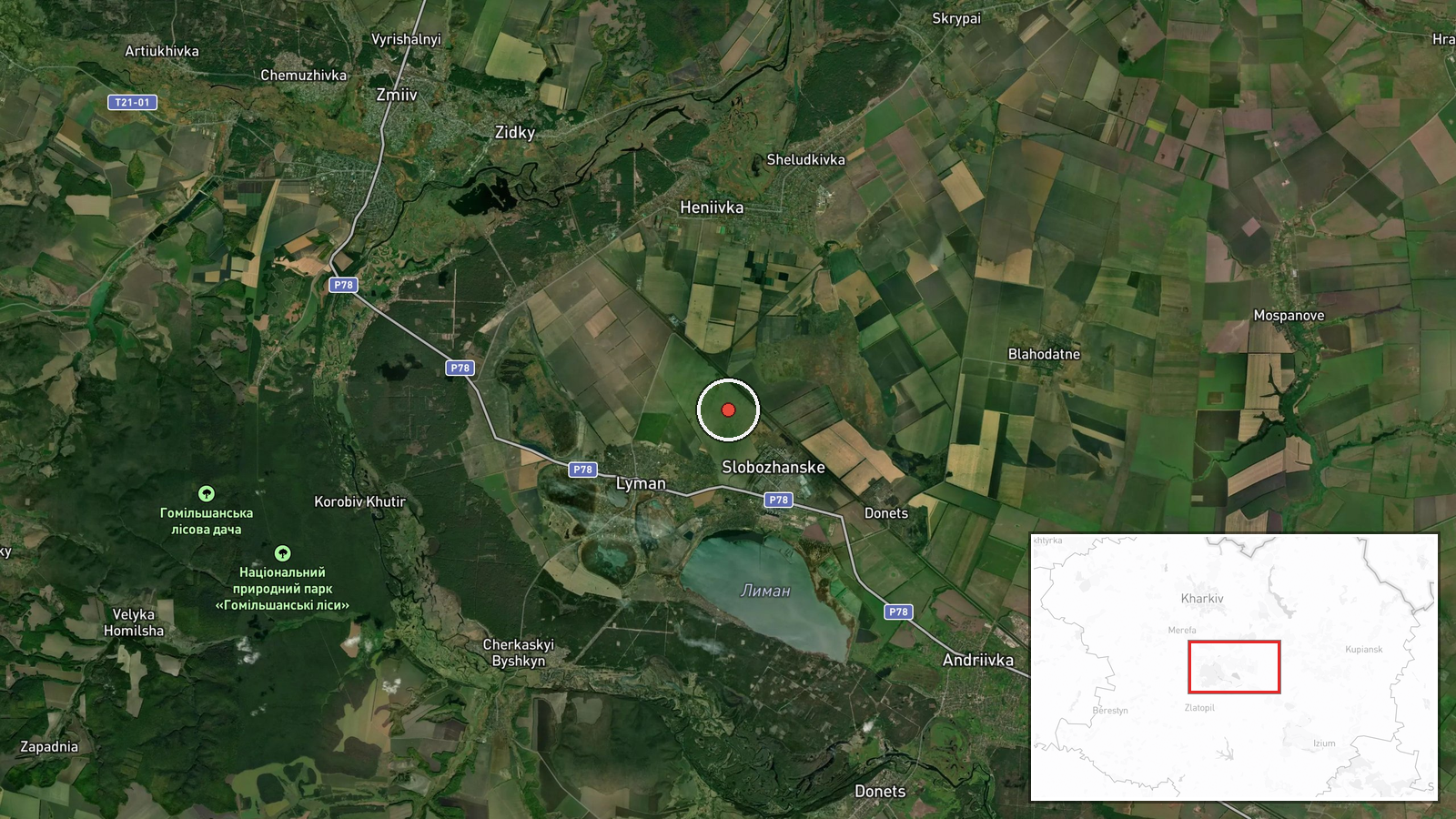
Kharkiv Oblast, eastern Ukraine, with exact geographic coordinates provided (49.61°N, 36.50°E). The oblast forms part of the northeastern front and has experienced sustained Russian air operations. Precise settlement identification not specified in available reporting; location determined to exact precision level by source data.
Related events nearby
- Ukrainian forces report significant advances in the Lyman direction, with Russian sources expressing concern a2026-09-11 00:01 UTC · Combat · Lyman, Donetsk Oblast, Ukraine
- Russian Shahed-136 kamikaze drones struck a shopping center in Pavlohrad, Ukraine, killing 3 people and injuri2026-09-10 15:22 UTC · UAS Strike · Pavlohrad, Dnipropetrovsk Oblast, Ukraine
- Russian forces advanced (~5 km²) in the Oleksiievo-Druzhkivka sector per DeepState frontline update. No settle2026-09-10 12:20 UTC · Combat · Oleksiievo-Druzhkivka sector, Ukraine
▶ View this event on the live map
Intel Mapper aggregates open-source reports from monitored Telegram and X channels, geolocates them, cross-checks duplicates across sources and assigns a confidence score. Entries are updated as new confirmations arrive. Read how we verify events.