Russian forces strike Odesa port, hitting five dry cargo vessels
What happened
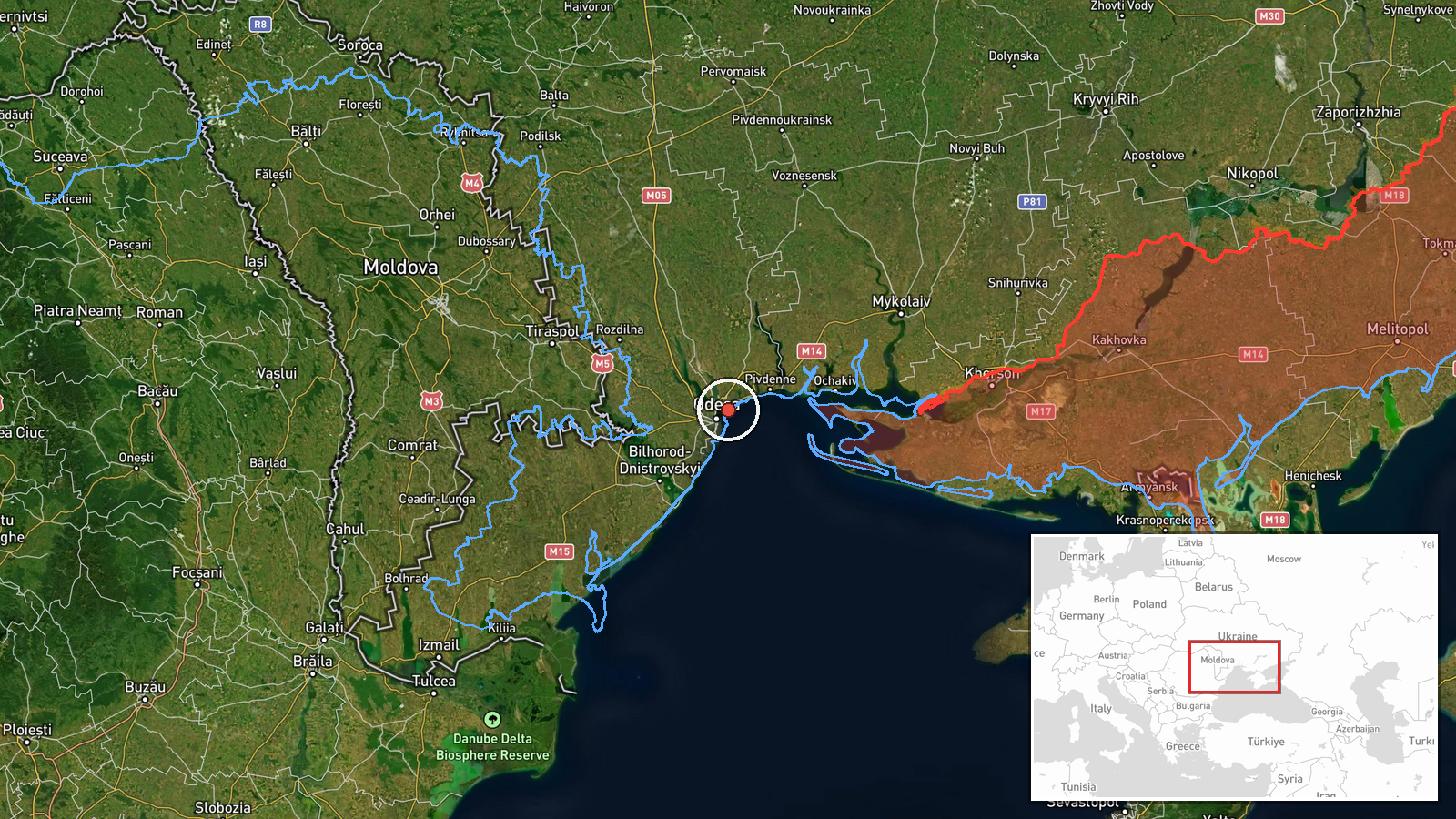
Russian forces attacked Ukrainian Black Sea port infrastructure at Odesa on September 18, reportedly striking five dry cargo vessels in the harbor. The attack targeted commercial shipping operations at one of Ukraine's main maritime trade hubs. The report was sourced from X (@ConflictTR) and documented as occurring at 14:55 UTC. This strike followed earlier Russian drone activity in the Odesa region the same day, including transits and a strike on an administrative building in central Odesa.
Context and assessment
Odesa port remains Ukraine's primary outlet for grain exports and general maritime commerce following the closure of the Danube corridor. Russian strikes on commercial shipping and port infrastructure have intensified as part of a broader campaign to disrupt Ukrainian trade and economic capacity. The September 18 attack fits an escalating pattern: Ukrainian air defense tracked multiple Shahed-136 reactive drones transiting toward Odesa throughout the morning and early afternoon, with confirmed impacts on civilian infrastructure and now port vessels. Such targeting suggests Russia seeks to compound economic pressure on Kyiv by degrading export capacity and deterring commercial navigation through the Black Sea.
Sources and confidence
Report sourced from X (@ConflictTR), a Turkish conflict monitoring account. Single-channel confirmation limits confidence to 6.0 out of 10. Cross-corroboration with Ukrainian official statements, port authority reports, or independent maritime intelligence would substantially raise confidence. Photographic evidence of vessel damage or Ukrainian air defense confirmations of drone impact would strengthen assessment.
Location
Odesa port, located in Odesa city on Ukraine's southern Black Sea coast (46.53°N, 30.81°E). The facility encompasses the main commercial harbor and anchorages handling dry cargo, container, and general vessels. Odesa lies approximately 40 kilometers west of the Dniester River, which marks the Moldova border. The port is the largest Ukrainian maritime terminal.
Related events nearby
- Four reactive-engine drones (Shahed variants) tracked in transit toward Odesa city. Ukrainian air raid monitor2026-09-18 00:37 UTC · Drone Transit · Odesa, Odesa Oblast, Ukraine
- Russian reactive (jet-powered Shahed-136) drone struck an administrative building in central Odesa, causing fi2026-09-18 14:30 UTC · UAS Strike · Administrative building, Odesa, Ukraine
- Russian reactive/jet-powered Shahed-136 drone detected transiting westward toward Odesa from the west. Ukraini2026-09-18 13:34 UTC · Drone Transit · Mykolaiv Oblast, Ukraine
- Two UMPB-5 (Shahed-variant reactive-engine) drones tracked in transit toward Mayaky, Odesa Oblast. Continuatio2026-09-18 00:53 UTC · Drone Transit · Mayaky, Odesa Oblast, Ukraine
▶ View this event on the live map
Intel Mapper aggregates open-source reports from monitored Telegram and X channels, geolocates them, cross-checks duplicates across sources and assigns a confidence score. Entries are updated as new confirmations arrive. Read how we verify events.