Russian warship retrofitted with anti-drone nets and steel cages in Sevastopol
What happened
A Russian naval vessel in Sevastopol has been outfitted with protective nets and steel cage structures, reportedly as a countermeasure against unmanned aerial attacks. The modification was documented on September 19. The retrofit suggests operational concern over drone threats to Russian maritime assets in the Black Sea, where Ukrainian forces have conducted multiple naval strikes in recent months.
Context and assessment
Sevastopol serves as Russia's primary Black Sea Fleet headquarters and hosts major naval installations. The defensive retrofit reflects a pattern of Ukrainian drone operations targeting Russian military infrastructure in Crimea, including the strike on a Saky Air Base ground control station on September 17–18. Such passive defenses indicate Russian efforts to adapt vessel-level protection against the evolving threat of maritime drone attacks, which have damaged or destroyed multiple Russian ships since 2022. The measure may reflect broader constraints on active air defense systems or their perceived ineffectiveness against low-altitude drone approaches.
Sources and confidence
Reported by X account @ConflictTR on September 19. Single-source reporting limits confirmation; the image-based evidence appears visual but cross-verification with independent sources is absent. Confidence score of 6.0 reflects plausible adaptation to known Ukrainian drone threats but lack of corroboration. Independent Russian or third-party confirmation would strengthen confidence substantially.
Location
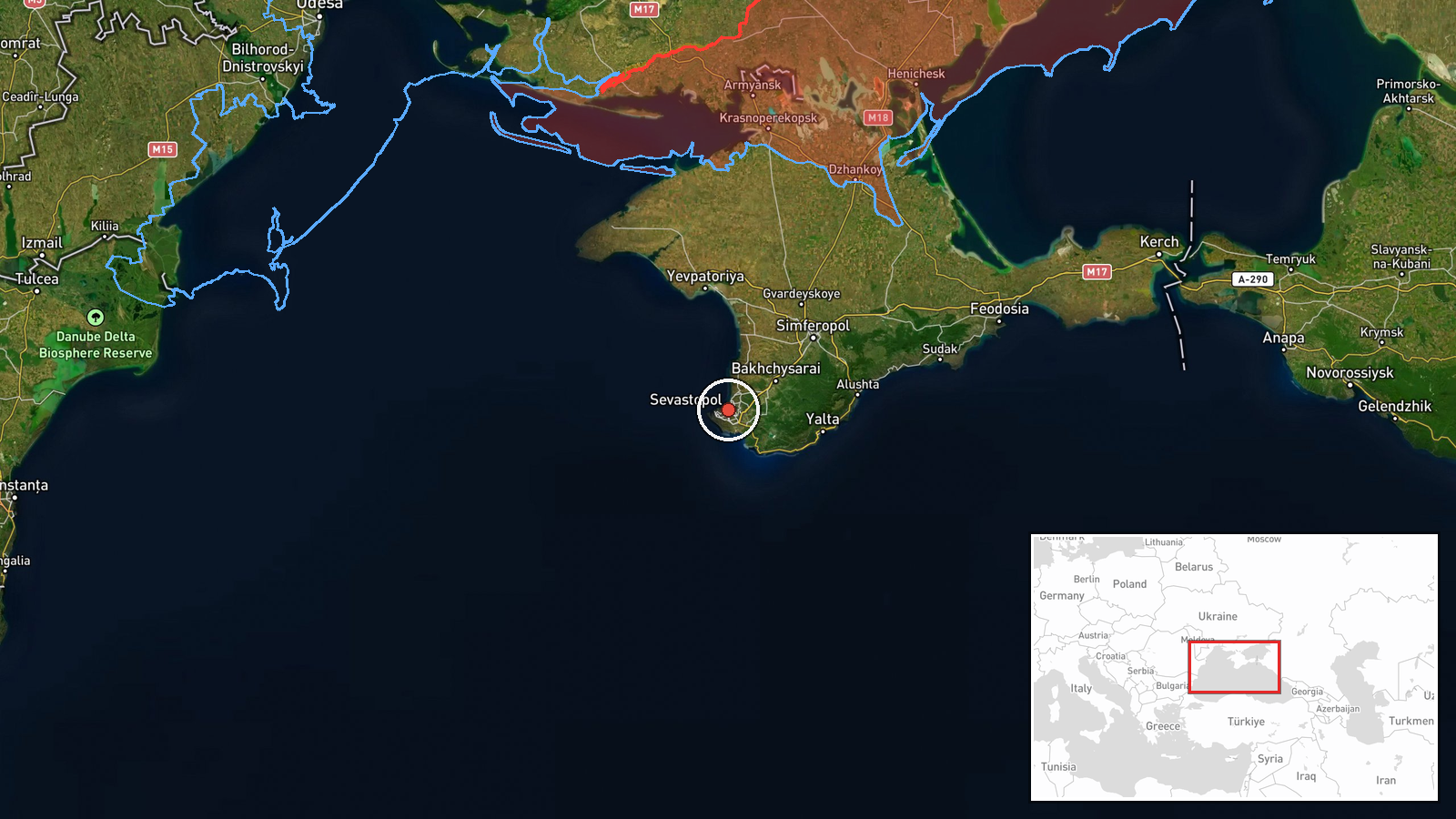
Sevastopol, Crimea, located at the southern tip of the Crimean Peninsula on the Black Sea coast. Sevastopol is Russia's primary naval base in the Black Sea and home to extensive port facilities. The city's strategic position and concentration of military assets make it a recurring focus of Ukrainian drone operations and intelligence monitoring.
Related events nearby
- Ukrainian forces struck a ground control station for Russian Orion reconnaissance-attack UAVs at Saky Air Base2026-09-18 09:43 UTC · UAS Strike · Novofedorivka, Saky Air Base, Crimea
▶ View this event on the live map
Intel Mapper aggregates open-source reports from monitored Telegram and X channels, geolocates them, cross-checks duplicates across sources and assigns a confidence score. Entries are updated as new confirmations arrive. Read how we verify events.