Saudi Aramco loads 14 million barrels for Strait of Hormuz export amid regional tensions
What happened
Saudi Aramco reportedly loaded 14 million barrels of crude oil for export via the Strait of Hormuz on 21 September 2026, according to a statement shared on X by @ConflictTR. The announcement indicates an intensification of petroleum logistics through the strategic waterway. The timing reflects efforts to maintain export capacity amid broader regional instability and U.S. sanctions targeting Iranian aviation.
Context and assessment
The Strait of Hormuz remains one of the world's most critical chokepoints for global energy supplies, with roughly one-third of all seaborne traded oil transiting the passage. This shipment announcement follows two significant incidents on the same day: an Iranian strike on an oil tanker in the strait earlier that morning, and an IRGC claim to have shot down a U.S. MQ-1 Predator drone over Hormozgan Province. Aramco's loading of such a substantial cargo volume suggests continued operational confidence in maintaining export routes despite these escalating maritime tensions. The concentration of incidents and cargo movements on 21 September may indicate a broader pattern of elevated activity and risk in the region.
Sources and confidence
Single source via X account @ConflictTR, which appears to cite Aramco's own statement. No cross-confirmation from independent shipping trackers or Aramco's official channels noted in available data. Confidence score of 6/10 reflects the single-source basis and absence of corroboration. Independent verification from UKMTO, AIS tracking data, or official Aramco statement would increase confidence substantially.
Location
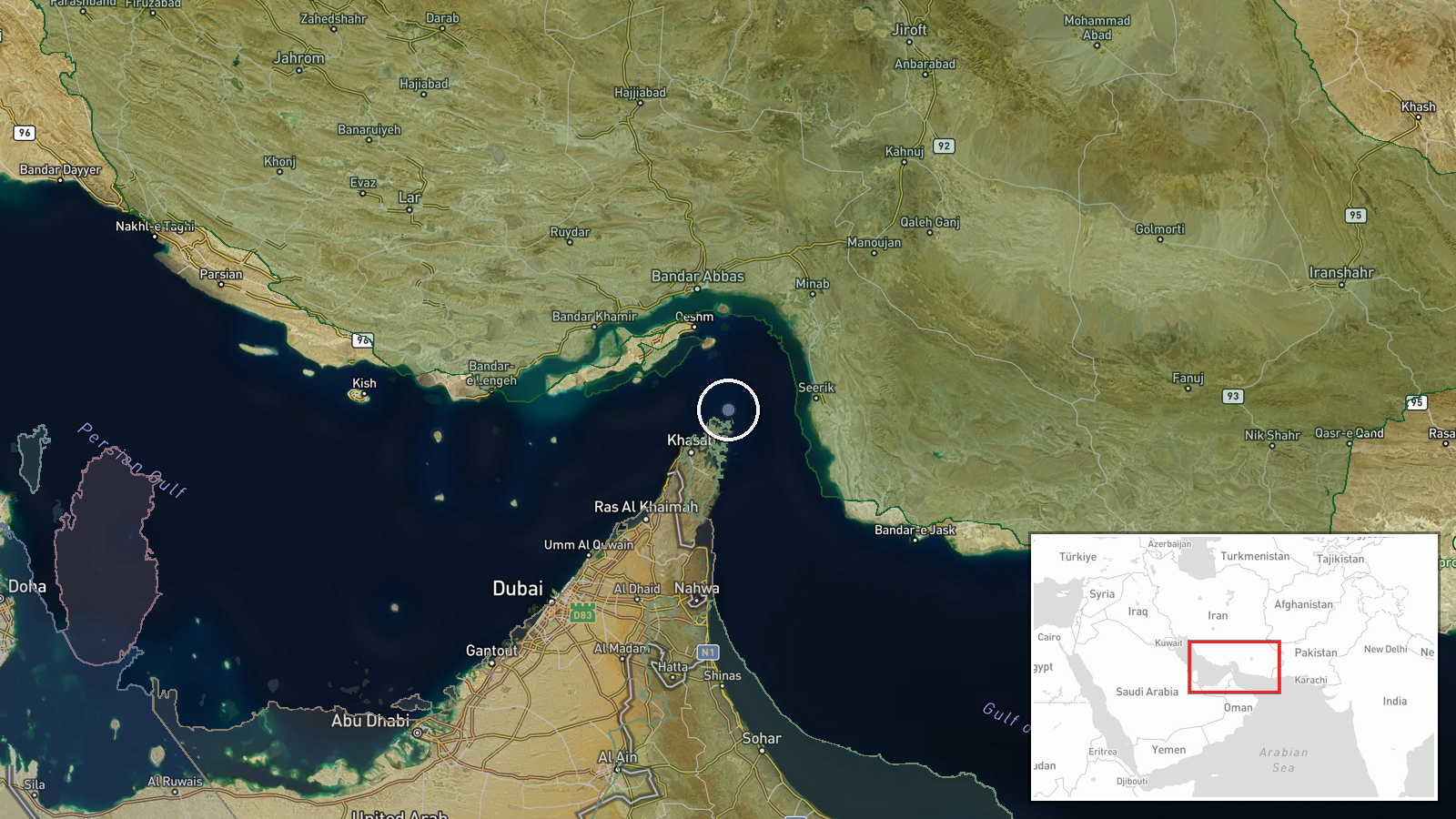
The Strait of Hormuz, the maritime passage separating Iran and Oman. Cargo movement encompasses Iran-Oman waters, one of the world's busiest shipping lanes. The strait lies approximately 300 kilometres east of the Persian Gulf and is narrowest at Hormuz Island.
Related events nearby
- Iranian forces struck two vessels transiting the Strait of Hormuz: one petroleum tanker and one liquefied natu2026-09-21 16:49 UTC · Naval · Strait of Hormuz, Iran-Oman Waters
- Iranian strikes hit oil tanker transiting Strait of Hormuz. UKMTO confirms Iranian attribution. Vessel sustain2026-09-21 09:40 UTC · Naval · Strait of Hormuz, Iran-Oman Waters
- Iran's Islamic Revolutionary Guard Corps (IRGC) claimed it shot down a U.S. MQ-1 Predator drone over Hormozgan2026-09-21 04:41 UTC · Drone Shootdown · Strait of Hormuz, Iran-Oman Waters
▶ View this event on the live map
Intel Mapper aggregates open-source reports from monitored Telegram and X channels, geolocates them, cross-checks duplicates across sources and assigns a confidence score. Entries are updated as new confirmations arrive. Read how we verify events.