Ukrainian troops evade Russian FPV drone strike in Donetsk Oblast
What happened
Ukrainian soldiers reportedly narrowly escaped a Russian first-person-view (FPV) drone attack targeting their pickup trucks in Donetsk Oblast on October 6. According to a report from X account @ConflictTR, the unmanned aircraft passed in close proximity to the vehicles but the troops avoided impact. The incident occurred amid ongoing daily drone operations across the front, with FPV drones serving as precision munitions in contested areas.
Context and assessment
Donetsk Oblast remains the most heavily contested region in eastern Ukraine, with Russian and Ukrainian forces engaged across multiple axes. The incident reflects the routine exposure of Ukrainian mobile units to Russian drone strikes, a persistent threat since 2024. On the same day, Ukrainian forces conducted multiple UAS strikes—hitting a Russian telecommunications hub in Makiivka and troop concentrations near Sievierodonetsk—while also striking the Snizhne Machine-Building Plant. The near-miss suggests either Ukrainian evasive awareness or technical failure of the FPV weapon system. Such incidents, whether successful or not, indicate sustained Russian attempts to degrade Ukrainian operational mobility.
Sources and confidence
The report originated from X account @ConflictTR (Turkish conflict tracking channel). Only a single source reported this specific incident, resulting in a confidence score of 6.0. Cross-confirmation from Ukrainian official channels or combat footage would strengthen confidence. The low source count and regional-level geolocation precision reflect information gaps; direct video evidence or unit corroboration would raise confidence significantly.
Location
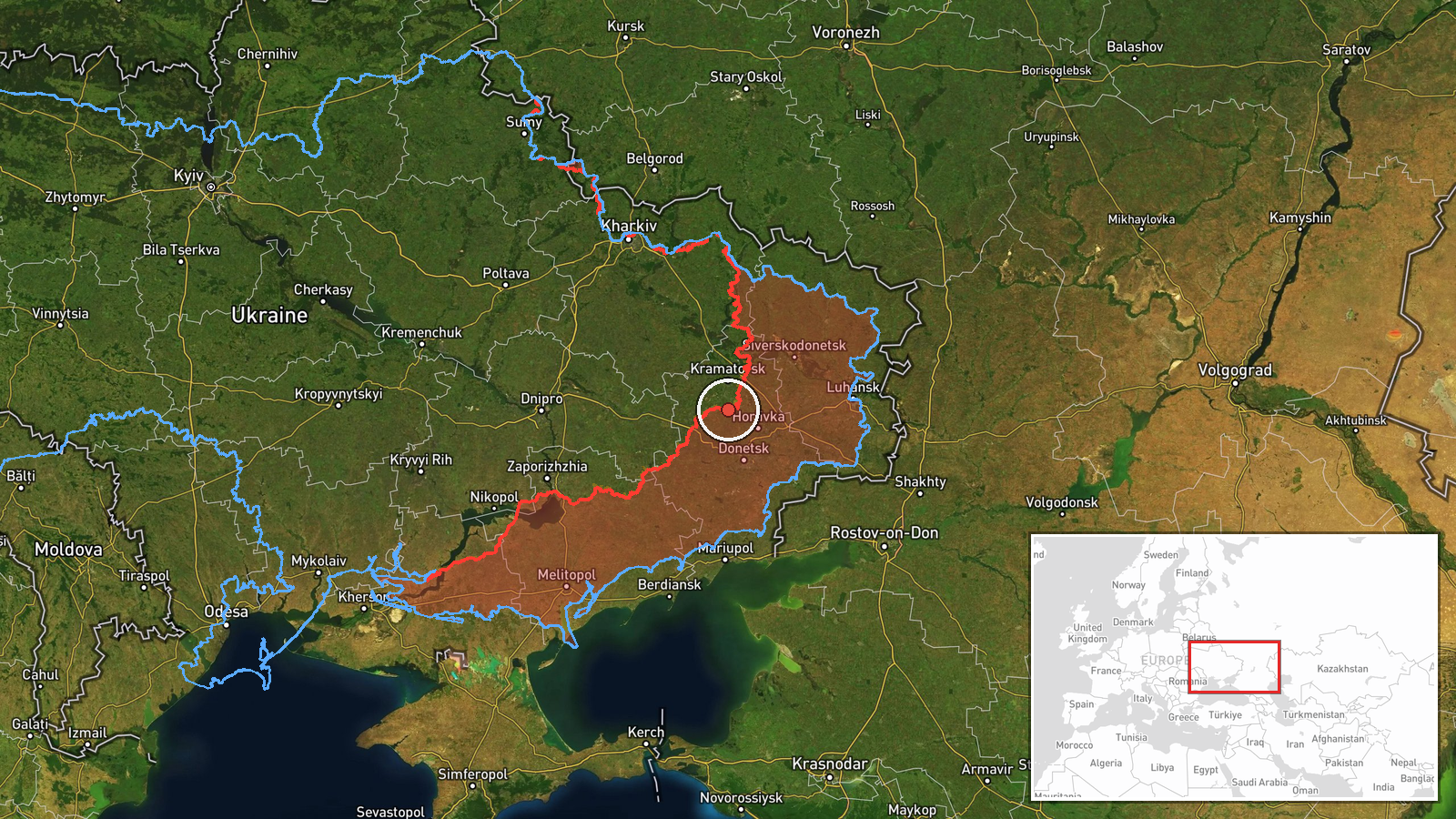
Donetsk Oblast, eastern Ukraine, near coordinates 48.48°N, 37.59°E. Precise settlement or military installation not specified; reported at region-level accuracy. The coordinates place the incident in central-eastern Donetsk, an area of active ground operations where Ukrainian mobile forces operate among Russian-held and contested terrain.
Related events nearby
- Ukrainian Defence Forces struck a Russian telecommunications hub in the Donetsk region on October 5-6, 2026. T2026-10-06 09:23 UTC · UAS Strike · Makiivka, Donetsk Oblast, Ukraine
- Ukrainian Defence Forces conducted a UAS strike on Russian troop concentrations in the Sokologirsk area, Luhan2026-10-06 09:24 UTC · UAS Strike · Sievierodonetsk, Luhansk Oblast, Ukraine
- Ukrainian 413th Separate Reconnaissance Regiment (Raid) struck Snizhne Machine-Building Plant on Russian-occup2026-10-06 15:25 UTC · UAS Strike · Snizhne, Donetsk Oblast, Ukraine
- Ukrainian unmanned ground vehicle rammed and destroyed a Russian drone in combat operations. Ukrainian drone o2026-10-06 18:13 UTC · Drone Shootdown · Kupiansk, Kharkiv Oblast, Ukraine
▶ View this event on the live map
Intel Mapper aggregates open-source reports from monitored Telegram and X channels, geolocates them, cross-checks duplicates across sources and assigns a confidence score. Entries are updated as new confirmations arrive. Read how we verify events.