Syria faces UXO crisis: one casualty every 6 hours since December 2024
What happened
France Press reports that Syria experiences one unexploded ordnance (UXO) casualty every six hours, severely hampering post-war recovery. Since December 8, 2024, documented incidents total 1,337, resulting in 2,375 deaths and injuries. Children account for more than 850 of the casualties. The data underscores the scale of contamination from Syria's 13-year conflict, with ordnance continuing to kill and injure civilians long after major fighting ceased.
Context and assessment
Syria's vast arsenal of unexploded munitions represents a critical impediment to reconstruction and civilian return. The casualty rate—approximately one person every six hours—indicates pervasive contamination across populated areas. This humanitarian emergency coincides with reported infrastructure rehabilitation efforts, such as the recent restart of the Conoco gas facility in Deir ez-Zor, suggesting authorities are attempting economic recovery despite the UXO hazard. The high proportion of child casualties suggests poor access to awareness or safe zones, typical in conflict zones with limited humanitarian presence. The scale may reflect both ongoing conflict legacies and the difficulty of systematic mine/ordnance clearance in economically constrained post-war environments.
Sources and confidence
Reported by France Press via Telegram channel @AJSyriaNow on September 2, 2026. Single source; no cross-confirmation noted in available data. Confidence of 7.5/10 reflects credible news agency reporting but lack of independent verification. Confirmation from international humanitarian organizations or UN agencies would strengthen confidence; contradictory casualty data would lower it.
Location
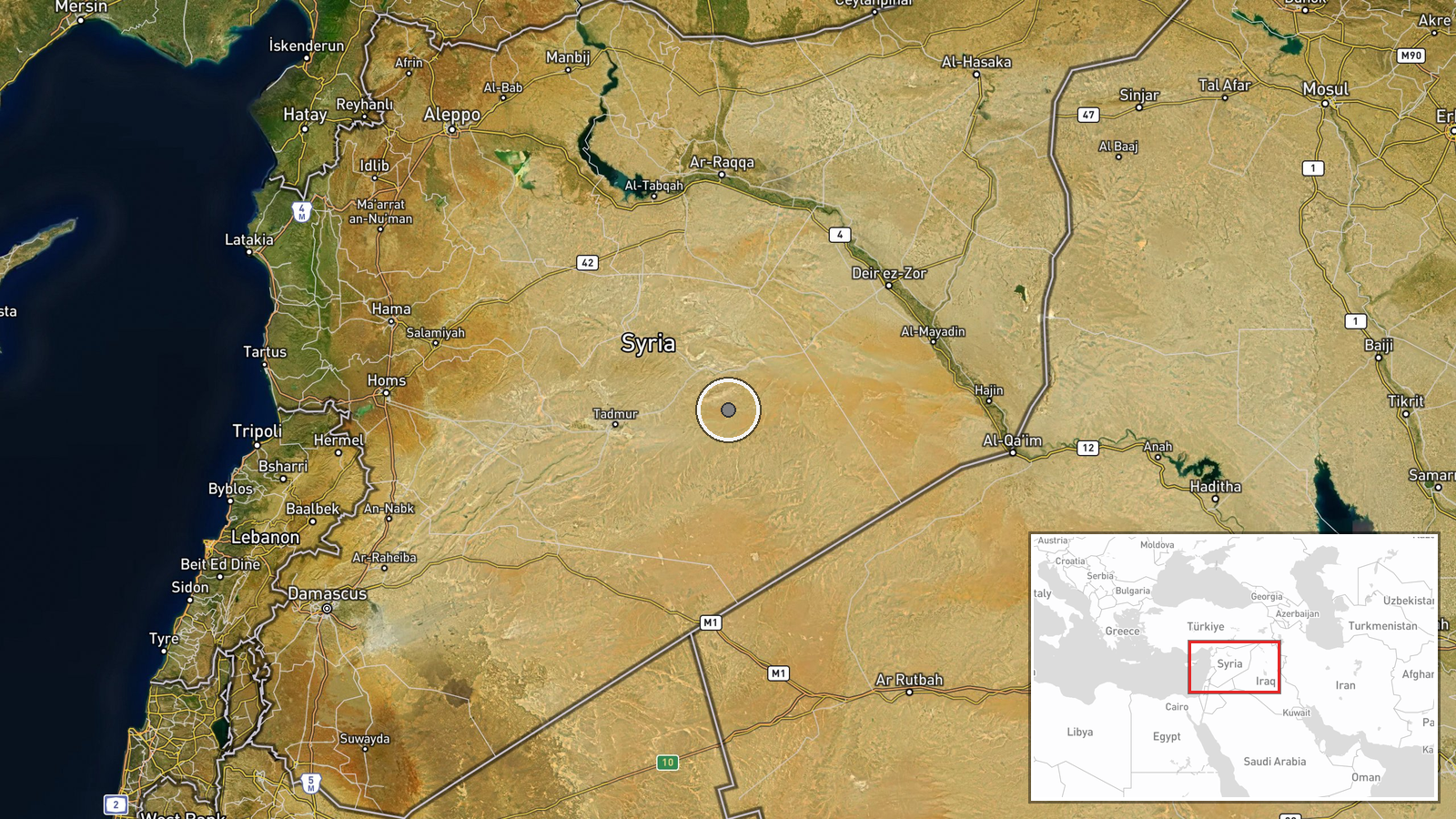
Syria-wide phenomenon. Central coordinates reflect the geographic center of Syria (34.64°N, 39.05°E). UXO incidents documented across the country; Deir ez-Zor province (eastern Syria, Euphrates valley) appears particularly affected based on concurrent infrastructure and deployment activity in that region.
Related events nearby
- Conoco gas facility in Deir ez-Zor resumed operations after rehabilitation. Two wells now producing 2.5 millio2026-09-01 14:52 UTC · Humanitarian Aid · Conoco Gas Plant, Deir ez-Zor, Syria
- Turkish Armed Forces deployed a collapsible ribbon floating bridge across the Euphrates River near Mayadin in 2026-09-02 08:22 UTC · Deployment · Mayadin, Deir ez-Zor, Syria
▶ View this event on the live map
Intel Mapper aggregates open-source reports from monitored Telegram and X channels, geolocates them, cross-checks duplicates across sources and assigns a confidence score. Entries are updated as new confirmations arrive. Read how we verify events.