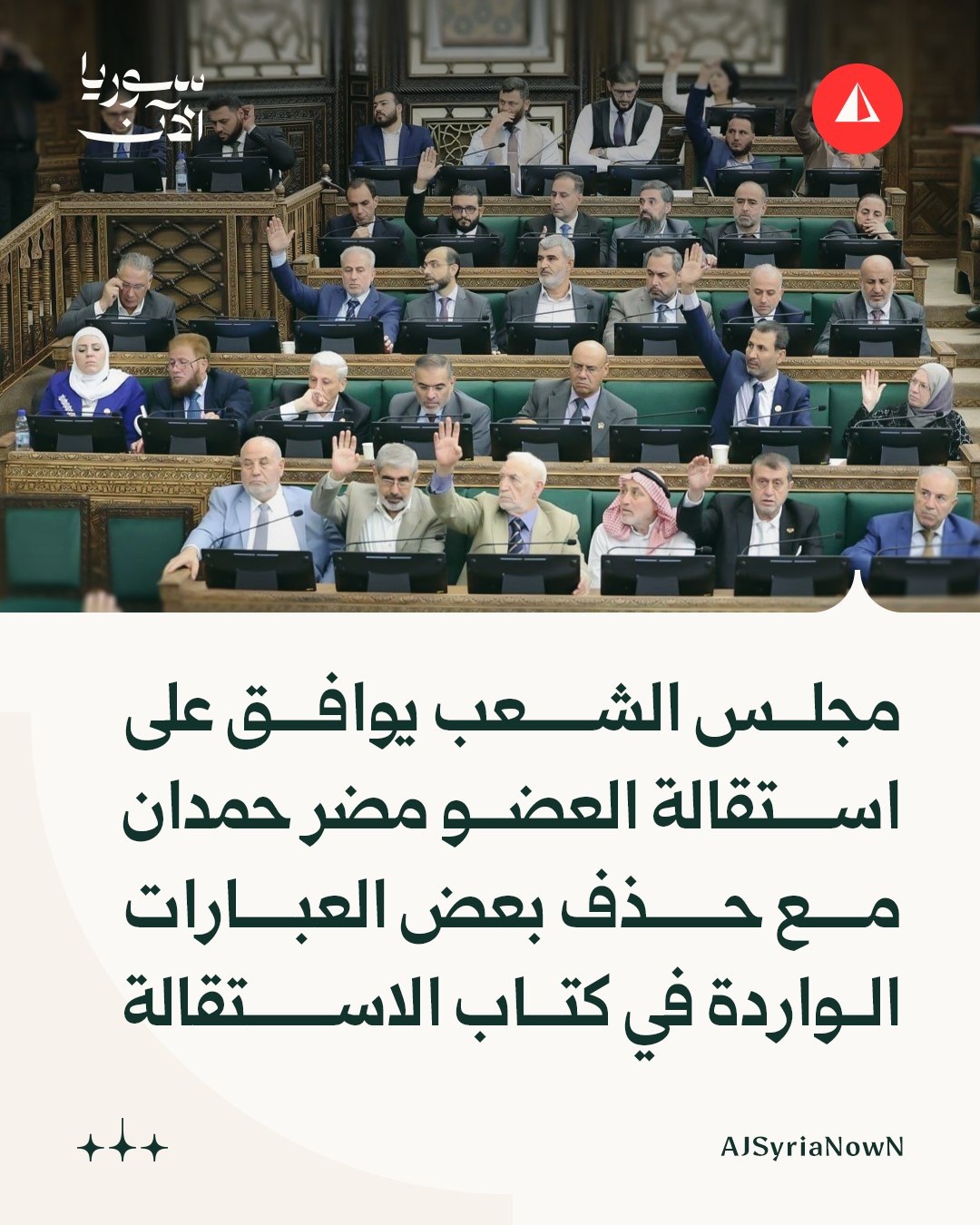
Syrian Parliament approves resignation of member Mudhir Hamdan after editing letter
What happened
The Syrian People's Assembly approved the resignation of parliamentary member Mudhir Hamdan during its third session of the first exceptional term on September 13. According to the parliament's official Telegram statement, the body discussed the resignation request and voted to accept it after removing certain phrases from the resignation letter. The specific reasons for Hamdan's departure and the nature of the deleted passages were not disclosed in the announcement.
Context and assessment
The resignation occurs amid significant diplomatic activity in Damascus on the same day, including bilateral talks between Turkish Foreign Minister Hakan Fidan and Syrian counterpart Asaad al-Shaibani focused on strengthening bilateral relations. Syrian authorities have emphasized post-conflict reconstruction efforts and refugee returns from Turkey. Parliamentary resignations in Syria's transitional political environment can reflect shifts in internal consensus or changes in governance priorities, though the timing alongside high-level Turkish-Syrian engagement may be coincidental. The deletion of specific phrases from Hamdan's letter suggests either internal sensitivities or procedural protocol.
Sources and confidence
Reported solely by Syrian Parliament's official Telegram channel (@AJSyriaNow) on September 13, 2026. No cross-confirmation from independent media outlets or international sources. The confidence score of 7.5 reflects the official nature of the source but limited corroboration. Confirmation by Syrian state media or additional parliamentary members would increase confidence; reports clarifying the deleted content or Hamdan's identity and role would strengthen assessment.
Location
Damascus, Syria, determined by the parliament's statement referencing the People's Assembly proceedings. The Syrian Parliament convenes at various official venues in central Damascus, Syria's capital and seat of government, located in southwestern Syria near the Lebanese border.
Related events nearby
- Turkish FM Hakan Fidan holds bilateral talks with Syrian FM Asaad al-Shaibani at Tishreen Palace in Damascus. 2026-09-13 15:49 UTC · Diplomacy · Tishreen Palace (Qassyoun Palace), Damascus, Syria
- Syrian FM Asaad al-Shaibani announces that over 700,000 Syrian refugees have returned home from Turkey since S2026-09-13 14:54 UTC · Statement · Damascus, Syria
- Syrian FM Asaad al-Shaibani, during joint press conference with Turkish FM Hakan Fidan at Tishreen Palace, Dam2026-09-13 13:43 UTC · Diplomacy · Qassyoun Palace (Tishreen Palace), Damascus, Syria
- Syrian FM al-Shaibani condemns ongoing Israeli attacks on Syria, reaffirms commitment to reconstruction despit2026-09-13 12:41 UTC · Statement · Damascus, Syria
- Syrian Foreign Minister Asaad al-Shaibani reports exceptional diplomatic progress between Damascus and Ankara:2026-09-13 12:20 UTC · Diplomacy · Damascus, Syria
▶ View this event on the live map
Intel Mapper aggregates open-source reports from monitored Telegram and X channels, geolocates them, cross-checks duplicates across sources and assigns a confidence score. Entries are updated as new confirmations arrive. Read how we verify events.