Lebanese PM Salam pledges to rebuild Syria ties on mutual respect for sovereignty
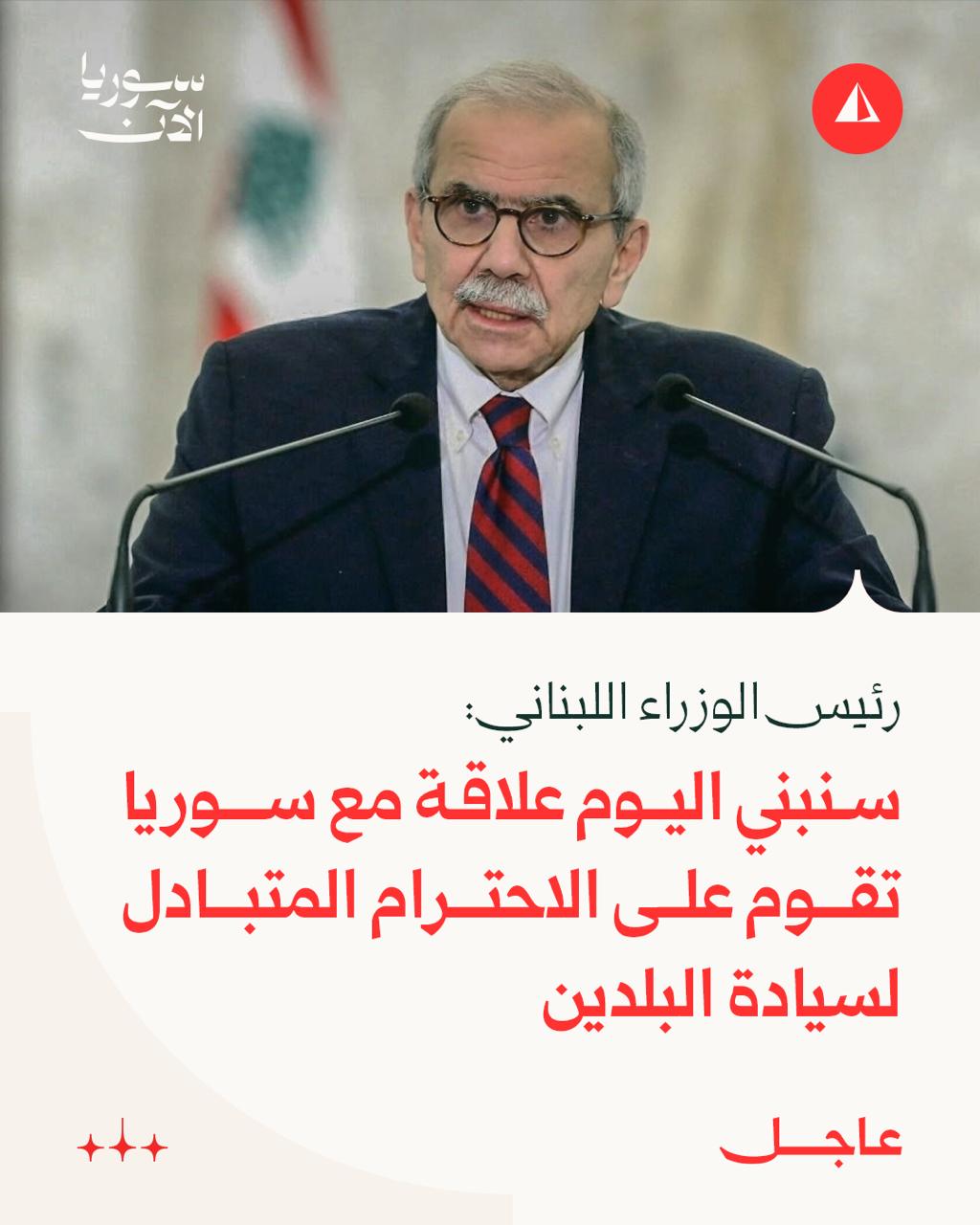
What happened
Lebanese Prime Minister Nawaf Salam stated on September 16 that Lebanon would build relations with Syria based on mutual respect for both nations' sovereignty and territorial integrity. The statement, reported via Telegram, comes as diplomatic engagement continues between the two neighboring countries. Salam's remarks emphasize a commitment to bilateral relations grounded in recognized principles of state sovereignty.
Context and assessment
Lebanon and Syria share a border and decades of entangled political, economic, and security relationships. Salam's emphasis on sovereignty and territorial integrity reflects ongoing efforts to establish clearer diplomatic boundaries between the two states. This statement arrives amid broader regional activity: Israeli forces are consolidating positions on Mount Hermon near the Syria-Lebanon border, Syrian military leadership is engaging with Russian commanders, and UNDOF mediators are addressing security concerns in the Golan Heights. The timing suggests Lebanon's leadership may be attempting to clarify its position and reinforce state principles during a period of heightened regional military activity and diplomatic engagement affecting both nations.
Sources and confidence
The statement was reported solely through Telegram channel @AJSyriaNow. Single-source reporting limits independent verification. The confidence score of 7.5 reflects the statement's direct attribution to an official figure but dependence on one channel. Cross-confirmation from Lebanese state media or international news agencies would strengthen confidence. Direct attribution to Salam or confirmation by Lebanese government spokespersons would raise the score significantly.
Location
Beirut, Lebanon, the capital city and seat of government. Located on the Mediterranean coast in western Lebanon, approximately 40 kilometers from the Syrian border. Beirut is the traditional venue for official Lebanese government statements and diplomatic announcements.
Related events nearby
- Lebanese PM Nawaf Salam announces a plan to facilitate Syrian refugee returns in coordination with the Syrian 2026-09-16 18:29 UTC · Statement · Beirut, Lebanon
- Israeli military advances and consolidates positions on Mount Hermon (Jabal al-Sheikh). Reported objectives in2026-09-16 14:04 UTC · Combat · Mount Hermon (Jabal al-Sheikh), Quneitra Governora
- Israeli forces conducted artillery strikes on the outskirts of Bayt Jan in western Rif Dimashq (Damascus Count2026-09-16 17:51 UTC · Artillery · Bayt Jan, Rif Dimashq, Syria
- Syrian Chief of General Staff Ali al-Nussan toured Hmeimim Air Base in Latakia, conducting meetings with Russi2026-09-16 13:46 UTC · Diplomacy · Damascus, Syria
- Syrian security forces in Al-Kiswa conducted an operation seizing approximately 4 kg of hashish distributed ac2026-09-16 07:09 UTC · Security · Al-Kiswa, Rif Dimashq Governorate, Syria
▶ View this event on the live map
Intel Mapper aggregates open-source reports from monitored Telegram and X channels, geolocates them, cross-checks duplicates across sources and assigns a confidence score. Entries are updated as new confirmations arrive. Read how we verify events.