Syria welcomes UN reaffirmation of 1974 Golan disengagement accord, cites Israeli violations
What happened
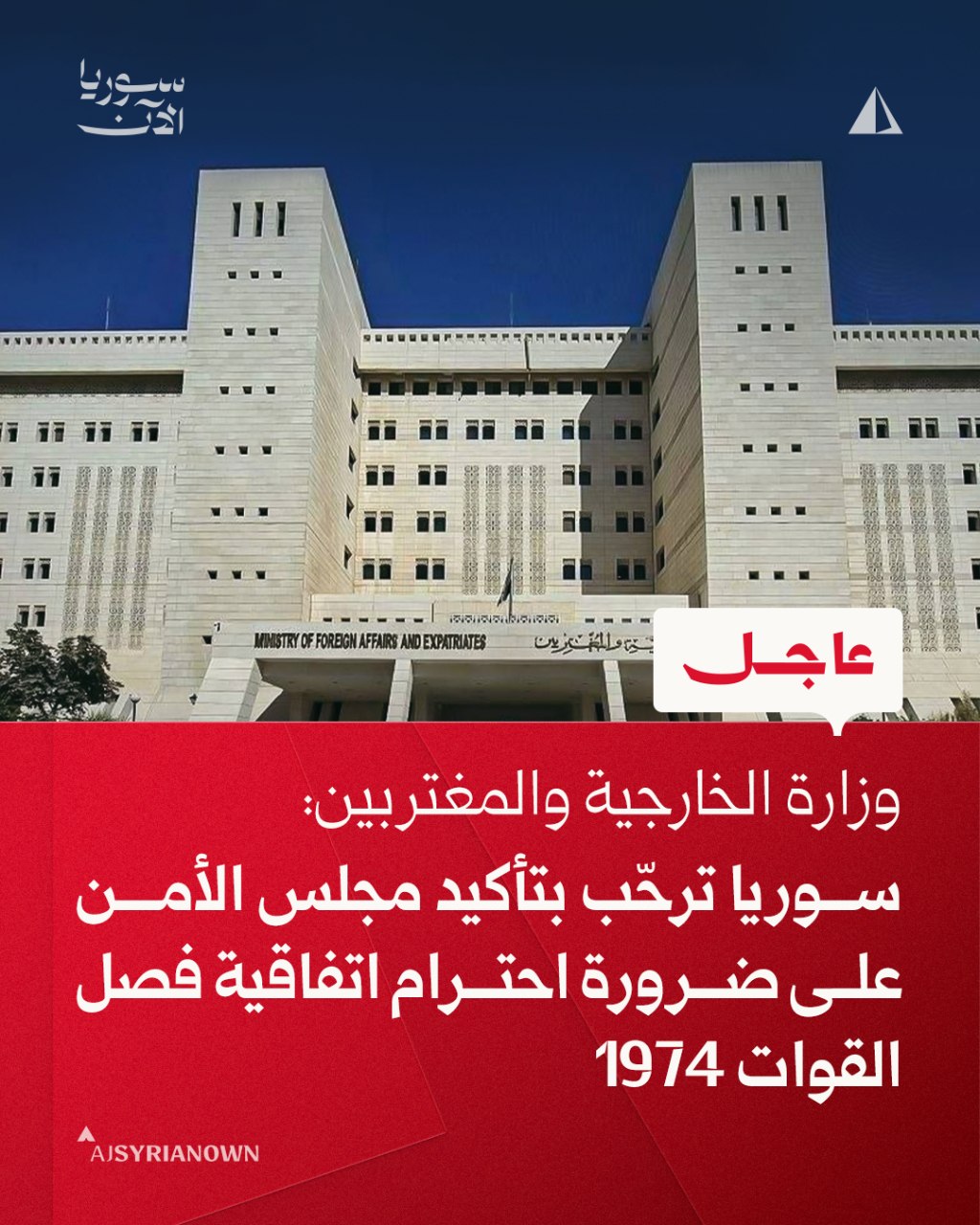
Syria's Foreign Ministry issued a statement welcoming a UN Security Council reaffirmation of the 1974 Disengagement Agreement between Syria and Israel. The statement, reported via Syrian state channels on October 9, reiterates Damascus's position that Israel must respect the accord's terms and Syrian sovereignty over territory affected by the agreement. Syria expressed support for United Nations Disengagement Observer Force (UNDOF) operations and their role in documenting what it characterizes as Israeli violations of the accord.
Context and assessment
The 1974 agreement established a demilitarized buffer zone on the Golan Heights following the 1973 war, monitored by UNDOF since its inception. Syria's emphasis on this accord reflects ongoing tensions over Israeli control of the occupied Golan and periodic incidents along the ceasefire line. The statement appears timed to broader Syrian state consolidation efforts visible in concurrent statements regarding institutional expansion in northeastern governorates and reconstruction projects like the Umayyad Mosque reopening, suggesting Damascus is reasserting state authority and international legitimacy across multiple fronts simultaneously.
Sources and confidence
Reported solely via Telegram channel AJSyriaNow, attributed to Syrian Foreign Ministry. No cross-confirmation from independent international sources, UN statements, or Israeli government responses is present in available data. Confidence score of 7.5 reflects official Syrian government sourcing but lack of corroborating reporting. Score would rise with UN statement confirmation or media coverage from multiple outlets; would lower if sourcing proves unreliable.
Location
Damascus, Syria serves as statement origin point (seat of Syrian government). The substantive subject—the Golan Heights disengagement zone—lies along Syria's southwestern border, approximately 100 kilometers south of Damascus, bordered by Israeli-controlled territory to the west and UN-patrolled demilitarized buffer zone.
Related events nearby
- Demonstrations in Al-Hasakah's Freedom Square demanding expansion of Syrian state authority and institutional 2026-10-09 12:36 UTC · Statement · Damascus, Syria
- Demonstrations across Hasakah Governorate and its countryside demanding Syrian state authority extend to the e2026-10-09 11:14 UTC · Statement · Damascus, Syria
- Aerial footage shows worshippers gathering at the Umayyad Mosque in Aleppo for the first Friday prayer followi2026-10-09 10:45 UTC · Statement · Damascus, Syria
- Syrian citizen celebrates flag-raising at Palace of Justice in Hasaka with internal security deputy Mahmoud Kh2026-10-09 10:18 UTC · Statement · Damascus, Syria
- Syria's OPCW delegate Muhammad Kattoub states Syria continues cooperation with the Chemical Weapons Convention2026-10-09 09:07 UTC · Statement · Damascus, Syria
▶ View this event on the live map

Intel Mapper aggregates open-source reports from monitored Telegram and X channels, geolocates them, cross-checks duplicates across sources and assigns a confidence score. Entries are updated as new confirmations arrive. Read how we verify events.