Syria's transitional justice body announces arrest of former regime official Maaraji Oural
What happened
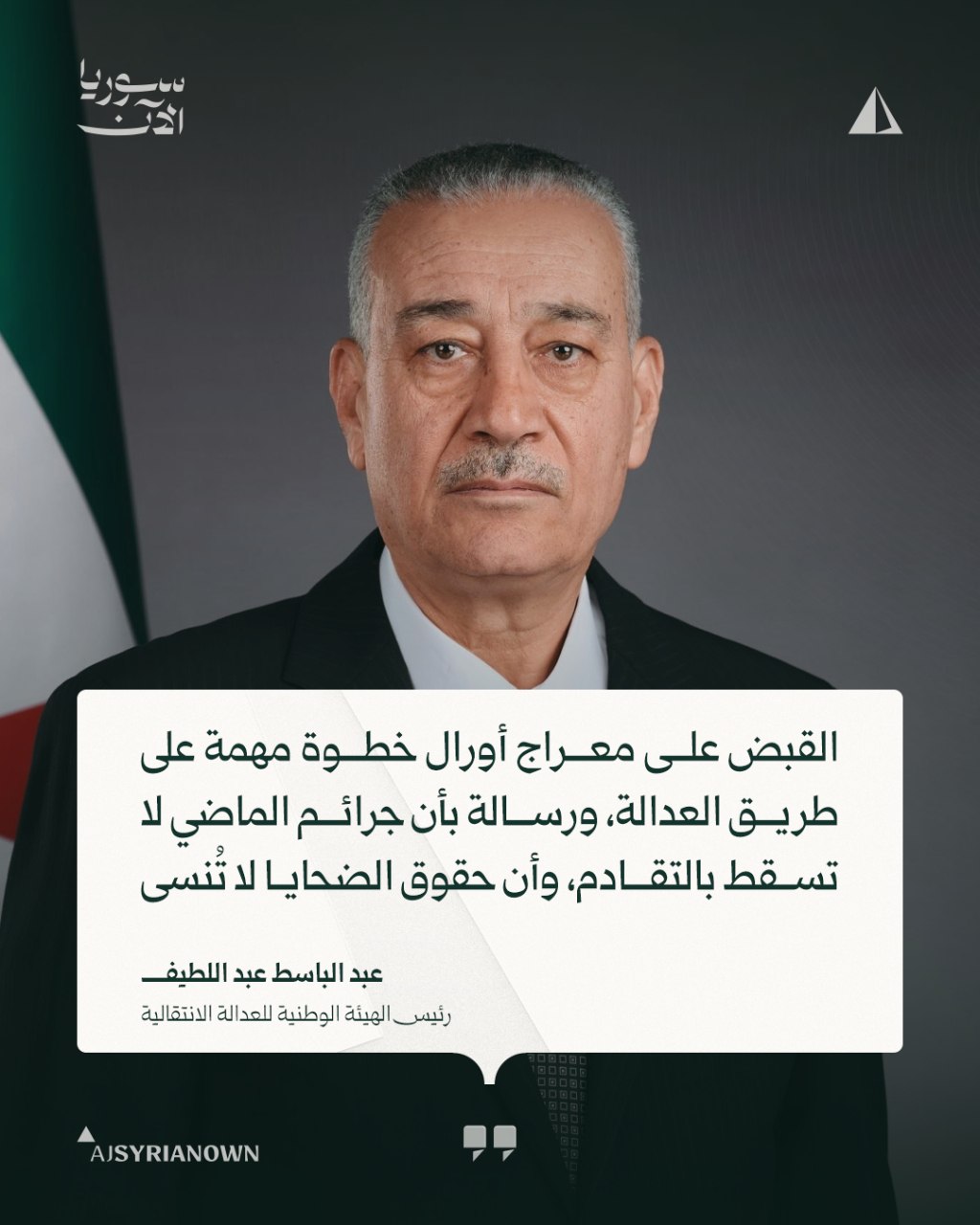
Abdel Basset Abdel Latif, head of Syria's National Transitional Justice Commission, announced via X (formerly Twitter) on October 15 the arrest of Maaraji Oural, a figure from the previous regime. In his statement, Latif framed the arrest as a significant step toward justice, emphasizing that crimes of the past regime do not expire under statute of limitations and that victims' rights remain a priority for transitional justice efforts.
Context and assessment
The announcement reflects Syria's ongoing efforts to address accountability for alleged abuses under the former government. It comes amid a series of judicial proceedings: on the same day, military courts in Damascus and Aleppo issued verdicts in cases related to regime-era violations, including death sentences for two former officials and additional convictions. These coordinated justice actions suggest a sustained institutional push to process high-profile cases through Syria's emerging judicial mechanisms. The timing and public framing underscore efforts to establish rule of law and acknowledge victim claims as part of Syria's transition, though the scale and effectiveness of these processes remain subject to international scrutiny.
Sources and confidence
Reported by Telegram channel @AJSyriaNow, citing the official X statement from Abdel Basset Abdel Latif. Single-source reporting limits independent verification; confidence score of 7.6 reflects the credibility of the official source but lack of cross-confirmation. Score would increase with corroboration from international justice monitors or Syrian legal authorities; it would lower if details were contradicted by subsequent official statements.
Location
Damascus, Syria, where the National Transitional Justice Commission is based. The commission operates within Syria's capital as the institutional body overseeing accountability processes for alleged crimes under the previous regime. No specific detention facility location was disclosed in the announcement.
Related events nearby
- Turkish Ambassador to Syria Nuh Yılmaz celebrates the arrest of Mihraç Ural (Maaraji Oural), stating 'Our sorr2026-10-15 13:32 UTC · Statement · Damascus, Syria
- Military Criminal Court in Aleppo issues verdicts in connection with Sahel events: death sentences for two for2026-10-15 09:00 UTC · Statement · Damascus, Syria
- Syrian Military Criminal Court begins second session to deliver verdicts in Coastal violations file. Court wil2026-10-15 07:20 UTC · Statement · Military Criminal Court, Damascus, Syria
- Israeli occupation forces conducted airstrikes on military positions on Mount Hermon slopes above Baqsam villa2026-10-15 12:17 UTC · Airstrike · Baqsam, Rif Dimashq, Syria
- Israeli occupation forces set fire to a hay storage depot and parts of a house during infiltration operations 2026-10-15 07:54 UTC · Combat · Wadi al-Raqad, Daraa Governorate, Syria
▶ View this event on the live map

Intel Mapper aggregates open-source reports from monitored Telegram and X channels, geolocates them, cross-checks duplicates across sources and assigns a confidence score. Entries are updated as new confirmations arrive. Read how we verify events.