BBC/NPR: U.S., Lebanon allegedly protecting Syrian general tied to chemical weapons
What happened
A joint BBC and NPR investigation reports that U.S. and Lebanese authorities are protecting and financially supporting Bassam al-Hassan, a former Syrian general allegedly responsible for overseeing the Assad regime's chemical weapons program. According to the investigation, Hassan reportedly receives money and security in Lebanon in exchange for providing intelligence on missing American journalist Austin Tice, absent since 2012, and other Syrian military information. The arrangement is believed to have begun in spring 2025. Syria's newly formed government is seeking Hassan's extradition to face trial for war crimes.
Context and assessment
Hassan's alleged role as a chemical weapons supervisor makes him a significant figure in documented atrocities during Syria's civil war. The arrangement highlights a complex dynamic as Syria transitions under new governance following years of civil conflict. The case reflects ongoing tensions between accountability for wartime conduct and intelligence priorities. Syria's request for extradition signals the new government's intent to prosecute officials tied to the previous regime's alleged crimes. The continued absence of clarity on journalist Austin Tice's fate has remained a persistent concern for U.S. officials. The reported protection arrangement, if confirmed, would represent a notable diplomatic accommodation by both governments amid broader Middle Eastern realignment and reconstruction efforts in Lebanon and Syria.
Sources and confidence
BBC and NPR conducted the investigation and appear to be the primary sources. The report reached media channels including Telegram (@ClashReport) on October 8, 2026. Single-source attribution and lack of official statement confirmation from U.S., Lebanese, or Syrian authorities lower confidence. Corroboration from government representatives or additional independent investigation would strengthen credibility. Official statements from the three governments involved would significantly raise confidence.
Location
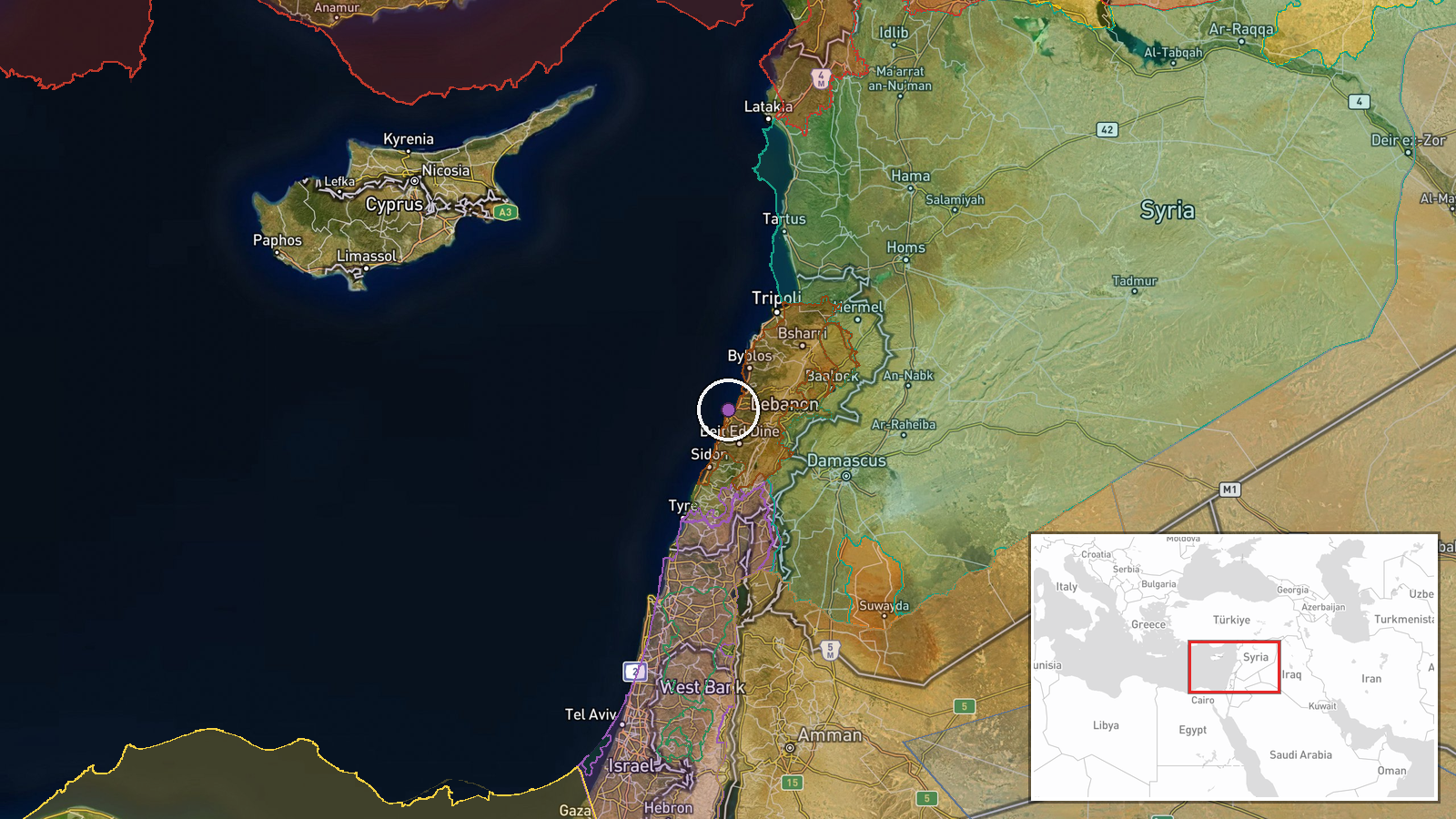
Beirut, Lebanon, the capital and largest city, located on the Mediterranean coast. The city's status as Lebanon's political and administrative center makes it a plausible location for such sensitive arrangements. Nearby regional dynamics include ongoing Lebanese security challenges and Syria's proximity directly to the east across mountainous terrain.
Related events nearby
- Hezbollah announces receipt of $200 million from Iran for Lebanese war displacement relief. Organization plans2026-10-07 14:42 UTC · Statement · Beirut, Lebanon
- Lebanese Army interdicted a smuggling operation on Wednesday, seizing 5 pickup trucks crossing from Syria lade2026-10-08 10:32 UTC · Security · Syria-Lebanon Border, Bekaa Valley
- Israeli forces fired upon shepherds and livestock herders in the vicinity of Kudna village in Quneitra country2026-10-08 12:30 UTC · Combat · Kudna, Quneitra Governorate, Syria
- Syrian Foreign Ministry condemns recent Houthi attacks on Saudi Arabia's vital infrastructure and civilian fac2026-10-08 05:38 UTC · Statement · Damascus, Syria
- Syria plans to establish new oil export route bypassing Strait of Hormuz. Initiative aims to redirect Iraqi cr2026-10-07 15:27 UTC · Statement · Damascus, Syria
▶ View this event on the live map
Intel Mapper aggregates open-source reports from monitored Telegram and X channels, geolocates them, cross-checks duplicates across sources and assigns a confidence score. Entries are updated as new confirmations arrive. Read how we verify events.