Saudi Arabia extends King Khalid Airport closure through October 17 after Houthi missile strike
What happened
King Khalid International Airport in Riyadh will remain closed until October 17, according to a Notice to Airmen (NOTAM) issued by Saudi authorities. The closure follows a Houthi ballistic missile attack on October 11 that struck Terminal 4, killing at least one civilian—identified as a Pakistani resident—and injuring 11 others. CCTV footage documented the missile impact at the facility, one of the Middle East's busiest aviation hubs.
Context and assessment
King Khalid International Airport serves as a critical civilian and strategic aviation node for Saudi Arabia and the broader region. The sustained Houthi campaign against the airport reflects the Yemen-based group's capability and willingness to conduct long-range strikes deep into Saudi territory. The October 11 attack and subsequent extended closure signal the severity of damage and security concerns; repeated targeting of major infrastructure suggests the Houthis are attempting to impose costs on Saudi Arabia's economy and civilian population. These strikes are consistent with the broader pattern of Iran-aligned drone and missile attacks on regional infrastructure over recent years.
Sources and confidence
The closure was reported by Clash Report via Telegram on October 12. The related ballistic missile strike on October 11 was confirmed by Saudi Arabia's General Authority of Civil Aviation (GACA) and documented in surveillance footage. Confidence is moderate (7.0/10) due to single-source reporting of the NOTAM itself, though the underlying attack is corroborated by official Saudi statements and video evidence. Cross-confirmation from aviation tracking services or additional Saudi officials would strengthen confidence.
Location
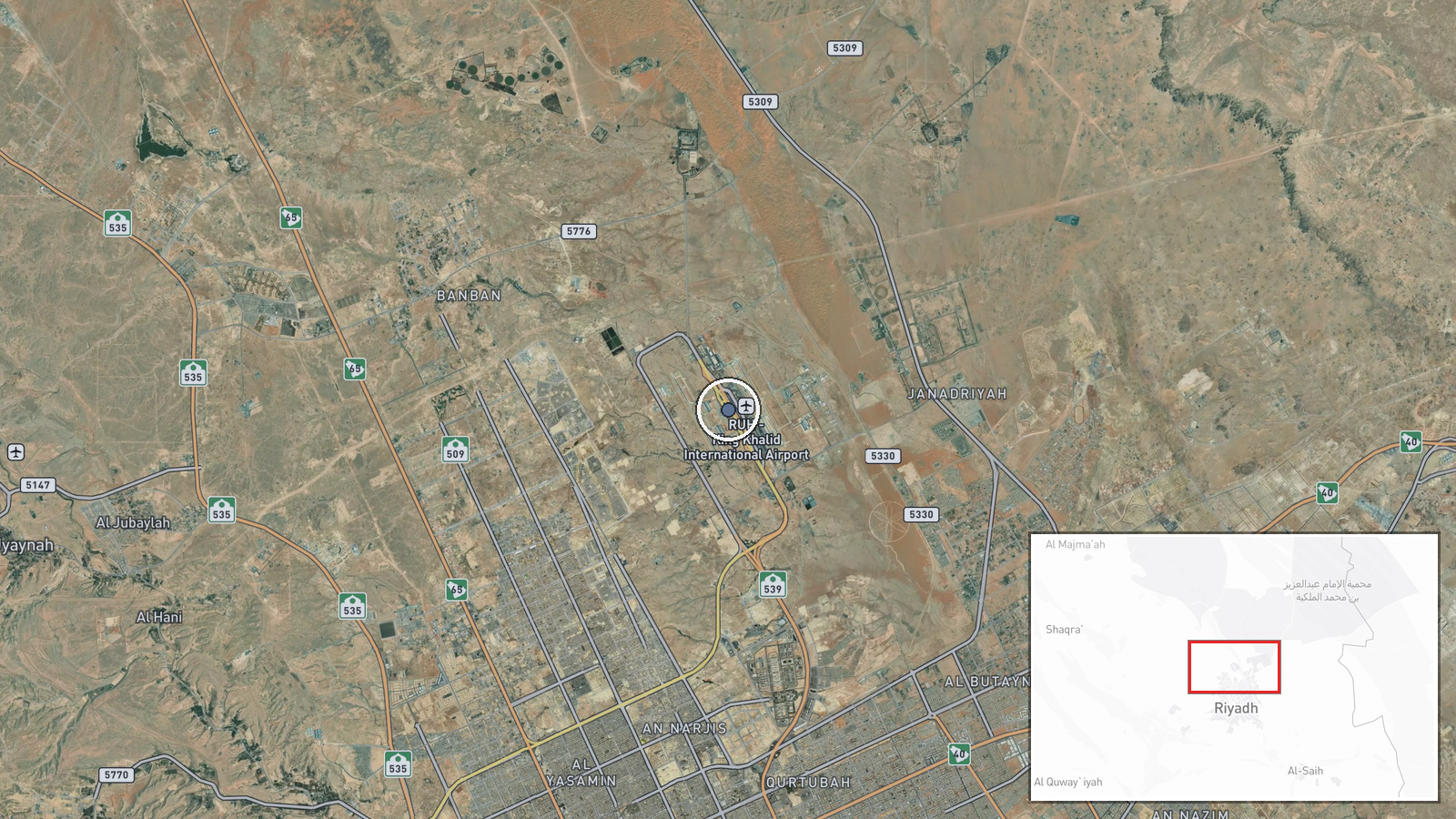
King Khalid International Airport is located approximately 35 kilometers north of central Riyadh, Saudi Arabia's capital, in Riyadh Province. The facility comprises multiple terminals; the October 11 attack specifically targeted Terminal 4. The airport's position makes it a major civilian hub and infrastructure asset within the Saudi capital region.
Related events nearby
- CCTV footage documents Houthi attack on King Khalid International Airport in Riyadh. Ballistic missile strike 2026-10-12 11:04 UTC · Ballistic Missile · King Khalid International Airport, Riyadh, Saudi A
- Syrian Customs Authority returned a recovered fishing boat to its owners at Banias port after completing legal2026-10-11 21:48 UTC · Humanitarian Aid · King Khalid International Airport, Riyadh, Saudi A
- Houthi ballistic missile strike on King Khalid International Airport in Riyadh confirmed by Saudi GACA. Attack2026-10-11 21:38 UTC · Ballistic Missile · King Khalid International Airport, Riyadh, Saudi A
- Saudi Arabia's GACA confirms King Khalid International Airport Terminal 4 was targeted in attack on October 112026-10-11 16:23 UTC · Air Defense · King Khalid International Airport, Riyadh, Riyadh
- Saudi-led coalition reported an unidentified projectile struck Terminal 4 at King Khalid International Airport2026-10-11 14:39 UTC · Ballistic Missile · King Khalid International Airport, Riyadh, Riyadh
▶ View this event on the live map

Intel Mapper aggregates open-source reports from monitored Telegram and X channels, geolocates them, cross-checks duplicates across sources and assigns a confidence score. Entries are updated as new confirmations arrive. Read how we verify events.