Ukrainian forces deploy net-firing robot to intercept Russian FPV drones
What happened
Ukrainian forces reportedly deployed a system called KARAKURT to counter Russian FPV kamikaze drones in rear areas. The robot fires a 3×3 meter net cartridge designed to entangle a drone's rotors mid-flight, moments before impact. According to the report, each net cartridge costs approximately $26. The deployment was documented in video footage shared via Telegram, showing the system successfully catching an incoming drone.
Context and assessment
FPV kamikaze drones have become a persistent threat to Ukrainian rear-area logistics and personnel, particularly as Russian forces seek to extend strike capabilities deeper behind front lines. The KARAKURT system represents a low-cost defensive innovation, offering an alternative to expensive air defense systems for protecting sensitive areas. This deployment follows broader Ukrainian efforts to develop asymmetric counter-drone solutions, including electronic warfare and kinetic interception methods. The approach aligns with recent operational patterns where Ukraine has had to improvise defenses against swarms of inexpensive unmanned systems, while simultaneously maintaining conventional air defense capabilities elsewhere.
Sources and confidence
Reported by Telegram channel @ClashReport on 4 October 2026. Single source limits confidence. No cross-confirmation from independent observers or Ukrainian military statements. Confidence score of 7/10 reflects visual documentation but unverified technical specifications and cost claims. Corroboration from Ukrainian military communications or additional independent sources would strengthen assessment.
Location
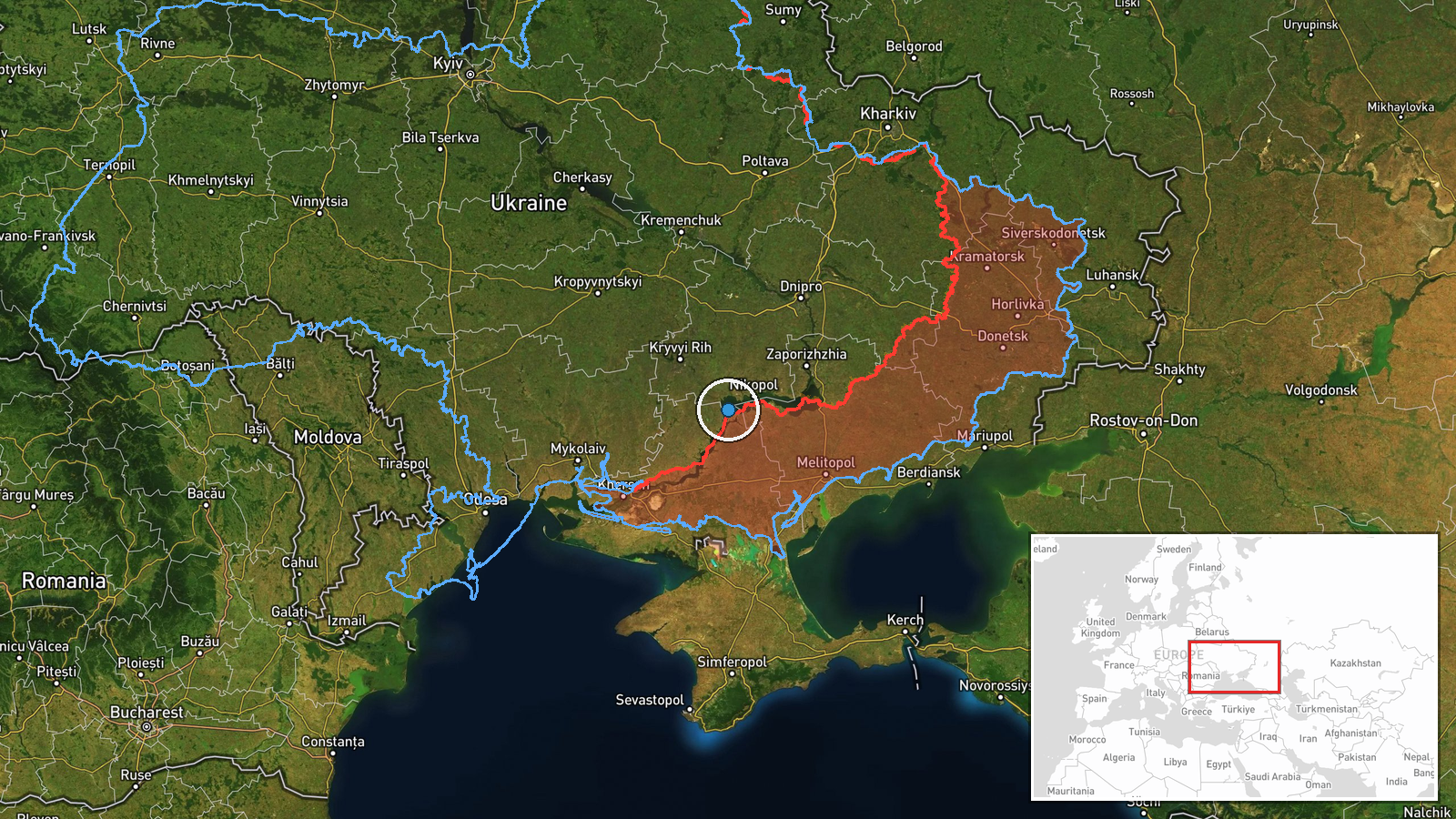
Rear area of Ukraine, regional precision only. Coordinates approximate Zaporizhzhia or southern Donetsk region based on typical logistics positioning. Exact facility location undetermined. The specific settlement or military installation was not disclosed in the report.
Related events nearby
- Ukrainian forces destroyed a Russian Buk-M3 air defense system in the Kuroshany area of Zaporizhzhia Oblast.2026-10-04 08:05 UTC · Report · Kuroshany, Zaporizhzhia Oblast, Ukraine
▶ View this event on the live map
Intel Mapper aggregates open-source reports from monitored Telegram and X channels, geolocates them, cross-checks duplicates across sources and assigns a confidence score. Entries are updated as new confirmations arrive. Read how we verify events.