Ukraine's air defense intercepts 165 drones and missiles in overnight Russian attack
What happened
Ukrainian air defense forces reported intercepting or suppressing 165 enemy unmanned aerial vehicles and air-launched weapons during an overnight attack on September 8–9. Russia launched the assault using Iskander-M ballistic missiles from Crimea, S-800 cruise missiles from the Azov Sea, and approximately 196 Shahed-type kamikaze drones—including jet-powered variants and decoy models—originating from Oryol and Kursk oblasts in Russia and from occupied territories in Donbas and Crimea. Ukrainian aviation, air defense units, electronic warfare teams, and mobile fire groups conducted the interception. Impacts were recorded at 23 locations, with debris from downed aircraft striking four additional sites.
Context and assessment
This represents a sustained Russian air campaign targeting Ukrainian territory, following attacks on Kyiv the preceding day. The scale—196 drones plus ballistic missiles—reflects Russia's continued reliance on mass drone strikes to degrade Ukrainian air defenses and strike civilian and military infrastructure. The use of Iskander-M ballistic missiles alongside cruise missiles and multiple drone types suggests a coordinated multi-vector assault designed to overwhelm defensive systems. The presence of jet-powered Shahed variants and decoy drones indicates Russian efforts to complicate interception. Air raid alerts triggered in Kyiv and Kyiv Oblast, including Darnytskyy District and Brovary, indicate the attack's geographic scope. President Zelensky's recent appeal for additional ballistic missile air-defense packages underscores Ukraine's capability gaps against such campaigns.
Sources and confidence
Reported solely by Telegram channel @GeneralStaffZSU (Ukrainian General Staff). The figures—165 intercepted systems and 196 drones launched—derive from a single authoritative Ukrainian military source with no cross-confirmation from independent monitors or alternative channels as of the report timestamp. Confidence is moderate (8/10) due to the source's institutional credibility and consistent reporting patterns, though independent verification of interception claims remains limited. Confirmation of impacts at 23 locations and debris strikes provides partial corroboration. Higher confidence would require third-party radar data or additional military sources; lower confidence would result from contradictory civilian reports or technical clarifications.
Location
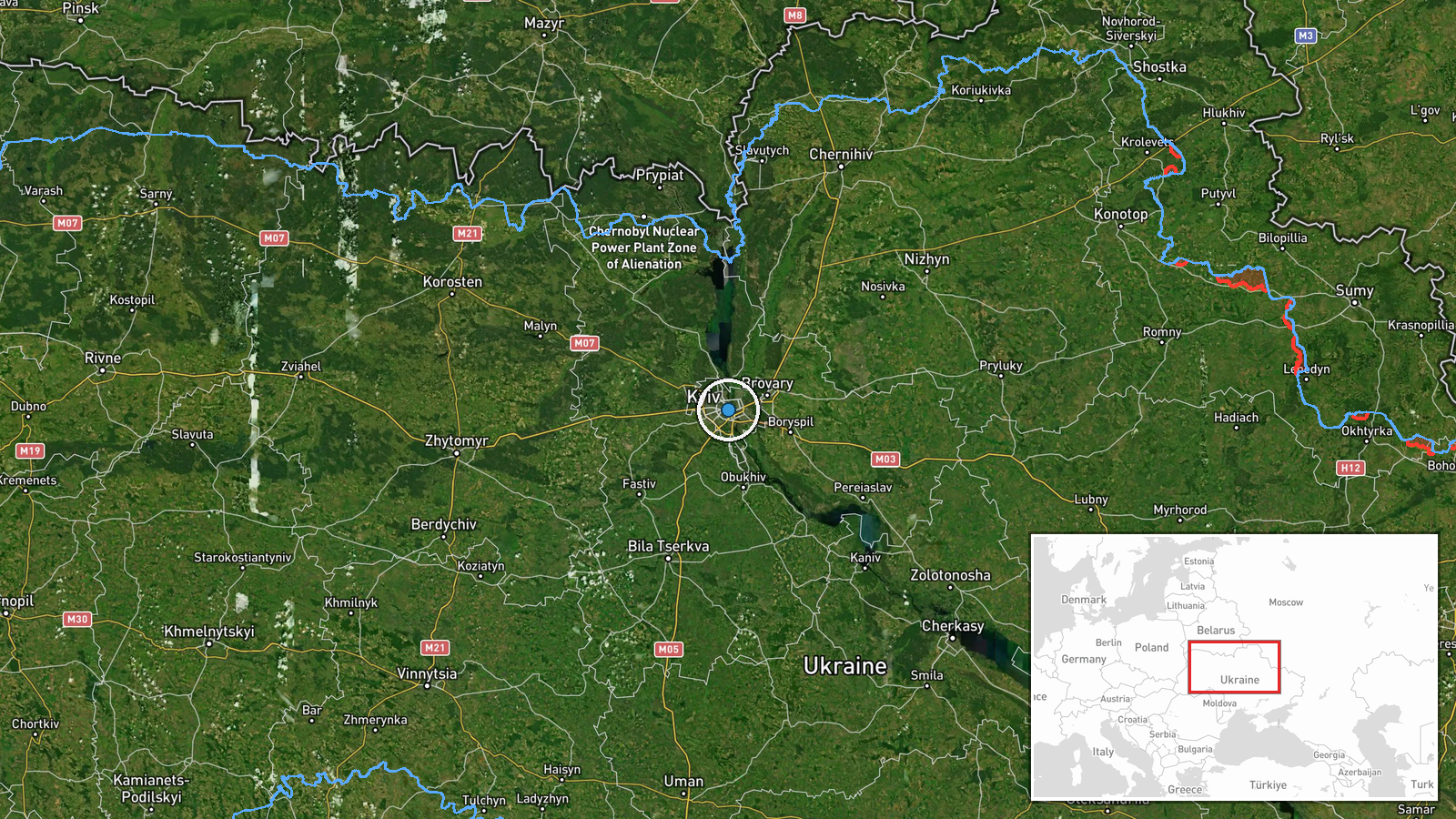
The attack targeted Kyiv and Kyiv Oblast broadly, with the main report centered on Kyiv city (50.45°N, 30.52°E). Specific impacts occurred in Darnytskyy District of Kyiv and in Brovary, Kyiv Oblast, approximately 30 kilometers northeast of the capital. Launch origins spanned Russian territory (Oryol and Kursk oblasts in western Russia) and Russian-occupied areas (Crimea, Donetsk). The Azov Sea served as a firing position for cruise missiles, located south of Donetsk and east of occupied Zaporizhzhia.
Related events nearby
- Air raid alert issued for Kyiv (Darnytskyy district). 'Реактив' (reactive/jet-powered UAV) detected, likely Sh2026-09-09 09:22 UTC · Siren · Darnytskyy District, Kyiv, Ukraine
- Ukraine reports medium-level ballistic missile threat overnight. Air raid alert issued across Kyiv Oblast as R2026-09-08 18:04 UTC · Siren · Kyiv, Kyiv Oblast, Ukraine
- President Zelensky appeals to the United States for ballistic missile air-defense packages to strengthen Ukrai2026-09-08 14:47 UTC · Statement · Kyiv, Kyiv Oblast, Ukraine
- Russian ballistic missiles struck Kyiv; footage captured two missiles impacting the same location seconds apar2026-09-08 14:03 UTC · Ballistic Missile · Kyiv, Kyiv Oblast, Ukraine
- One reactive (jet-powered) Shahed-136 kamikaze drone detected in transit toward Brovary, Kyiv Oblast. Air raid2026-09-09 09:30 UTC · Drone Transit · Brovary, Kyiv Oblast, Ukraine
▶ View this event on the live map
Intel Mapper aggregates open-source reports from monitored Telegram and X channels, geolocates them, cross-checks duplicates across sources and assigns a confidence score. Entries are updated as new confirmations arrive. Read how we verify events.