Ukrainian forces strike ammunition depot in Dovzhansky, Luhansk Oblast
What happened
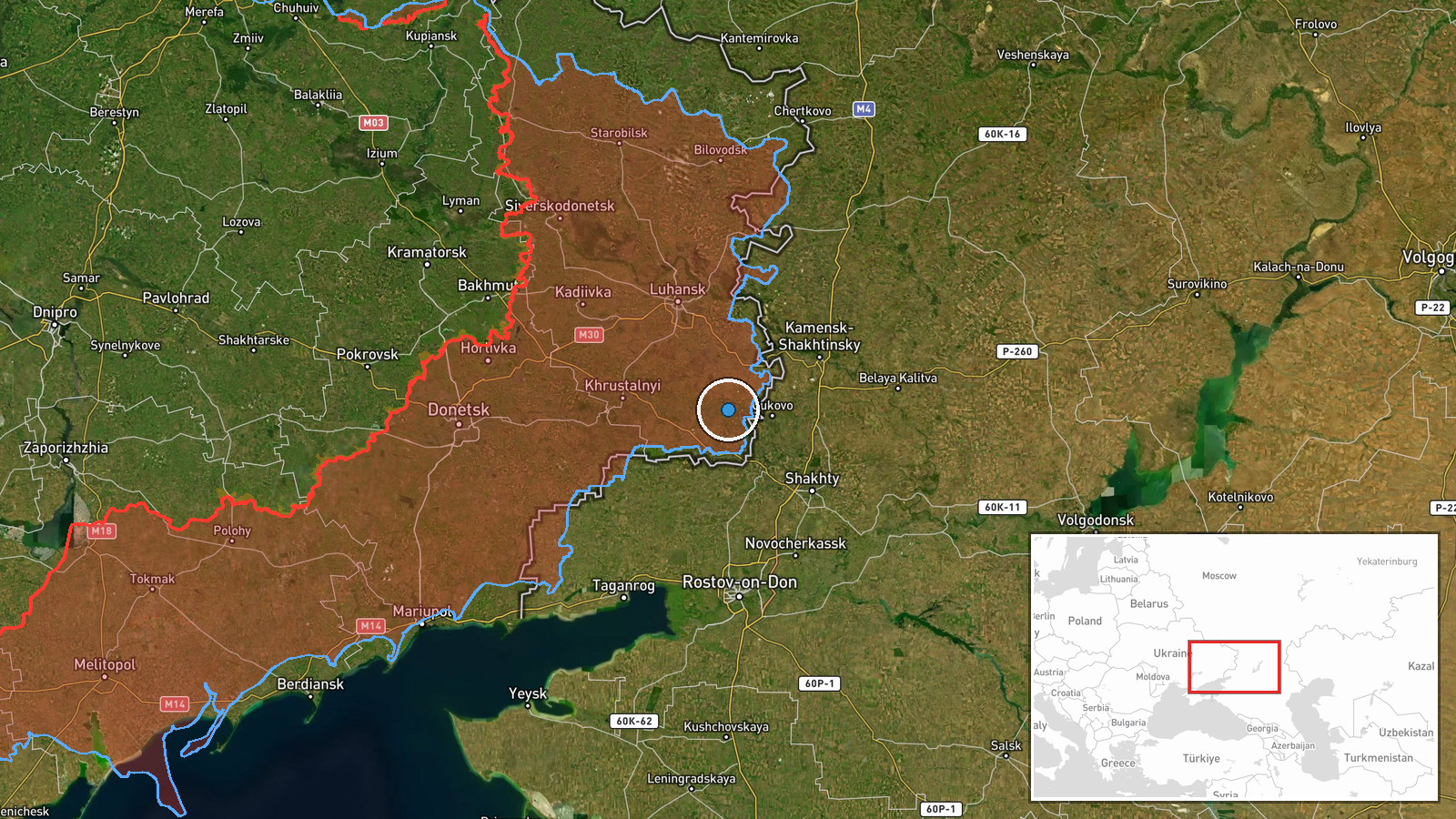
Ukrainian forces conducted a UAS strike against an ammunition storage facility in Dovzhansky, in Russian-controlled Luhansk Oblast, on September 16 at approximately 09:25 UTC. The General Staff of the Armed Forces of Ukraine reported that the facility contained Russian ordnance and explosives. The strike was announced via official military channels shortly after the reported attack time.
Context and assessment
The strike on Dovzhansky follows a sustained Ukrainian campaign targeting Russian rear-area logistics and munitions infrastructure. On September 15, Ukrainian forces struck a fuel and lubricant depot in nearby Novosvitiivka, also in Luhansk Oblast, and destroyed drone storage and launch facilities in Horlivka and Donetsk city. These coordinated strikes suggest a deliberate operational focus on degrading Russian supply chains and aerial capabilities across multiple sectors simultaneously. Ammunition depots are high-value targets whose destruction can constrain Russian combat operations. The concentration of such strikes within a 24-hour period indicates sustained Ukrainian deep-strike capability despite significant attrition.
Sources and confidence
The attack was reported solely by the General Staff of Ukraine's official Telegram channel. No independent cross-confirmation from Ukrainian field sources, Russian acknowledgments, or third-party observers is currently available. The confidence score of 8.0 reflects the credibility of the official source but the absence of corroboration. Confirmation through secondary reporting, Russian defensive statements, or satellite imagery would raise confidence; lack of further mentions would lower it.
Location
Dovzhansky is a settlement in Russian-controlled Luhansk Oblast in eastern Ukraine, located approximately 80 kilometers north of the regional administrative center Luhansk city. The coordinates place the target within the settled area. The location lies in territory held by Russian forces since 2014 and heavily militarized as part of the broader Donbas conflict zone.
Related events nearby
- Ukrainian forces destroyed an enemy fuel and lubricant storage depot in Novosvitiivka, Luhansk Oblast. Part of2026-09-15 10:07 UTC · UAS Strike · Novosvitiivka, Luhansk Oblast, Ukraine
- Ukrainian forces destroyed a storage, preparation, and launch site for attack drones in the Donetsk city distr2026-09-15 10:05 UTC · UAS Strike · Horlivka, Donetsk Oblast, Russia-controlled
- Ukrainian forces struck an enemy drone storage, preparation, and launch facility in Donetsk city. The facility2026-09-16 09:24 UTC · UAS Strike · Donetsk City, Donetsk Oblast, Ukraine
- Ukrainian special forces (SBS) released footage confirming the elimination of Russian Major General Anton Grun2026-09-16 08:39 UTC · Security · Bakhmut, Donetsk Oblast, Ukraine
- Ukrainian General Staff reports 278 combat engagements on day 1666 of the war. Russia conducted 106 airstrikes2026-09-16 05:05 UTC · Statement · Ukraine (Nationwide)
▶ View this event on the live map
Intel Mapper aggregates open-source reports from monitored Telegram and X channels, geolocates them, cross-checks duplicates across sources and assigns a confidence score. Entries are updated as new confirmations arrive. Read how we verify events.