Ukraine intercepts 117 Russian drones in overnight nationwide air defense operation
What happened
Ukraine's air defense system shot down or suppressed 117 Russian attacking aircraft during an overnight assault on October 9-10, according to the General Staff. Russia launched approximately 160 drones, including 110 jet-powered Shahed variants, Gerber UAVs, and decoy drones from multiple launch points in Russian territory and occupied areas—specifically Oryol, Kursk, Shataliovo, Millerovo, and Primorsko-Akhtarsk regions, plus occupied Donets'k and Crimea. Ukrainian air defense, aviation, electronic warfare units, and mobile fire groups engaged the attack. Preliminary reports at 09:00 indicated 82 of the downed drones were jet-powered variants. Impact sites were recorded at 14 locations with 10 debris fall zones.
Context and assessment
Overnight drone assaults have become routine features of Russia's aerial campaign against Ukraine, reflecting sustained efforts to degrade Ukrainian infrastructure and civilian targets across the country. The interception rate of 73 percent represents a high success margin typical of recent Ukrainian air defense performance, though such sustained attacks indicate Russia maintains significant UAV production and launch capacity despite previous losses. The geographic spread of launch points—from western Kursk to eastern Primorsko-Akhtarsk—demonstrates Russia's distributed launch strategy to complicate defense responses. This assault follows a mass strike on October 7 that killed at least 32 people, suggesting a pattern of intensified aerial operations. The continued threat to civilian areas, evidenced by the related incidents in Kyiv region, underscores the ongoing vulnerability despite interception successes.
Sources and confidence
The General Staff of the Armed Forces of Ukraine reported the interception on Telegram, providing detailed casualty figures and attack parameters as of 09:00 on October 10. This represents a single primary source with no cross-confirmation from independent monitors or allied intelligence agencies noted in available data. The confidence score of 8.0 reflects the official Ukrainian military sourcing and specific numerical claims, though the single-source status and preliminary nature of impact assessments present marginal uncertainty. Confirmation from NATO intelligence or detailed photo-reconnaissance would strengthen confidence; significant downward revision would occur if Ukrainian interception claims were materially contradicted by third-party analysis.
Location
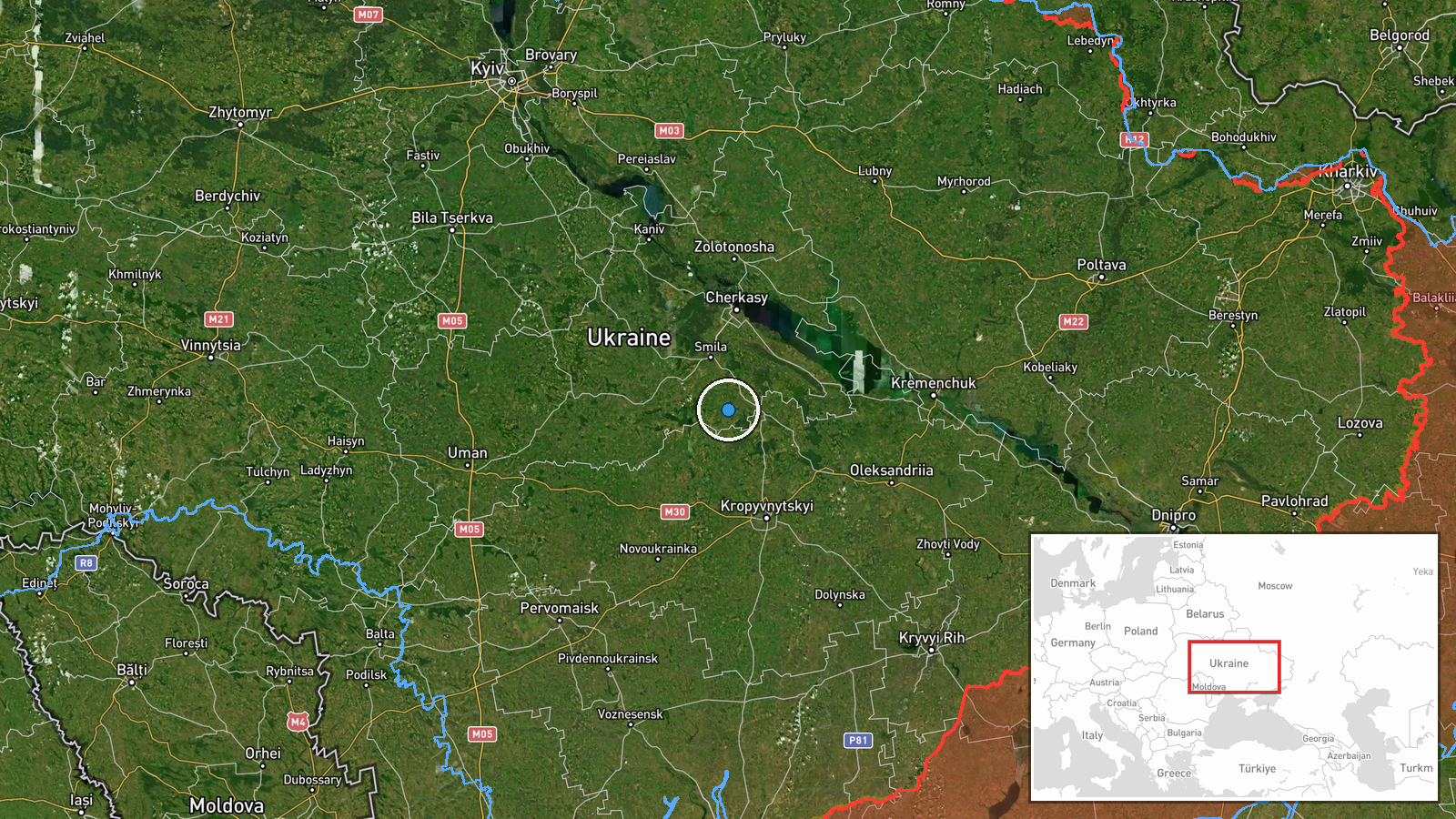
The attack targeted Ukraine nationwide, with impact sites recorded across 14 unspecified locations. Launch origins spanned Russian territory from Oryol and Kursk in the west to Primorsko-Akhtarsk in the southeast, plus occupied Donets'k and the Crimean peninsula. Related incidents suggest impacts in the Kyiv region. Geographic precision reflects the countrywide scope of air defense operations rather than a specific discrete target.
Related events nearby
- Ukrainian soldier shot down a Russian reconnaissance or loitering drone near the frontline with a single rifle2026-10-09 21:03 UTC · Drone Shootdown · Ukraine (location not reported)
- A man narrowly escaped a jet-powered Shahed drone strike in Kyiv region, fleeing seconds before impact. Footag2026-10-09 11:45 UTC · UAS Strike · Ukraine (location not reported)
- Russia launched mass strike on Ukraine on October 7, killing at least 32 people. Zelensky remarked Putin timed2026-10-09 09:15 UTC · Ballistic Missile · Ukraine (location not reported)
- Ukrainian military personnel in a vehicle narrowly escaped a Russian FPV drone strike at the front lines. No c2026-10-09 08:23 UTC · UAS Strike · Ukraine (location not reported)
- Ukrainian air monitoring: 2 Russian jet-powered Shahed (Geran-3) drones circling over Oleksandriya.2026-10-09 12:05 UTC · Drone Transit · Oleksandriya, Ukraine
▶ View this event on the live map

Intel Mapper aggregates open-source reports from monitored Telegram and X channels, geolocates them, cross-checks duplicates across sources and assigns a confidence score. Entries are updated as new confirmations arrive. Read how we verify events.